
How Much Does a Pineapple Cost?
Updated on | Written by Alec Pow
This article was researched using 12 sources. See our methodology and corrections policy.
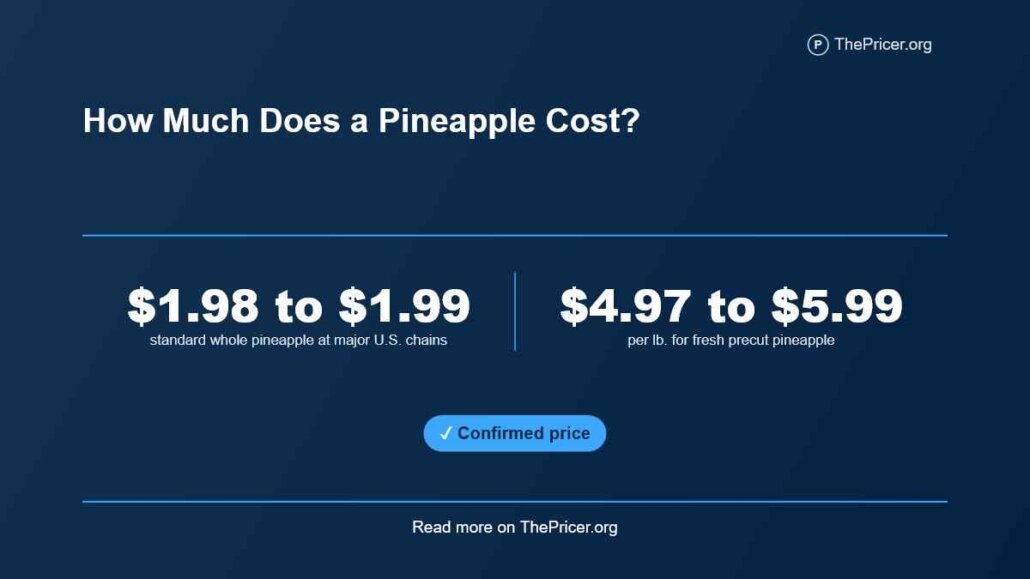
A whole fresh pineapple currently costs about $2 to $4 at major U.S. supermarkets, with standard fruit near $1.98 to $1.99 each in current Walmart and Target examples and premium varieties around $3.49 or more. Precut pineapple costs much more, commonly about $5 to $6 per pound, while frozen pineapple is around $2.80 to $3 per pound and a 20-ounce can usually costs about $1.70 to $2.35.
The sticker price does not tell the whole story. USDA says only about 51% of a whole pineapple’s retail weight becomes edible fruit after the crown, rind, core, and scraps are removed. A cheap whole fruit can still be far less expensive per edible pound than a ready-cut container, but the gap is smaller than comparing the shelf prices alone suggests.
Article Highlights
Jump to sections
- Standard whole pineapples are currently about $2 each at major-chain examples.
- A premium Honeyglow pineapple currently costs about $3.49 at Target.
- Fresh precut pineapple currently runs about $4.97 to $5.99 per pound in major-chain examples.
- Frozen pineapple is about $2.82 to $2.99 per 16-ounce bag.
- Twenty-ounce canned pineapple commonly costs about $1.68 to $2.33.
- A 64-ounce bottle of pineapple juice costs roughly $4.40 to $4.90 in current examples.
- USDA estimates a whole pineapple yields about 51% edible fruit by weight.
- Direct-shipped Hawaiian pineapple can cost more than $20 per fruit after premium packing and included shipping.
How Much Does a Pineapple Cost?
| Pineapple product | Current price example | Useful unit cost |
|---|---|---|
| Standard whole pineapple | $1.98 to $1.99 each | Lowest-cost fresh option in current examples |
| Premium Honeyglow pineapple | $3.49 each | About $1.50 more than a standard Target pineapple |
| Fresh precut pineapple | $4.97 to $5.99 per lb | No rind or core to discard |
| Frozen pineapple chunks | $2.82 to $2.99 per lb | Little preparation, little waste |
| Canned pineapple, 20 oz | $1.68 to $2.33 | About 8 to 12 cents per ounce |
| Pineapple juice, 64 oz | $4.39 to $4.89 | About 7 to 8 cents per fl oz |
| Direct-shipped Maui Gold case | $159.99 for 7 to 8 fruit | About $20 to $22.86 each |
A current Walmart whole pineapple listing shows $1.98 each. Target’s current pineapple selection shows a standard fresh pineapple at $1.99 and a Honeyglow at $3.49.
Those prices make $2 to $4 a better present-day planning range for an ordinary whole pineapple than the older $3 to $5 estimate. Prices still differ by region, promotion, variety, store, and fruit size.
Precut Costs Much More
Convenience changes the price quickly. Target currently lists one-pound fresh pineapple spears at $5.99. Walmart’s current pineapple selection shows a 16-ounce Marketside fresh-cut tray at $4.97.
At first glance, comparing a $1.99 whole fruit with a $5.99 one-pound precut package makes the cut fruit look three times as expensive. That comparison is too simple because nearly half of a whole pineapple is discarded during preparation.
USDA’s fruit-price methodology says one pound of store-bought fresh pineapple produces about 0.51 pound of edible fruit after removing the crown, core, rind, and scraps.
The Real Edible-Pound Cost
Take a hypothetical three-pound pineapple priced at $1.99. Using USDA’s 51% edible yield:
3 lb × 0.51 = 1.53 lb of edible pineapple.
Now divide the purchase price by the usable fruit:
$1.99 ÷ 1.53 = about $1.30 per edible pound.
Compare that with Target’s current $5.99 per pound precut spears. The convenience premium in this model is:
$5.99 – $1.30 = $4.69 more per edible pound.
The precut fruit costs about 4.6 times as much per edible pound, or roughly 361% more. The exact result changes with the whole fruit’s weight, purchase price, and how aggressively you trim it, but the calculation shows why cutting your own pineapple can save several dollars per pound.
Frozen Is the Middle Ground
Frozen pineapple avoids most of the rind-and-core waste without reaching fresh-cut prices. Walmart currently lists a 16-ounce Great Value frozen bag at $2.82, while Target lists a 16-ounce frozen pineapple bag at $2.99.
Using the modeled $1.30 edible-pound cost for a $1.99 whole pineapple, the $2.82 frozen bag costs about $1.52 more per usable pound. That extra money buys fruit that is already peeled, cored, cut, and suitable for smoothies or cooking.
For someone who regularly throws away part of a whole pineapple because it spoils, frozen can also narrow the practical price gap. A cheaper whole fruit is not a bargain if half of the edible portion ends up in the trash.
Canned Pineapple Prices
Canned pineapple remains inexpensive and shelf-stable. Walmart currently shows Great Value 20-ounce pineapple chunks from about $1.68. A 20-ounce Dole can packed in pineapple juice is currently around $2.33, with multipacks sometimes reducing the per-can cost.
At $1.68 for 20 ounces, the package costs about 8.4 cents per ounce. At $2.33, it costs about 11.7 cents per ounce.
Canned products are not identical to fresh fruit. Some are packed in juice, water, light syrup, or heavy syrup, so compare the label rather than price alone. Heat processing also changes the product, including the activity of enzymes such as bromelain.
What Pineapple Juice Costs
Pineapple juice is currently around $4.40 to $4.90 for a 64-ounce bottle in major-chain examples. Target lists 64-ounce pineapple juice at about $4.89, while other current Target category results have shown the same store brand around $4.39.
That works out to roughly 7 to 8 cents per fluid ounce, or about 55 to 61 cents for an eight-ounce glass.
Small cans can cost more per ounce. Dole’s six-pack of 6-ounce cans has recently been around $5.34 to $5.49, equal to roughly 15 cents per fluid ounce. The smaller package is easier to store and portion, but the convenience nearly doubles the unit price compared with some 64-ounce bottles.
The Hawaiian Shipping Premium
Shipping a pineapple directly from Hawaii is a completely different purchase from grabbing one in a supermarket produce aisle. The fruit itself, harvest timing, gift packaging, and fast mainland shipping all contribute to the price.
The Maui Gold 25-pound case currently costs $159.99, contains about 7 to 8 pineapples, and includes U.S. and Canadian shipping.
At eight fruit, that is about $20 each. At seven, it is about $22.86 each.
Compared with a $1.99 supermarket pineapple, the direct-shipped Hawaiian fruit can cost roughly 10 to 11.5 times more per pineapple. This is a premium gift and farm-direct product, not a normal grocery-price benchmark.
How to Pick a Good One
Oregon State University’s pineapple buying guidance recommends choosing fruit that feels heavy for its size and firm rather than rock-hard, with green leaves and some yellow coloring on the lower half. A sweet smell at the base is another useful sign. Soft spots, brown leaves, or a sour smell can signal an overripe fruit.
Pineapple does not become sweeter on the counter in the way a banana does. UC Davis classifies it as a non-climacteric fruit that should be harvested at eating maturity. Ethylene exposure may make the outside lose some green color, but it does not create meaningful internal ripening after harvest.
That makes selection at the store especially relevant. Buying a hard, bland pineapple and waiting a week will not reliably turn it into a sweeter one.
Storage Without Waste
A whole pineapple can stay at room temperature for about 2 to 3 days or refrigerated for up to about 5 days, according to Oregon State Extension. Once cut, store it in an airtight container in the refrigerator and use it within about 4 days.
Those short windows make package choice part of the price decision. One person who eats pineapple slowly may get better value from frozen or canned fruit, even if a whole pineapple has the lowest theoretical edible-pound cost.
If you are comparing other fresh-fruit budgets, see our guides to the cost of an orange, a pomegranate, and blueberries.
A Short Nutrition Note
 Fresh pineapple supplies vitamin C and contains bromelain, a group of enzymes that break down proteins. The National Center for Complementary and Integrative Health says bromelain is found in pineapple fruit and stems.
That does not make fresh pineapple a treatment for depression, a “detox” food, or a substitute for medical care. NCCIH says research on oral bromelain supplements is limited for many promoted uses, and supplements are a different exposure from eating normal amounts of pineapple as food.
Claims that ordinary pineapple consumption causes miscarriage should also not be presented as fact. NCCIH’s pregnancy caution concerns the limited safety information for concentrated bromelain products, not evidence that eating pineapple as food causes pregnancy loss.
Three Pineapple Budgets
Lowest-cost fresh option: Buy one standard pineapple for $1.99. If it weighs three pounds and yields 51% edible fruit, the usable 1.53 pounds cost about $1.30 per pound.
No-prep option: Buy one pound of fresh-cut pineapple for $5.99. You pay about $4.69 more per usable pound than in the modeled whole-fruit example, but there is no peeling, coring, or cutting.
Freezer option: Buy a one-pound frozen bag for $2.82. It costs $3.17 less than the $5.99 fresh-cut example and requires almost no preparation.
Worked weekly example: A household eating two pounds of pineapple flesh per week would need about 3.92 pounds of whole pineapple at USDA’s 51% yield. At the modeled $1.30 edible-pound cost, two pounds of edible fruit cost about $2.60. Buying the same two pounds precut at $5.99 per pound costs $11.98. The modeled weekly saving from cutting whole fruit is $9.38, or about $487.76 over 52 weeks if prices and consumption stayed the same.
A Fruit With an Expensive Past
Pineapple was once far removed from today’s $2 supermarket fruit. The Smithsonian’s history of the pineapple says Christopher Columbus encountered it on Guadeloupe in November 1493, not 1439.
The fruit later became a European luxury because tropical fruit was difficult to transport and costly to grow in heated glasshouses. Modern cultivation, refrigeration, and global shipping turned what was once a status symbol into an inexpensive year-round grocery item.
What We Verified
- Checked: current Walmart and Target examples put standard whole pineapple at about $1.98 to $1.99 each.
- Confirmed: fresh precut pineapple currently runs about $4.97 to $5.99 per pound in the major-chain examples checked.
- Cross-referenced: USDA’s preparation data say one retail pound of fresh pineapple yields about 0.51 pound of edible fruit.
- Verified: UC Davis says pineapple is non-climacteric, while Smithsonian records Columbus encountering the fruit in the Caribbean in 1493.
Answers to Common Questions
How much does one pineapple cost?
A standard whole pineapple currently costs about $2 to $4 at major U.S. supermarkets. Current Walmart and Target examples are close to $2 each, while premium varieties can cost around $3.50 to $5+.
How much does precut pineapple cost?
Current major-chain examples are around $5 to $6 per pound. Precut fruit costs more because the rind and core have already been removed and the fruit has been washed, cut, packaged, and chilled.
Is whole pineapple cheaper than precut?
Yes in the examples checked. A modeled three-pound, $1.99 whole pineapple costs about $1.30 per edible pound after USDA’s 51% yield adjustment, compared with about $5.99 per pound for one current fresh-cut option.
How much is canned pineapple?
A 20-ounce can commonly costs about $1.70 to $2.35. Store-brand cans can be at the lower end, while national brands can cost more.
Does pineapple ripen after you buy it?
Not in the same way as bananas or avocados. Pineapple is non-climacteric and does not meaningfully get sweeter after harvest, although its outer color can continue changing.
How long does fresh pineapple last?
A whole pineapple lasts about 2 to 3 days at room temperature or up to around 5 days refrigerated. Cut pineapple can be refrigerated in an airtight container for about 4 days.
Disclosure: Educational content, not financial advice. Prices reflect public information as of the dates cited and can change. Confirm current rates, fees, taxes, and terms with official sources before purchasing. See our methodology and corrections policy.