
The Cost of an F-18
Last Updated on February 1, 2024
Written by CPA Alec Pow | Content Reviewed by  CFA Alexander Popinker
The F-18 is one of the most popular multirole combat aircrafts. It is mainly used by the Marine Corps and the U.S. Navy, although it is also a part of the combat equipment of many air forces all around the world. It was first released in 1987 and managed to make a name for itself as a versatile but also reliable aircraft. The F-18 can easily handle all kinds of missions, from ground attack ones, to air-to-air, open combat.
This combat fighter jet has supersonic capabilities, is designed for all-weather missions and is packed with two engines. It was designed by Northrop Grumman in a partnership with McDonnell Douglas. The F-18 was first made to be used by the U.S. Navy, but it didn’t take lng for a lot of other countries to adopt it. This very adaptable piece of combat equipment comes equipped with very advanced weapons systems and avionics, which give it a lot of accuracy when carrying out missions. But how much will an F-18 cost?
How Much Does an F-18 Cost?
The F-18 is known to cost somewhere between $50 million and $120 million when bought new. Used F-18 models will cost significantly less, although it will be hard to find one below the price of $20 million.
This cost will vary depending on a number of factors, including the condition of the aircraft when it isn’t new, as well as its age and model.
Can Civilians Buy an F-18?
If you live in the US, then you can buy and own a fighter plane, as long as it has been demilitarized. The demilitarization is the process in which a plane is stripped of its weapons and radar system. Most planes have demilitarized versions, although newer models like the F-35 don’t, just yet.
You might also like our articles on the cost of a low-cost fighter plane, a battle tank, or a submarine.
The Cost of Owning an F-18
Of course, the innitial price of the aircraft isn’t the only expense you’ll have to consider when getting an F-18. There are a lot of expenses and fees related to the maintainance and usage of a combat plane, including long-term ownership expenses, costs repated to the repair and replacement of parts, and so on. So let’s go into detail about some of the most common costs you should consider.
- Initial Purchase Price – When it comes to the initial cost of the F-18, this will usually depend on the model of the aircraft, its age, and the condition you’re buying it in. Keep in mind that although an airplane in a worse condition will be cheaper, it might cost a lot more to get it fixed than getting a properly working one. The initial expense is the one mentioned above, so between $20 million and $120 million.
- Upfront Costs – The acquisition cost of the F-18 isn’t the only expense you’ll deal with upfront. Other costs like regstration fees, insurance, and taxes will also have to be factored in. These will usually depend on the country you’re living in and the laws that govern it, but these can easily add up so they shouldn’t be ignored.
- Long-term Ownership Costs – After purchasing an F-18, you will have to deal with repeated expenses, like maintenance costs, fuel costs, or pilot training expenses. These will depend on the market but you can expect them to add up significantly as well. For example, the cost of Jet fuel alone can pass the $2,000 mark for a single flight.
Different Models Have Different Prices
The F-18 plane has been designed in a few different models, each of them coming with its own capabilities and features. The standard model, that is used by the Marine Corps and the U.S. Navy is is the basic version, called the F/A-18C Hornet. Expect to pay around $50 million for the basic model when getting a new aircraft.
If you want to get a mode advanced version, don’t be surprised if you’ll see a price of $75 million for the F/A-18E Super Hornet. If this isn’t enough for you either, then you can opt for the most advanced model, called F-35 Lightning II, that can be bought for $100 million to $120 million.
Details on the Costs of Operating an F-18
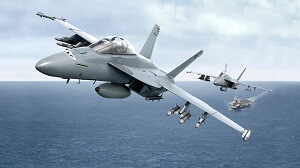 As we said above, it won’t be cheap to own and operate an F-18. Among the most common repeated expenses are those related to fuel, training of the staff, and maintenance.
- Fuel Costs – When it comes to costs related to fuel, you should know that the F-18 is quite the gas-consumer, so don’t be surprised if the fuel expenses add up to big numbers. The exact cost will usually depend on the type of fuel, its price, as well as the amount you use. Experts say that usually, an F-18 will consume close to $1,000 per hour of flight.
- Maintenance Costs – Not only the F-18 but most fighter planes require extensive and regular maintenance to ensure a smooth running. Part replacement, scheduled maintenance, and unscheduled maintenance are among the most important expenses in this category.
- Scheduled Maintenance – An experienced plane owner knows that scheduled maintenance is a must when it comes to fighter planes like the F-18, especially when they are extensively used. During such scheduled maintenance, things like lubrication and system ispections are done, along with any needed minor adjustments. Expect to pay between $700 and $5,000+ on this, depending on the complexity of the job and the expert you employ.
- Unscheduled Maintenance – It happens that from time to time, the F-18 will need maintenance due to unexpected situations. This service is called an unscheduled maintenance and can easily reach costs of $7,000 depending on the issue needing to be taken care of. Unscheduled maintenance can mean anything from simple system updates, to engine overhauls or even repairs to damaged parts.
- Parts Replacement Costs – The cost of replacing parts on your F-18 will range from around $500 to several thousands, depending on what needs to be replaced. The most common parts that are considered consumable and will need to be replaced periodically are oil, spark plugs, and filters.
- Training Costs – There’s no point in keeping an F-18 up to date with its maintenance and full of fuel if you don’t have a trained pilot to fly it. Getting the necessary training to become a pilot will also cost a few thousand dollars for basic training. This expense will increase when it comes to advanced training.
Ways to Save on F-18 Costs
There are a few things you could try to reduce the cost of an F-18, although the market is on the side of the seller when it comes to fighter planes, very few models available for sale. The first thing you should consider is getting a used aircraft, although you should make sure its repair won’t make it more expensive than getting a new one.
You can also try negotiating a better deal with the seller, as most of them will have some wiggle room.
Alternatively, if the F-18 model isn’t a must, you could go for an older type of fighter jet instead.

Leave a Reply
Want to join the discussion?Feel free to contribute!