
How Much Do Permanent Fangs Cost?
Last Updated on February 28, 2024
Written by CPA Alec Pow | Content Reviewed by  CFA Alexander Popinker
Getting permanent vampire fangs installed is an aesthetic dental procedure that allows you to customize your smile and get the vampire look you want. But custom cosmetic dentistry doesn’t come cheap.
If you’re considering permanent fang implants or other tooth modifications, it’s important to understand the cost factors so you can plan and budget accordingly.
In this article, we’ll break down the price range for different types of permanent fang procedures and materials. We’ll look at financing options like dental insurance and payment plans.
And we’ll explore what impacts the variation in costs for custom vampire teeth, from the types of dental materials used to your location. Read on for a detailed overview of the expenses involved in getting custom fangs made and implanted permanently in your mouth.
How Much Do Permanent Fangs Cost?
The costs of permanent dental fangs vary between $500 and $6,000 or more per tooth, based on the specific procedures, materials, and techniques used. Here are some of the pricing factors to consider:
- Dental veneers to create custom fangs range from $800 – $2,500 per tooth. Porcelain and ceramic veneers tend to be more expensive.
- Tooth implants for permanent fang replacement or reshaping are $1,500 – $6,000 per tooth. The surgical component raises costs.
- Dental crowns to cap fangs or teeth cost $500 – $3,000 per tooth on average. Gold crowns are more expensive than porcelain.
- Most major dental insurance plans only cover a portion of cosmetic procedures like fangs. Expect to pay a co-pay of 50% or more.
- Many cosmetic dentists offer payment plans or financing to break up fang costs over 12 months or longer. This helps ease the financial impact.
- Based on your location, costs may be 20% higher in major metro areas versus smaller cities. Shop around for the best pricing.
If you’re looking for something less expensive, then Feel the Bite offers custom fangs services in New Orleans, Louisiana for $40 per set. Appointments take about 30 minutes per set to make and fit.
Common Procedures for Fang Creation
There are a few common cosmetic dental procedures used to create custom permanent fangs:
Dental Veneers
Veneers are thin porcelain or ceramic covers bonded permanently to existing teeth to reshape them. This allows sculpting fangs while preserving the underlying tooth.
Cost per veneer: $900 – $2,300
Dental Implants
Implants surgically insert a titanium screw fang into the gums and jawbone as a replacement or addition to your existing teeth. The visible tooth portion is attached after healing.
Cost per implant: $1,800 – $5,000
Dental Crowns
Crowns are hollow caps placed over an entire tooth. Often made of porcelain fused to metal, crowns fully encapsulate the tooth behind them.
Cost per crown: $800 – $3,000
Tooth Reshaping
Enameloplasty carefully contours and sculpts the enamel of existing teeth using dental drills or lasers. Filing, bonding, or capping can refine the shape.
Cost per tooth: $300 – $1,500
Dental Bonding
Bonding applies tooth-colored resin directly to a tooth’s surface to change its shape or hide flaws. The material is hardened with light and carefully formed.
Cost per tooth: $100 – $600
Dental Materials and Techniques for Fangs
The materials and methods used by your cosmetic dentist also impact the final cost:
- Porcelain veneers are the most realistic-looking option to create custom fangs but also the most expensive material. The dental laboratory craftsmanship drives up costs.
- Ceramic materials like e.max or zirconia are more durable and stain-resistant than porcelain for veneers and crowns. But ceramic is still costlier than other materials.
- Enameloplasty is an affordable way to reshape teeth through controlled filing and contouring of the natural enamel. It avoids more expensive bonding or capping options.
- Dental bonding utilizes composite resins to build up, sculpt, and harden with curing light. The artistry of shaping fangs or teeth will impact cost.
- CAD/CAM technology allows precision 3D modeling and milling of veneers, crowns, and bridges in dental labs. But the digital dentistry costs are higher.
What Impacts the Cost of Permanent Fangs?
These main factors influence the total investment for custom vampire teeth procedures:
- Type of dental professional – Cosmetic dentists or specialists charge more than general dentists.
- Materials used – Gold, porcelain, ceramic, zirconia – higher quality means higher pricing.
- Amount of custom craftsmanship and design sophistication. More dental artistry costs more.
- Whether you get a full smile makeover with multiple fangs/teeth done together vs. just one.
- Your location – Major cities with higher costs of living will charge more.
- Whether your regular dental insurance plan will cover a portion of the procedures. Most only cover basics.
- If payment plans or financing is available through your cosmetic dentist to budget the costs over time.
Professional Cosmetic Dental Services
Seeking an experienced cosmetic dentist is advisable for permanent fang creation:
- Dental specialists in prosthodontics can customize restorations and implants to perfection. More expertise means more cost.
- Accredited cosmetic dentists have advanced training and artistry skills for smile makeover services like fangs.
- The dental laboratory used also impacts results. Quality labs do exceptional ceramic and porcelain work but charge more.
- Digital dentistry services utilizing CAD/CAM and 3D printing produce precision-fit veneers, crowns, and bridges – technology has a higher cost.
- Aesthetic dental product companies like DenMat offer beautiful lifelike dental materials to choose from. The price tag goes up with luxury materials.
Also read about Tooth extraction, Dental implants, and teeth whitening.
Patient Experiences and Satisfaction
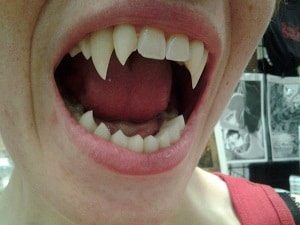 Looking at patient case studies and reviews provides insights into experiences with fang creation:
- A patient opted for ceramic veneers to transform his canine teeth into permanent fangs. He paid around $2,000 per fang but was “thrilled with the realistic look.”
- One patient said her zirconia dental implants to support custom fang crowns were “absolutely worth the $4,500 price tag.” She appreciates the stain resistance and durability.
- A patient who chose enameloplasty for reshaping and minimal bonding paid only $600 per fang tooth. He was pleased with the affordability of directly altering his natural teeth structure.
- One warning from a patient who cheaped out – her $300 dental acrylic fangs ended up “looking horribly fake.” She had to replace them with $1,200 ceramic crowns to get the right aesthetic.
Planning Your Budget for Fangs
Based on the price range for custom permanent fangs, you can expect to invest anywhere from $500 for acrylic up to $10,000 or more for a full-mouth restoration.
For quality materials like ceramic or zirconia, plan on budgeting $2,000 to $4,000 per fang tooth. Get cost estimates upfront before undergoing any irreversible procedures. And consider financing options through reputable cosmetic dentists to make fangs more affordable.
For the best results, focus on choosing an experienced cosmetic dentistry professional with a proven artist’s eye and quality dental laboratory partners.
Be open about your desired look and budget. And don’t compromise on quality just to save money or you may be disappointed with the results. With proper planning and care, you can achieve your dream smile full of natural-looking permanent fangs designed just for you.
Frequently Asked Questions
Can I get permanent fangs?
Yes, with cosmetic dental procedures like veneers, crowns, and implants, you can absolutely get semi-permanent or permanent fangs installed professionally and safely by a dentist.
They can customize fangs from high-quality materials like porcelain and ceramic to precisely match your preferences and dental anatomy.
How much do real vampire fangs cost?
For custom ceramic or porcelain permanent dental fangs created and installed by a cosmetic dentist, expect pricing from $800 to $6,000 per fang tooth depending on materials, procedure type, specialization of your dentist, and your location.
With higher-end materials and extensive dental remodeling, costs for a full set of fangs could exceed $10,000.
Can you ask the dentist to give you fangs?
If you’re interested in getting fangs, have a consultation with a quality cosmetic dentist and they can advise on options. An experienced dentist can shape dental veneers, crowns, or implants to create natural-looking, custom fangs.
Done right, permanent fang creation is safe, reversible, and allows you to achieve the unique smile you want. Just be prepared for the procedures to be pricey compared to standard dental work given the custom craftsmanship involved.
Leave a Reply
Want to join the discussion?Feel free to contribute!