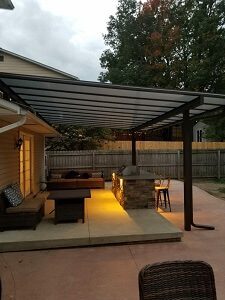
How Much Do Bright Covers Cost?
Updated on | Written by Alec Pow
This article was researched using 9 sources. See our methodology and corrections policy.
A professionally installed BrightCovers patio or deck cover will likely cost about $10,000 to $25,000+ for many residential projects. A smaller, straightforward attached cover may fall near the lower end, while a large freestanding structure, elevated deck cover, commercial canopy, or project engineered for heavy snow and wind can cost $30,000 to $50,000+.
BrightCovers does not publish a standard price list or fixed cost per square foot. Every system is designed around the size, attachment method, structural requirements, local climate, foundation, drainage, permits, and selected features. The company provides project-specific estimates through its free quote process.
A cautious early planning allowance is approximately $50 to $110+ per square foot installed. This is a ThePricer estimate based on current permanent patio-roof costs and the custom nature of the BrightCovers system, not an official manufacturer rate.
Article Highlights
Jump to sections
- Many residential BrightCovers projects may cost $10,000 to $25,000+ (at $30 per hour, earning that amount would take about 1.9 to 4.8 months of full-time work, before taxes).
- Large or structurally difficult installations can exceed $30,000.
- BrightCovers publishes quote-only pricing rather than a standard rate sheet.
- The system combines translucent polycarbonate roof panels with structural aluminum framing.
- Size, attachment, posts, foundations, engineering, drainage, and permits affect the price.
- Lighting and fan preparation may add $800 to $3,000+.
- The manufacturer advertises separate warranties for rust, panels, materials, and installation.
- Homeowners should review deposits, cancellation terms, financing, and warranty exclusions before signing.

How Much Do BrightCovers Cost?
| Example project | Area | Planning estimate |
|---|---|---|
| 10-by-12 attached cover | 120 square feet | $8,000 to $15,000+ (about 6.7 to 12.5 full-time workweeks at $30 per hour) |
| 12-by-16 attached cover | 192 square feet | $10,000 to $21,000+ |
| 12-by-20 deck or patio cover | 240 square feet | $12,000 to $27,000+ |
| 16-by-20 custom cover | 320 square feet | $16,000 to $35,000+ |
| 20-by-20 freestanding cover | 400 square feet | $20,000 to $45,000+ |
| Commercial or complex structure | Varies | $30,000 to $75,000+ |
These ranges are not published BrightCovers prices. They are budget estimates based on the cost of custom permanent patio roofs and comparable aluminum or polycarbonate structures.
Current national patio-cover data from Angi places many professionally installed covers around $20 to $50 per square foot, with a typical project near $8,500. BrightCovers may cost more than a basic cover because it is a custom structural system rather than a simple retail kit.
HomeGuide currently estimates basic patio roofs at $20 to $50 per square foot, while custom gable roof extensions can cost $70 to $155 per square foot. BrightCovers can fall between these categories depending on engineering, access, design, and location.
What BrightCovers Are Made From

BrightCovers is not a collection of separate vinyl, polycarbonate, and aluminum product tiers. The system uses light-transmitting polycarbonate roof panels supported by structural aluminum framing.
The manufacturer describes its products as translucent patio, deck, awning, and commercial canopy systems that allow filtered natural light into the covered area. Its official BrightCovers solutions page identifies structural aluminum framing and polycarbonate panels as the principal components.
This means the project price cannot be calculated by looking only at the retail cost of polycarbonate sheets. The completed system also includes beams, posts, attachment hardware, drainage, structural design, fabrication, delivery, foundations, and installation.
Why There Is No Fixed Price
Two covers with the same square footage can receive very different quotes. One may attach easily to a one-story home over an existing concrete patio. Another may require posts through a deck, new concrete footings, engineering for snow loads, difficult second-story access, and custom drainage.
The quote may be affected by:
- Total roof area
- Projection from the house
- Number and spacing of posts
- Attached or freestanding design
- Roof height and slope
- House or deck attachment conditions
- Wind and snow design loads
- Concrete footings
- Site access
- Drainage and downspouts
- Permits and engineering
- Electrical work
- Commercial versus residential use
The manufacturer asks prospective buyers to submit project information and schedule a design consultation rather than selecting a package from a published catalog with fixed pricing.
ThePricer 12-by-20 Example
Consider a 12-by-20 attached BrightCovers system spanning 240 square feet:
- Custom aluminum and panel system: $13,500 (about 11.3 full-time workweeks at $30 per hour)
- Installation labor: $4,800
- Structural drawings and permit: $1,200
- Two upgraded footings: $1,400
- Gutter and downspout work: $650
- Electrical preparation for lights: $1,100
The completed project costs $22,650, equal to about $94.38 per square foot.
The roof system itself represents approximately 59.6% of the total. Installation, engineering, foundations, drainage, and electrical work add another $9,150.
This example demonstrates why material-only patio-cover prices cannot be used as a BrightCovers installation quote.
Small Cover Cost
A basic 10-by-12 cover has 120 square feet of roof area. Applying a broad planning range of $65 to $125 per square foot produces a cost of approximately $7,800 to $15,000.
The project may remain near the lower end when it has:
- Simple rectangular dimensions
- Easy ground-level access
- An existing concrete patio
- A straightforward house attachment
- Few posts
- No electrical features
- Minimal permit requirements
A small cover can still be expensive per square foot because design, delivery, mobilization, permits, and installation carry minimum charges regardless of size.
Large Cover Cost
A 20-by-20 cover spans 400 square feet. At approximately $50 to $110 per square foot, the planning total is $20,000 to $44,000.
HomeGuide places a 20-by-20 covered patio in a similarly wide range because material, roof style, support structure, and site work differ substantially.
A large BrightCovers system may require additional beams, columns, footings, drainage capacity, structural engineering, lift equipment, and installation labor. Commercial occupancy or public use can introduce stricter code requirements.
Attached vs Freestanding Cost
An attached cover connects to the home or another existing structure. It may require a ledger, wall connection, roof connection, flashing, or custom brackets.
Attachment can reduce the number of support posts, but the installer must confirm that the existing structure can safely carry the additional loads. Brick veneer, cantilevered roofs, unusual fascia conditions, and older framing can complicate the work.
A freestanding structure avoids attaching to the house but generally requires more posts and independent foundations. Additional columns and footings can raise the cost by several thousand dollars.
Freestanding designs may also need more guttering, downspouts, electrical trenching, and finished surfaces on all sides.
Deck Installation Costs
Installing a BrightCovers system over a raised deck can cost more than covering a ground-level concrete patio.
The existing deck must be evaluated to determine whether it can support the roof’s columns and structural loads. Posts may need to extend through the deck to new foundations below rather than resting on ordinary deck boards.
Possible extra costs include:
- Deck framing inspection
- Structural engineering
- New beams or blocking
- Post penetrations
- Concrete footings below the deck
- Removal and replacement of decking
- Second-story access equipment
A difficult elevated installation can add $3,000 to $10,000+ compared with an otherwise similar ground-level project.
Footings and Foundations
Posts need properly designed support. They generally cannot be placed on thin patio slabs, pavers, or deck surfaces without confirming the structure beneath them.
New concrete footings may cost approximately $500 to $1,500+ each, depending on excavation, depth, diameter, reinforcement, frost requirements, soil conditions, and access.
Cutting through an existing concrete patio and restoring the surrounding surface creates an additional charge. Rocky soil, buried utilities, difficult equipment access, and deep frost lines increase the cost.
Permits and Engineering
A permanent patio roof may require zoning review, a building permit, structural drawings, inspections, and approval from a homeowners association.
Permit and engineering expenses may range from $500 to $3,000+. Large commercial projects or sites with unusual wind, snow, seismic, or foundation conditions may cost more.
The manufacturer states that BrightCovers systems are engineered as structural outdoor covers. Local authorities still determine whether a particular project complies with zoning, setbacks, lot coverage, drainage, and building codes.
Ask whether the contractor’s quote includes drawings, permit submission, correction responses, fees, and inspection coordination.
Wind, Snow, and Climate
A cover installed in a mild climate may require less structural capacity than one located in a heavy-snow or hurricane-prone region.
Climate-related design considerations include:
- Ground snow load
- Wind speed and exposure
- Coastal corrosion conditions
- Freeze and frost depth
- Rainfall intensity
- Hail exposure
- Drifting snow
BrightCovers promotes the system for protection from sun, rain, wind, hail, and snow on its official company website. That does not mean one standard design is automatically appropriate for every location. The project must be engineered for local conditions.
Drainage Costs
A permanent roof collects rainwater that must be discharged safely. The design may include gutters, downspouts, splash blocks, underground drains, or connection to an existing stormwater system.
Basic integrated drainage may be part of the cover quote. Longer downspout runs, underground piping, dry wells, or landscape restoration can add $500 to $5,000+.
Poor drainage can send water toward the foundation, neighboring property, walkways, or the deck below. Confirm the discharge location before approving the design.
Lighting and Electrical Work
Lighting is not a simple material add-on when the cover is outdoors. Fixtures, wiring, boxes, switches, controls, and connections must be rated and installed for the location.
Typical electrical additions may cost:
- Basic wiring for two lights: $800 to $1,500
- Several recessed or surface fixtures: $1,500 to $3,000+
- Ceiling-fan preparation: $500 to $1,200 per location
- Heaters or dedicated circuits: $1,000 to $4,000+
The actual charge depends on panel capacity, circuit distance, fixture selection, trenching, permits, and whether an electrician can access the cover framing before installation is completed.
Warranty Coverage
BrightCovers advertises several separate warranty terms rather than one unlimited lifetime warranty covering the entire project.
The company currently states that Translucent LLC provides:
- A lifetime warranty against rust
- A 90-day warranty against defects in materials and installation when installed by Translucent LLC
- A separate 15-year warranty on polycarbonate panels
These terms are described on the manufacturer’s BrightCovers warranty and product page.
Ask for the complete written warranty before signing. Confirm what is covered, who provides the labor, whether travel charges apply, which installers qualify, and what conditions can void coverage.
A warranty against rust is not the same as a warranty against leaks, impact damage, fading, panel movement, storm damage, or installation defects.
Maintenance and Cleaning
BrightCovers markets the system as a low-maintenance or maintenance-free outdoor cover. There is no published requirement for a professional annual tune-up costing $200 to $400.
Owners may still need to:
- Clear leaves from gutters
- Inspect downspouts
- Wash dirt from panels
- Check for storm damage
- Trim nearby branches
- Inspect sealants and attachments
Basic homeowner cleaning may cost little beyond supplies. Professional washing or high-access cleaning may cost $200 to $600+, depending on size and access.
Use cleaning products and methods approved for the polycarbonate panels. Abrasive tools or incompatible chemicals may damage the surface or affect warranty coverage.
BrightCovers vs Retail Kits
Retail aluminum and polycarbonate patio-cover kits can cost much less than a custom installed BrightCovers system.
Home Depot currently lists polycarbonate-roof patio kits from less than $1,000 to more than $6,000 before installation, foundations, permits, electrical work, and site modifications on its polycarbonate patio-cover page.
A retail kit is not an equal price comparison when the BrightCovers proposal includes custom measurements, engineered framing, special connections, fabrication, drainage, delivery, foundations, and professional installation.
Kit systems can offer good value for suitable straightforward projects, but they may provide fewer custom dimensions and design options.
BrightCovers vs Insulated Roofs
Insulated aluminum patio covers commonly cost around $30 to $60 per square foot installed, according to current covered-patio pricing data.
An insulated solid roof can provide deeper shade and limit heat transfer, while a translucent BrightCovers system is designed to preserve natural light beneath the structure.
The better choice depends on whether the homeowner values filtered daylight, complete shade, appearance, ceiling finishes, electrical integration, or compatibility with a future enclosure.
Deposits and Financing
Custom construction projects commonly require a deposit followed by progress or completion payments. The payment schedule should be written into the contract.
Before paying, confirm:
- Deposit amount
- Refund and cancellation rules
- Estimated design and installation dates
- Permit responsibility
- Conditions that can change the price
- Financing interest rate
- Loan term and total repayment
- Responsibility for hidden site conditions
Do not evaluate financing only by the monthly payment. A $20,000 project financed for ten years at 9% costs approximately $253 per month and nearly $30,400 in total payments.
The financing would add about $10,400, increasing the effective project cost by approximately 52%.
Contract Protections
The contract should identify the roof dimensions, panel type, frame finish, post locations, attachment method, drainage, foundations, electrical scope, permits, warranty, payment schedule, and cleanup.
Ask what happens if the permit authority requires deeper footings, additional framing, or revised engineering. Confirm whether change orders require the homeowner’s written approval.
Review cancellation rights before signing. Complaints published through the Better Business Bureau include disputes involving deposits and cancellation expectations. Individual complaints do not establish a companywide practice, but they show why buyers should understand the exact contract and cancellation terms.
Keep copies of estimates, design drawings, financing documents, communications, permits, warranties, and payment receipts.
How to Compare Quotes
Compare at least two or three quotes with the same project scope. A lower price may exclude permits, electrical work, footings, gutters, or finish details included by another contractor.
Each proposal should identify:
- Total roof dimensions
- Attached or freestanding construction
- Number of posts
- Footing size and quantity
- Structural engineering
- Permit fees
- Gutters and drainage
- Electrical preparation
- Installation labor
- Warranty terms
- Taxes and financing charges
Do not compare a custom installed system with a material-only kit price unless installation, engineering, site work, and all additional components are added.
How to Control the Cost
Keep the dimensions rectangular and avoid unnecessary offsets or unusual roof shapes. Standardized geometry can reduce fabrication and installation difficulty.
Cover the most frequently used area rather than the entire deck. A 12-by-16 structure costs significantly less than a 20-by-20 cover while still protecting a dining or seating area.
Plan electrical work before installation so wiring does not require later panel removal or exposed conduit. Ask whether future fan or heater preparation can be installed economically during construction.
Confirm zoning, setbacks, HOA rules, and permit requirements before final design. Redesigning a structure after engineering has started can create extra costs.
Homeowners expanding a larger outdoor project can compare BrightCovers with the cost of accordion-style patio doors or a complete pool house.
What We Verified
- Confirmed that BrightCovers uses quote-only pricing.
- Verified the aluminum frame and translucent polycarbonate panel system.
- Removed the unsupported vinyl and aluminum product tiers.
- Compared current permanent patio-cover costs.
- Reviewed the manufacturer’s published warranty categories.
- Removed the invented annual maintenance requirement.
- Removed fabricated expert and customer quotations.
- Added engineering, permit, drainage, foundation, financing, and contract costs.
Answers to Common Questions
How much does a BrightCovers patio cover cost?
A reasonable early budget is approximately $10,000 to $25,000+ for many residential projects. Large or difficult installations can exceed $30,000 to $50,000.
Does BrightCovers publish a price per square foot?
No. The manufacturer provides custom quotes. A cautious planning estimate is approximately $50 to $110+ per square foot installed, but this is not an official BrightCovers rate.
What materials are used?
BrightCovers systems use translucent polycarbonate roof panels supported by structural aluminum framing.
How much would a 12-by-20 cover cost?
A 240-square-foot project may cost approximately $12,000 to $27,000+, depending on attachment, posts, foundations, climate, permits, and electrical work.
Are permits included?
They may or may not be. Ask whether the quote includes structural drawings, permit fees, application work, revisions, and inspections.
Do BrightCovers require annual professional maintenance?
The manufacturer markets the system as low maintenance. Routine cleaning and drainage inspection may still be needed, but no standard annual professional service requirement is published.
What warranty does BrightCovers offer?
The manufacturer advertises a lifetime warranty against rust, a 90-day materials and installation warranty for qualifying installations, and a separate 15-year polycarbonate-panel warranty. Review the full written terms and exclusions.
Can lighting be installed?
Yes, subject to the cover design and electrical plan. Basic lighting work may add $800 to $3,000+, while fans, heaters, or new circuits can cost more.
Disclosure: Educational content, not financial advice. Prices reflect public information as of the dates cited and can change. Confirm current rates, fees, taxes, and terms with official sources before purchasing. See our methodology and corrections policy.