ThePricer Media
  • Latest: When Is an Electric Car Actually Cheaper?
  • Cost Guides
  • News & Investigations
  • Daily Price Puzzle (60s)
  • Methodology
  • Press & Mentions
  • Contact
  • Click to open the search input field Click to open the search input field Search
  • Menu Menu
Appliances, Home and Garden

How Much Does a Central Air Compressor Cost?

Updated on July 31, 2026 | Written by Alec Pow
This article was researched using 9 sources. See our methodology and corrections policy.

Replacing a central air-conditioning compressor typically costs $1,500 to $3,500 when the homeowner pays for the compressor, labor, refrigerant, and related materials. A relatively straightforward job may cost closer to $1,200 to $2,000, while a large, variable-capacity, difficult-to-access, or contaminated system can cost $3,500 to $5,000+.

If the compressor is covered by a manufacturer’s parts warranty, the homeowner may still pay approximately $900 to $2,200 for diagnosis, labor, refrigerant, shipping, a filter-drier, nitrogen, brazing materials, evacuation, and warranty processing. A parts warranty does not automatically make the repair free.

A compressor replacement should not be confused with replacing the complete outdoor condenser or installing an entirely new central AC system. A new outdoor condenser commonly costs $3,000 to $7,500+, while a complete matched central air-conditioning system generally costs $5,500 to $12,000+. Larger homes, difficult installations, electrical work, premium equipment, and new ductwork can push a full replacement beyond that range.

Article Highlights

Jump to sections
  • Central Air Compressor Cost Breakdown
  • Compressor, Condenser, or Full System?
  • Diagnosis and Warranty Coverage
  • Labor, Refrigerant, and Burnout Cleanup
  • SEER2 and Matched Equipment
  • R-22, R-410A, and Newer Refrigerants
  • When Repair Makes Financial Sense
★ Prefer ThePricer on Google
  • Most compressor replacements cost $1,500 to $3,500 (at $30 per hour, earning that amount would take about 1.3 to 2.9 full-time workweeks, before taxes).
  • A warranty compressor repair may still cost $900 to $2,200.
  • Large or variable-capacity compressors can cost $3,500 to $5,000+.
  • A complete outdoor condenser costs approximately $3,000 to $7,500+.
  • A full central AC replacement commonly costs $5,500 to $12,000+.
  • Compressor replacement normally does not require new ductwork.
Air Conditioner Compressor Replacement Cost

Central Air Compressor Cost Breakdown

The completed repair price depends on more than the compressor itself. The contractor must identify the failure, safely recover the refrigerant, remove the damaged component, braze the replacement into the sealed circuit, pressure-test the system, evacuate moisture and air, recharge it, and confirm correct operation. Internal contamination or an obsolete refrigerant can add substantial time and material costs.

Project or expense Typical cost What the price may cover
Diagnostic service call $100 to $250 (about 0.4 to 1 full-time workdays at $30 per hour) Testing electrical and refrigerant-system operation
Warranty compressor replacement $900 to $2,200 Labor, refrigerant, materials, processing
Out-of-warranty compressor replacement $1,500 to $3,500 Compressor, labor, refrigerant, commissioning
Large or variable-capacity compressor $2,500 to $5,000+ Expensive part, controls, added labor
Complete outdoor condenser $3,000 to $7,500+ Outdoor unit, installation, refrigerant work
Complete matched AC system $5,500 to $12,000+ Condenser, indoor coil, installation, controls
New or major ductwork $2,000 to $8,000+ Separate full-system project when required

Current consumer cost research supports a broad compressor-replacement range rather than one fixed national average. HomeGuide reports approximately $600 to $1,200 when the compressor is under warranty and around $1,800 to $2,800 when it is not. Angi and This Old House also show that equipment size, compressor design, refrigerant, labor, and warranty status can move the bill well beyond a simple average.

Related guides

  • How Much Does it Cost to Build a House?
  • How Much Does Crushed Concrete Cost?
  • How Much Does it Cost to Build a Guest House?

Compressor, Condenser, or Full System?

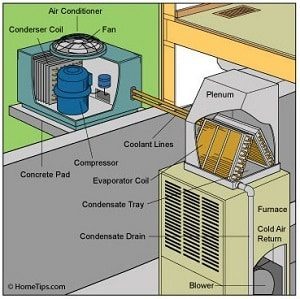
The compressor is the sealed mechanical component that circulates refrigerant between the indoor and outdoor coils. It sits inside the outdoor condensing unit alongside the condenser coil, fan, contactor, capacitor, controls, and other parts. Replacing the compressor means opening the existing condenser and changing that one major component.

Replacing the condenser means installing the complete outdoor unit. That can provide new controls, coil, fan, cabinet, and compressor, but the contractor must confirm that it is compatible with the indoor evaporator coil and refrigerant-metering device. Replacing the full split system normally includes both the outdoor unit and indoor coil, with additional changes where necessary.

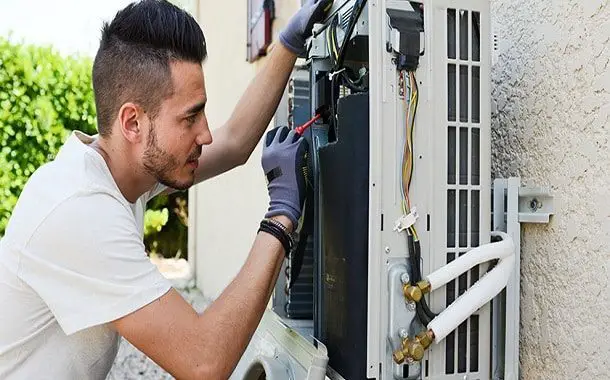
Technician replacing outdoor central air-conditioning equipment

This distinction removes one of the largest errors in the old article. A compressor swap does not normally involve new air ducts, drywall repair, zoning installation, or a complete central-air installation charge. Those costs belong to a broader replacement project. Existing duct problems can still affect compressor life because restricted airflow or poor system performance may increase stress, but the ducts are not routinely replaced simply because the compressor failed.

A homeowner comparing options should therefore request three separate numbers when appropriate: the price to replace only the compressor, the price to replace the complete condenser with compatible equipment, and the price for a complete matched system. Comparing clearly defined scopes prevents a low repair quote from being measured against a replacement estimate containing unrelated work.

Diagnosis and Warranty Coverage

A non-running outdoor unit does not automatically have a failed compressor. A defective capacitor, contactor, thermostat, control board, loose electrical connection, fan motor, pressure switch, or low-voltage problem can create similar symptoms and cost much less to repair. The technician should provide test results that support the compressor diagnosis rather than relying only on the fact that the unit will not start.

Useful diagnostic findings may include winding-resistance readings, insulation testing, locked-rotor current, operating amperage, refrigerant pressures, oil condition, temperature measurements, and confirmation that the starting components are functioning. A second opinion can be worthwhile before authorizing one of the most expensive AC repairs.

Warranty status should be checked using the outdoor unit’s model and serial numbers. Lennox, for example, describes compressor coverage that can extend to 10 years on eligible registered equipment. Coverage differs by manufacturer, model, registration, installation date, ownership, and maintenance requirements.

A manufacturer’s warranty commonly covers the replacement part rather than every cost associated with installing it. Carrier explains that labor and refrigerant may not be included under its limited parts warranty. The homeowner may still pay for recovery, replacement refrigerant, labor hours, shipping, nitrogen, filter-driers, welding supplies, and administrative processing.

Labor, Refrigerant, and Burnout Cleanup

A compressor replacement is labor-intensive because it opens the sealed refrigerant circuit. The technician must recover the existing refrigerant, disconnect electrical components, remove the failed compressor, install the correct replacement, braze the tubing, change the filter-drier, pressure-test with nitrogen, evacuate the system, and recharge it according to manufacturer specifications.

Labor and related materials commonly account for $700 to $2,000+ (about 0.6 to 1.7 full-time workweeks at $30 per hour) of the bill, even when the manufacturer supplies the compressor. Difficult access, high-capacity equipment, multiple refrigerant circuits, variable-speed electronics, emergency service, or a large refrigerant charge can raise the amount.

A severe electrical burnout creates another problem. The compressor motor can release acid, burned oil, moisture, and debris into the circuit. The contractor may recommend acid testing, additional filter-driers, line flushing, oil management, or replacement of contaminated components. A replacement compressor installed into a dirty circuit may fail again.

The quote should identify how much refrigerant will be required and whether recovered refrigerant can be reused. Homeowners can compare this expense with ThePricer’s guide to AC refrigerant recharge costs. A refrigerant charge is not routine maintenance. A system that has lost refrigerant has a leak or has been opened for repair, and simply adding more without addressing the cause can waste money.

SEER2 and Matched Equipment

A compressor does not have a standalone SEER or SEER2 rating in the way the old article suggested. SEER2 measures the seasonal cooling efficiency of a tested equipment combination, including the outdoor unit, indoor coil, and associated components. Installing a compatible replacement compressor normally restores the existing system’s intended operation rather than upgrading it into a new high-efficiency system.

The Air-Conditioning, Heating, and Refrigeration Institute advises homeowners to request an AHRI Reference Number or Certificate of Certified Product Performance when replacing complete indoor or outdoor equipment. That certificate identifies a tested matched combination and its certified efficiency ratings.

An unmatched condenser and evaporator coil may cool the house, but the combination may not deliver the claimed capacity, efficiency, humidity removal, reliability, or warranty protection. This matters when a contractor proposes replacing the complete outdoor unit instead of only the compressor.

The promise that a “16 SEER compressor” will automatically reduce electricity bills by 20% to 40% should therefore be removed. Significant efficiency improvements usually require a properly selected matched system, suitable ductwork, correct refrigerant charge, adequate airflow, and professional commissioning. A compressor-only repair does not reset the age or efficiency of the indoor coil, blower, ducts, or controls.

R-22, R-410A, and Newer Refrigerants

Refrigerant type can change whether a compressor repair makes financial sense. Older central AC systems may use R-22, many established systems use R-410A, and newer equipment is moving toward lower-global-warming-potential refrigerants such as R-32 and R-454B.

The U.S. Environmental Protection Agency states that homeowners are not required to replace an existing R-22 system solely because of the phaseout. Existing equipment can continue to be repaired, including replacement of failed components. New production and import of R-22 ended, however, so servicing depends on recovered, recycled, reclaimed, or previously produced supplies.

That can make a major compressor repair on an aging R-22 system less attractive. The repair may require expensive refrigerant while leaving the homeowner with an old evaporator coil, blower, controls, and condenser cabinet. The availability of compatible parts also becomes less predictable.

An existing R-410A system can still be repaired. The move toward newer refrigerants does not force immediate replacement of functioning equipment. Contractors must nevertheless use the exact refrigerant and components approved for the system. EPA warns against using unapproved flammable substitutes such as products marketed as R-22a in equipment that was not designed for them.

When Repair Makes Financial Sense

Compressor replacement can make sense when the system is relatively young, properly sized, otherwise reliable, and still uses a readily serviceable refrigerant. Warranty coverage strengthens the repair case because it can remove one of the largest part costs.

Consider a nine-year-old system with a covered compressor. Labor, refrigerant, a filter-drier, materials, and processing total $1,650. A complete matched replacement is quoted at $8,500. The repair represents:

$1,650 ÷ $8,500 × 100 = 19.4%.

Paying 19.4% of replacement cost may be reasonable when the evaporator coil is sound, the existing system has not required repeated repairs, the contractor finds no severe contamination, and the homeowner expects to remain in the house long enough to benefit from the lower immediate expense.

The system’s age should not be the only deciding factor. A 10-year-old premium system with a valid compressor warranty and a healthy indoor coil may deserve repair. A six-year-old system with chronic refrigerant leaks, installation defects, and several major failures may not.

Homeowners should compare the immediate repair with the cost of a complete central air-conditioning replacement rather than automatically accepting either the cheapest or most expensive proposal. Written quotes should use the same system size, efficiency tier, warranty, and scope before costs are compared.

When Complete Replacement Is Stronger

Complete replacement becomes more attractive when the system is near the end of its expected service life, uses R-22, has a leaking or deteriorated indoor coil, has suffered repeated repairs, or requires a compressor job approaching half the cost of a new matched system.

Consider a 15-year-old R-22 system needing a $3,200 compressor replacement. The evaporator coil is also corroded, and a new matched system costs $7,500. The compressor repair equals:

$3,200 ÷ $7,500 × 100 = 42.7%.

The homeowner would spend nearly 43% of replacement cost while retaining an old indoor coil, blower, controls, and duct system. The repaired equipment would still have its original efficiency and could require another large repair soon. In that situation, replacement is generally the stronger long-term value.

A condenser-only replacement can fall between these options, but the contractor must prove compatibility with the indoor coil and metering device. An AHRI-certified match is preferable. If the indoor coil must also be replaced, the project is effectively becoming a matched-system replacement.

Replacing the system does not always mean replacing the ducts. Existing ducts should be inspected for size, leakage, insulation, damage, and airflow. Work such as HVAC duct replacement should appear as a separate quote item only when inspection shows it is needed.

Tax Credits, Rebates, and Financing

A compressor-only repair generally does not qualify for the same federal incentive that may apply to new qualified central air-conditioning equipment. The repair restores an existing system rather than placing a new qualifying energy property into service.

The Internal Revenue Service states that eligible central air conditioners may qualify for the Energy Efficient Home Improvement Credit. Current IRS examples calculate the credit as 30% of qualified cost, subject to a $600 limit for qualifying central air-conditioning equipment. Eligibility depends on the equipment, efficiency tier, manufacturer requirements, taxpayer, residence, installation year, and available documentation.

Homeowners should not subtract an expected credit from a quote until the contractor identifies the qualifying model and provides the required manufacturer information. Tax rules can change, and a general advertisement saying “tax-credit eligible” is not enough. The credit also reduces federal income-tax liability according to IRS rules rather than operating as an immediate checkout discount.

Utility rebates are local and may require preapproval, a participating contractor, an AHRI certificate, proof of removal, or a specific efficiency rating. Homeowners should search the local utility’s current program before signing the contract.

Financing can make a large replacement manageable, but the monthly payment should not hide the total cost. Compare annual percentage rate, dealer fees, promotional-period expiration, prepayment terms, and total payments. A financed $9,000 replacement can cost substantially more than $9,000 after interest.

Three Homeowner Scenarios

Warranty repair: The compressor part is covered. The contractor charges $1,200 for labor, $500 for refrigerant and materials, $150 for diagnosis, and $100 for shipping and warranty processing. The homeowner pays $1,950.

Out-of-warranty repair: A standard compressor costs $1,250, labor and commissioning cost $1,100, refrigerant and materials cost $550, and diagnosis costs $150. The total is $3,050. If a matched replacement system costs $8,000, the repair represents approximately 38.1% of replacement cost.

Contaminated older system: A compressor, burnout cleanup, filter-driers, refrigerant, and labor total $4,200. A complete matched system costs $8,500. The repair equals 49.4% of replacement while leaving other old components in service. Full replacement is likely the stronger choice.

These examples show why one national average cannot decide the project. Warranty status, contamination, refrigerant, system age, indoor-coil condition, and replacement cost matter more than a simple rule based only on years.

How to Review an HVAC Quote

A compressor quote should identify the confirmed diagnosis, model and serial numbers, warranty status, exact compressor, refrigerant type and quantity, labor, filter-drier, recovery, nitrogen pressure test, evacuation, charging procedure, cleanup plan, and workmanship warranty. It should also explain whether tax, permit, disposal, shipping, or emergency fees are included.

Ask whether the contractor tested the capacitor, contactor, wiring, supply voltage, airflow, refrigerant charge, and possible causes of the failure. Installing a new compressor without correcting low airflow, an electrical problem, liquid refrigerant return, contamination, or an improper charge can shorten the life of the replacement.

The contractor should hold appropriate state or local licensing and carry insurance. EPA requires technicians who maintain, service, repair, or dispose of equipment in ways that could release regulated refrigerants to have Section 608 certification. Compressor removal is specifically treated as major service or repair under EPA terminology.

This is not an appropriate homeowner DIY project. It involves high-voltage electricity, pressurized refrigerant, recovery equipment, brazing, nitrogen purging, leak testing, deep evacuation, correct charging, and manufacturer-specific controls. A mistake can cause injury, fire, refrigerant release, equipment damage, or loss of warranty coverage.

What We Verified

We checked current compressor-replacement ranges from HomeGuide, Angi, and This Old House and compared them with current full-system pricing. We verified parts-warranty limitations through Carrier and compressor warranty information through Lennox. We reviewed EPA rules for refrigerant handling, R-22 service, and Section 608 certification, AHRI guidance on matched indoor and outdoor systems, and IRS guidance on the current central-air-conditioner tax credit. We also removed unsupported claims that a compressor itself carries a SEER rating, that ductwork is routinely replaced during a compressor swap, and that a compressor replacement automatically produces major energy savings.

Answers to Common Questions

How much does it cost to replace a home AC compressor?

Most completed residential compressor replacements cost approximately $1,500 to $3,500. Warranty jobs may cost $900 to $2,200, while large or complicated replacements can exceed $5,000.

Is replacing an AC compressor worth it?

It can be when the system is relatively young, the compressor is covered by warranty, the indoor coil is sound, and the repair costs much less than a matched-system replacement.

Is it cheaper to replace the compressor or the whole unit?

Replacing only the compressor usually costs less immediately. A complete replacement may provide better value when the old system uses R-22, has repeated failures, has an aging indoor coil, or requires a repair approaching 40% to 50% of replacement cost.

Does a compressor warranty cover labor and refrigerant?

Not necessarily. Many manufacturer warranties cover the replacement part but exclude labor, refrigerant, shipping, diagnostic work, and installation materials.

Will a new compressor make an old AC more efficient?

It should restore the system’s intended operation, but it does not turn the old equipment into a new high-SEER2 matched system. Major efficiency gains generally require properly matched indoor and outdoor equipment.

Can an R-22 air conditioner still be repaired?

Yes. EPA does not require homeowners to replace an existing R-22 system, and failed components can still be repaired. Refrigerant availability, equipment age, and repair cost may make replacement more economical.

Can I replace the AC compressor myself?

No. The job requires refrigerant recovery, Section 608-qualified work, brazing, electrical testing, pressure testing, evacuation, charging, and system commissioning.

Disclosure: Educational content, not financial advice. Prices reflect public information as of the dates cited and can change. Confirm current rates, fees, taxes, and terms with official sources before purchasing. See our methodology and corrections policy.

by Alec Pow
1 reply
  1. jarboes
    jarboes says:
    March 7, 2022 at 1:18 pm

    Absolutely! If your heat pump is blocked by ice or doesn’t seem to be defrosting enough to allow it to run normally, there are a few things you can check. Make sure that the air filter is in good condition. Replace the filter if it seems to be full of buildup.

Comments are closed.

ThePricer cost research Independent price research used by media, universities and public institutions.

We research provider pricing, market examples, buyer reports, hidden fees and public records.

Methodology · Citations · Newsroom
© 2014 - 2026 - ThePricer Media, LLC, 4 Grove Street, New York, NY, 10014, Phone: (212) 431-2441
We don’t use affiliate links or paid placements. All sources are cited only for verification.
  • Link to X
  • Link to LinkedIn
  • Link to Facebook
  • Link to Instagram
  • Link to Pinterest
  • Link to Youtube
  • Contact Us
  • About Us
  • Press & Mentions
  • Careers
  • Meet the Founder
  • Privacy Policy
  • Editorial Ethics
  • Methodology
  • Corrections
  • Disclosure
  • Terms and Conditions
Scroll to top Scroll to top Scroll to top