ThePricer Media
  • Latest: The Cost to Cool an AI Data Center
    • New: How Much Will Gas Prices Rise After the Iran Strikes?
  • Daily Price Puzzle (60s)
  • Talk to Alec
  • Blog
  • Podcast
  • eBook
  • Click to open the search input field Click to open the search input field Search
  • Menu Menu
Beauty Products & Treatments, Family & Lifestyle, Fashion, Health & Beauty

How Much do Cornrows Cost?

Updated on July 4, 2026 | Written by Alec Pow
This article was researched using 11 sources. See our methodology and corrections policy.

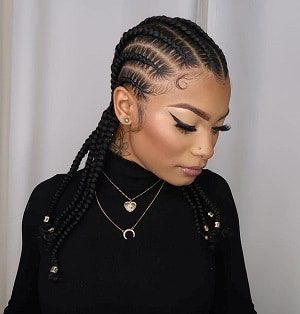
Cornrows usually cost about $45 to $220+, depending on the style, stylist, location, hair length, hair thickness, design detail, and whether extension hair is added. Simple straight-back cornrows often cost about $45 to $75, kids’ basic cornrows cost about $40 to $80, feed-in cornrows cost about $80 to $140, and full-head extended or detailed cornrow styles usually cost about $120 to $220+.

Very simple braid-downs for wigs or sew-ins can cost as little as $25 to $60, while premium stitch-braid designs, long feed-in cornrows, small detailed patterns, or styles with added hair can reach $150 to $250+. The final price depends less on the word “cornrows” and more on how much time, tension control, parting work, added hair, and finishing the appointment requires.

Cornrows are different from box braids. Cornrows are braided close to the scalp in rows or designs, while box braids hang more freely from individual parted sections. That difference matters for price because cornrows are often faster than full box braids, but detailed cornrow patterns can still take several hours.

Article Highlights

Jump to sections
  • do Cornrows Cost?
  • The Real Cornrows Price
  • Current Price Examples
  • What Affects the Cost?
  • Cornrows With Added Hair
  • Wigs, Crochet, and Sew-Ins
  • Extra Costs to Expect
  • Simple straight-back cornrows usually cost about $45 to $75 (at $30 per hour, earning that amount would take about 1.5 to 2.5 hours of work, before taxes).
  • Kids’ basic cornrow styles usually cost about $40 to $80.
  • Feed-in cornrows usually cost about $80 to $140.
  • Full-head extended or small detailed cornrow styles usually cost about $120 to $220+.
  • A braid-down for a wig or sew-in may cost about $25 to $60.
  • Extra costs can include shampoo, blow-dry, added hair, beads, takedown, scalp products, and tip.
Cornrow Braid Price

How Much do Cornrows Cost?

Cornrow style or service Typical cost What the price usually means
Basic straight-back cornrows $45 to $75 (about 1.5 to 2.5 hours of work at $30 per hour) Simple rows, usually no added hair, faster appointment
Kids’ basic cornrows $40 to $80 Simple child-friendly style, price depends on age, hair thickness, and design
Men’s custom or geometric cornrows $70 to $120 Curved parts, freestyle designs, zig-zags, or more detailed patterns
Feed-in cornrows $80 to $140 Extension hair gradually added for a fuller or longer look
Full-head extended cornrows $120 to $220+ Small, detailed, longer, or more complex cornrow style
Braid-down for wig or sew-in $25 to $60+ Functional cornrows used as a base under a wig, crochet, or sew-in
Premium stitch-braid or designer cornrows $150 to $250+ Sharp parting, advanced pattern work, added hair, length, and longer chair time

Related guides

  • How Much Does a Tattoo Cost?
  • How Much Does HairClub Cost?
  • How Much Do Vampire Fang Implants Cost?

The Real Cornrows Price

Cornrows are often quoted by style, but the price usually follows time. A simple $60 (about 2 hours of work at $30 per hour) straight-back style that takes 45 minutes works out to about $80/hour. A detailed $180 feed-in or design style that takes 3 hours works out to about $60/hour.

That is why the “cheaper” style is not always the better value and the higher quote is not always overpriced. Small parts, added hair, stitch-braid detail, curved designs, length, thick natural hair, detangling, and blow-drying can add hours to the appointment.

Before comparing prices, ask the stylist what is included: shampoo, blow-dry, added hair, design work, beads, trim, takedown, and tip. A $90 quote that excludes wash, hair, and blow-dry can end up close to a $140 quote that includes more of the appointment.

Current Price Examples

Booksy’s current cornrow pricing guide lists basic men’s cornrows at $45 to $75 for 30 to 60 minutes, custom geometric or design cornrows at $70 to $120 for 60 to 90 minutes, feed-in cornrows at $80 to $140 for 1 to 2 hours, and full-head extended cornrows at $120 to $220+ for 2 to 4 hours on its cornrows booking guide.

StyleSeat’s cornrow cost guide gives a broader market range of $38 to $183, depending on stylist, location, and style, through its cornrow pricing guide. This is useful as a general benchmark, but current appointment prices can run higher for long feed-in, stitch, or designer looks.

Booksy’s broader African braiding guide says simple cornrows can start around $60 to $150, while extension hair is usually purchased separately, through its African hair braiding price guide. That is why a quote for “cornrows” can look very different once the style includes length, added hair, or a more advanced braid pattern.

What Affects the Cost?

The biggest cost factors are the number of rows, size of the parts, length of the braids, whether hair is added, whether the style is straight-back or patterned, the stylist’s experience, and whether shampoo and blow-dry are included.

Hair density matters too. Thick, long, tangled, or very curly hair can take longer to part, stretch, and braid. Some stylists require clients to arrive washed, detangled, and blow-dried. Others include prep in the appointment price.

Location also changes the bill. A neighborhood barber or braid shop may charge less than a high-demand natural hair salon, celebrity stylist, or premium salon in a large metro area.

Cornrows With Added Hair

Adding hair usually raises the price because the stylist has to blend the extension hair into the natural hair while keeping the braid even and neat. Feed-in cornrows are often priced higher than simple natural-hair cornrows for this reason.

Diamond Hair Studio in New Jersey lists 2 feed-in braids without hair at $40 and with hair added at $50, while 4 feed-in braids are listed at $60 without hair and $75 with hair added on its braiding service menu. That example shows how added hair can raise the price even on a small cornrow style.

Some salons charge much more for larger feed-in appointments. Mr. Naturalz lists 2 feed-in braids at $110+, 3 to 8 feed-in braids at $130+, 8 to 12 feed-in braids at $190+, and 15 to 20 feed-in braids at $230+ on its services page. Its listings say wash and blow-dry are included, but hair is not included.

Wigs, Crochet, and Sew-Ins

Not every cornrow appointment is meant to be seen. A braid-down is a flatter cornrow base used under a wig, crochet style, or sew-in. This can be cheaper than visible designer cornrows because the goal is a secure, flat foundation, not a detailed visible pattern.

Diamond Hair Studio lists a braid-down at $25, while some salons charge more if the braid-down includes shampoo, blow-dry, detangling, or a more complex base pattern.

If the cornrows are part of a sew-in or extension appointment, compare the total with the full hair extensions cost, not only the braid-down line item. The braid base may be affordable, while the weave, bundles, install, styling, and maintenance can make the full appointment much more expensive.

Extra Costs to Expect

Common extra costs include shampoo, deep conditioning, blow-dry, detangling, added hair, beads, cuffs, colored hair, takedown, trim, scalp oil, edge control, and tip. Some stylists include these in the price, while others list them separately.

JamaicasBeauty lists kids’ basic braids at $60, man bun braids at $60, whole-head cornrows at $100, and feed-ins with crochets half-up half-down at $160 on its hair menu. This is a good example of why the style name alone is not enough. The exact service description matters.

Tip is another real cost. A common salon tip is about 15% to 20%. On a $100 cornrow appointment, that adds about $15 to $20. On a $180 detailed style, it adds about $27 to $36.

How Long Cornrows Take

Simple straight-back cornrows may take about 30 to 60 minutes. A custom men’s design can take about 60 to 90 minutes. Feed-in cornrows often take about 1 to 2 hours, and small full-head extended styles can take about 2 to 4 hours.

The older idea that cornrows should take a maximum of 45 minutes is only true for very simple styles. More rows, smaller parts, added hair, thick hair, wash and blow-dry, or a detailed pattern can easily push the appointment past 2 hours.

Ask for both a price and an expected appointment length before booking. That helps you compare stylists fairly and plan around work, school, childcare, or transportation.

How Long Cornrows Last

Cornrows often last about 2 to 6 weeks, depending on hair texture, scalp health, braid tightness, activity level, washing routine, and how neat the wearer wants the style to look.

Very tight, very small, or heavy styles should not be kept in just because they still look neat. If the scalp hurts, bumps appear, the hairline feels pulled, or the braids feel too tight, the style may be creating too much tension.

Many people protect cornrows at night with a satin or silk scarf, bonnet, or pillowcase. Light scalp care can help, but heavy oils and product buildup can make the scalp itchy or flaky if the style is kept too long.

Scalp Safety and Traction Alopecia

Cornrows can be a beautiful and practical protective style, but they should not be painfully tight. The American Academy of Dermatology warns that hairstyles that pull tightly, including cornrows, locs, tightly braided hair, buns, ponytails, and updos, can cause traction alopecia on its hairstyles and hair loss guide.

The British Association of Dermatologists also lists tight braids such as cornrows as common causes of traction alopecia, especially when hair loss appears between braids or along areas where tension is highest, in its traction alopecia patient leaflet.

A medical review in the National Library of Medicine notes that traction alopecia risk increases with the amount of pulling, duration of traction, and use of tight braids or extensions in its traction alopecia review. If a style causes pain, bumps, thinning edges, redness, pustules, or persistent itching, loosen or remove the style and consider seeing a dermatologist.

Workplace and School Considerations

The older advice that cornrows may be considered inappropriate by some employers should be replaced with a more current and respectful warning. In many places, natural hair texture and protective styles are protected from discrimination, but the exact law depends on the state, city, school, or workplace policy.

The Legal Defense Fund describes the CROWN Act as legislation that protects against race-based hair discrimination in workplaces and schools based on hair texture and protective styles on its CROWN Act page. GovDocs notes that common protected hairstyles under hair discrimination laws can include braids, twists, locs, textured hair, Bantu knots, and afros on its hair discrimination law overview.

For most readers, the practical point is simple: cornrows are a normal protective hairstyle. If a workplace or school raises an issue, check the local law and written grooming policy rather than assuming the style itself is inappropriate.

How to Save Money on Cornrows

The easiest way to spend less is to choose a simpler style. Straight backs, fewer rows, no added hair, and no complex parting usually cost less than feed-ins, stitch braids, freestyle designs, or long extended cornrows.

Arriving washed, detangled, and blow-dried can lower the price if the stylist charges separately for prep. But only do this if the stylist allows it, because some prefer to prep the hair themselves to control the final result.

You can also compare local braid shops, barbers, natural hair salons, and booking apps. Student discounts, child pricing, weekday appointments, loyalty discounts, and occasional promotions can reduce the cost. Avoid choosing only by the lowest price if the style is painfully tight or the stylist does not explain what is included.

Three Realistic Cost Cases

Case 1: Simple straight backs. A client books a basic straight-back cornrow style for $60. They arrive washed and detangled, and no added hair is used. With a 20% tip, the total is $72.

Case 2: Feed-in cornrows. A client books feed-in cornrows for $130. Added hair costs $15, and the stylist charges $25 for wash and blow-dry. With a 20% tip on the service price, the practical total is about $196.

Case 3: Detailed full-head design. A client books a small detailed cornrow style for $220. The appointment takes 4 hours. With a 20% tip, the total is $264, before any beads, cuffs, takedown, or special hair.

A $140 Quote vs a $100 Quote

Assume Stylist A charges $100 for cornrows but does not include shampoo, blow-dry, or extension hair. Shampoo and blow-dry add $30, and hair adds $15. The total before tip is $145.

Stylist B charges $140 and includes shampoo, blow-dry, and basic added hair. The total before tip is still $140.

In this example, the higher headline quote is actually $5 cheaper before tip. That is why cornrow prices should always be compared by what is included, not only by the first number the stylist gives.

When Cornrows Make Sense

Cornrows make sense if you want a neat protective style, a low-maintenance look for a few weeks, a base for a wig or sew-in, a style that keeps hair off the face, or a design that can work for kids, adults, athletes, and everyday wear.

They may not make sense if your scalp is already sore, your edges are thinning, you recently had traction-related hair loss, you cannot tolerate tension, or you need a style that can stay in for several months without maintenance.

If you mainly want a quick cut instead of a protective braided style, compare the appointment with a basic Sport Clips haircut. If you are comparing hair-removal or grooming services instead, the cost structure is completely different from laser hair removal pricing.

What We Checked

  • Checked current Booksy cornrow price ranges for basic men’s cornrows, custom designs, feed-in cornrows, full-head extended styles, and kids’ cornrows.
  • Checked StyleSeat’s published cornrow cost range of $38 to $183.
  • Checked active salon price examples for braid-downs, feed-ins, whole-head cornrows, and services with wash and blow-dry included.
  • Checked American Academy of Dermatology, British Association of Dermatologists, and National Library of Medicine guidance on traction alopecia and tight hairstyles.
  • Checked CROWN Act and hair discrimination law sources for natural hair and protective-style workplace and school context.
  • Compared natural-hair cornrows, feed-in cornrows, braid-downs, and full-head extended styles separately instead of using one broad average.

Answers to Common Questions

How much do simple cornrows cost?

Simple straight-back cornrows usually cost about $45 to $75. A very basic braid-down may cost about $25 to $60, while more visible or detailed straight-back styles can cost more.

How much are feed-in cornrows?

Feed-in cornrows usually cost about $80 to $140, but larger, longer, or more detailed feed-in styles can reach $150 to $250+. Always ask whether extension hair is included.

How much do kids’ cornrows cost?

Kids’ basic cornrows usually cost about $40 to $80. The price can increase for added hair, beads, detailed designs, thick hair, or longer appointment time.

Do cornrows damage your hair?

Cornrows should not damage hair when they are installed with reasonable tension and removed on time. Very tight cornrows, heavy extensions, or repeated high-tension styles can contribute to traction alopecia, especially around the edges.

How long do cornrows last?

Cornrows often last about 2 to 6 weeks. The exact time depends on hair texture, scalp health, activity level, braid size, tension, and how neat the wearer wants the style to remain.

Should I tip for cornrows?

Yes, tipping is common. A typical tip is about 15% to 20%. On a $100 appointment, that adds about $15 to $20.

Disclosure: Educational content, not medical advice. Pricing varies by provider, location, and insurance. Confirm eligibility, coverage, and out-of-pocket costs with a licensed clinician and your insurer. See our methodology and corrections policy.

by Alec Pow
ThePricer cost research Independent price research used by media, universities and public institutions.

We research provider pricing, market examples, buyer reports, hidden fees and public records.

Methodology · Citations · Newsroom
© 2014 - 2026 - ThePricer Media, LLC, 4 Grove Street, New York, NY, 10014, Phone: (212) 431-2441
We don’t use affiliate links or paid placements. All sources are cited only for verification.
  • Link to X
  • Link to LinkedIn
  • Link to Facebook
  • Link to Instagram
  • Link to Pinterest
  • Link to Youtube
  • Contact Us
  • About Us
  • Press & Mentions
  • Careers
  • Meet the Founder
  • Privacy Policy
  • Editorial Ethics
  • Methodology
  • Corrections
  • Disclosure
  • Terms and Conditions
Scroll to top Scroll to top Scroll to top