
How Much Does it Cost to Fill a Propane Tank?
Last Updated on May 19, 2024
Written by CPA Alec Pow | Content Reviewed by  CFA Alexander Popinker
Filling up a propane tank can be an expensive endeavor, but knowing what to expect for propane refill costs can help you budget and shop around for the best deals.
This comprehensive guide examines the typical pricing, factors that influence costs, and tips to save money when you need your propane tank refilled.
How Much Does it Cost to Fill a Propane Tank?
For a 20-pound propane tank refill, expect to pay around $15 to $25 for service, plus the current per-gallon propane price for your area. The national average for a 20 lb. tank refill is $25 to $35 in total.
Larger tanks (30 lb., 40 lb., 100 lb.) incur higher service fees, ranging from $20 to $150 per fill-up. Fuel costs scale up with more propane volume.
The price to top off a propane tank depends on two key factors:
- Service fees – Most providers charge a flat rate for access to their refilling service. This covers labor and equipment costs.
- Volume-based pricing – The amount of propane dispensed into your tank is priced per gallon/pound. This fluctuates based on market rates.
Together, fixed service fees and variable propane fuel charges make up your total fill-up cost.
Cost to Fill Specific Propane Tank Sizes
Propane refill prices can vary based on the tank’s capacity. Here’s what to expect for popular tank sizes:
How Much Does It Cost to Fill a 30 lb Propane Tank?
- Average Price Range: $35 to $50
- Factors Affecting Cost: 30 lb. tanks need more propane volume than 20 lb. versions. You may pay an extra $5 to $10 for service. Fuel prices follow market rates.
How Much Does It Cost to Fill a 40 lb Propane Tank?
- Price vs. Smaller Tanks: Around $45 to $65 per fill-up. The extra 10 lbs. of capacity compared to a 30 lb. tank adds $5 to $15 more.
- Cost-Saving Tips: Ask about loyalty discounts for repeat refills. Buy in bulk if you use a lot of propane.
How Much Does It Cost to Fill a 100 lb Propane Tank?
- For these larger bulk propane tanks, expect to pay $60 to $150 per fill or more.
- Special Considerations: Big tanks often require truck delivery or service calls to fill onsite. This adds labor fees. Shop around for the best rates.
According to This Old House, here are the residential propane tank costs by capacity:
- 120 Gallon: $350–$600
- 250 Gallon: $450–$1,000
- 330 Gallon: $500–$1,400
- 500 Gallon: $700–$2,500
iRV2.com reports that the cost of refilling a propane tank is $16.00 for a 20-lb tank in Fuquay Varina, NC.
TVWBB.com notes that it costs $12 to refill a 20 lb. propane tank.
The cost of refilling a propane tank at U-Haul ranges from approximately $3.00 to $4.00 per gallon.
The cost of refilling your propane tank at Franger Gas is about $3-$4 per gallon, which is approximately $1.76 per gallon cheaper than exchanging.
Factors Affecting Propane Refill Costs?
Several variables influence how much you’ll pay to re-supply propane tanks:
- Market Prices – Propane costs fluctuate based on supply and demand. Prices peak in winter when heating use rises.
- Location – Accessibility and local rates determine service fees. Rural areas may have higher costs.
- Propane Quality – High-purity propane costs more but burns more efficiently.
- Bulk Purchasing – Big 100 lb. tanks offer lower per-gallon costs but have higher upfront fees.
Comparing Propane Refill vs. Tank Exchange
For 20 lb. cylinders, propane tank exchange services provide a ready-to-go pre-filled tank. However, refilling your existing tank is often cheaper.
- Refill Pricing – $25 to $35 per 20 lb. tank
- Exchange Pricing – $40 to $50+ for a swapped 20 lb. tank
Exchanges can cost $10 to $15 more but are quicker. Consider both options.
Understanding Propane Delivery Costs
Some propane providers offer on-site delivery to fill large tanks. Prices vary by distance and tank size:
- 100 lb. Tank Delivery – $75 to $125+
- 250+ lb. Tank Delivery – $150 to $300+
Compare local suppliers to find the best delivery rates.
You might also like our articles about the cost of a Blue Rhino Propane Tank, Acetylene Tank Refill, or Gas Tank Refill.
Tips to Save on Propane Tank Refilling
Follow these tips to keep your propane refill costs affordable:
- Time fill-ups for off-peak months when prices decline.
- Sign up for loyalty discounts with one trusted provider.
- Pay attention to current propane prices to get the best deal.
- For big tanks, consider annual propane contracts to lock in lower rates.
Choosing the Right Propane Refill Service
 When selecting a provider, look for:
- Convenient locations to minimize driving and delivery fees.
- Competitive pricing, especially for large bulk tanks.
- Good customer service and safety reputation.
- Discounts and rewards programs to save on repeat business.
Comparing multiple suppliers can help find the most cost-effective option based on your propane usage and tank size.
Propane Market Trends and Pricing Outlook
Propane prices have climbed in recent years due to high fuel demand and tight supplies. Expect costs to remain elevated through winter. Look for lower prices in the spring and summer. Sustained cold weather or supply disruptions could drive costs higher.
Safety Tips for Refilling Your Tank
Follow all safety rules when refueling propane tanks:
- Turn off gas appliances and close tank valves before transporting.
- Don’t overfill tanks beyond the safe capacity.
- Allow tanks to cool before refueling.
- Keep sources of ignition away from propane.
Adhering to propane safety guidelines during refueling helps prevent accidents and injuries.
The Future of Propane: Emerging Options
Sustainability trends may impact propane costs and supply long-term. Alternatives like renewable propane produced from bio-based sources are emerging but not yet widespread. For now, consumers can expect propane prices to remain tied to market conditions for fossil fuel-based propane.
Cost of propane tank refill over the last 5 years
Here’s a combined markdown table that includes both the average annual propane prices and the estimated costs to refill a typical residential 120-gallon propane tank for the past 5 years:
| Year | Average Price per Gallon | Cost per Tank Refill |
|---|---|---|
| 2018 | $2.30 | $55 |
| 2019 | $2.42 | $60 |
| 2020 | $1.93 | $45 |
| 2021 | $2.25 | $55 |
| 2022 | $2.49 | $60 |
| 2023 (through February) | $2.77 | $65 |
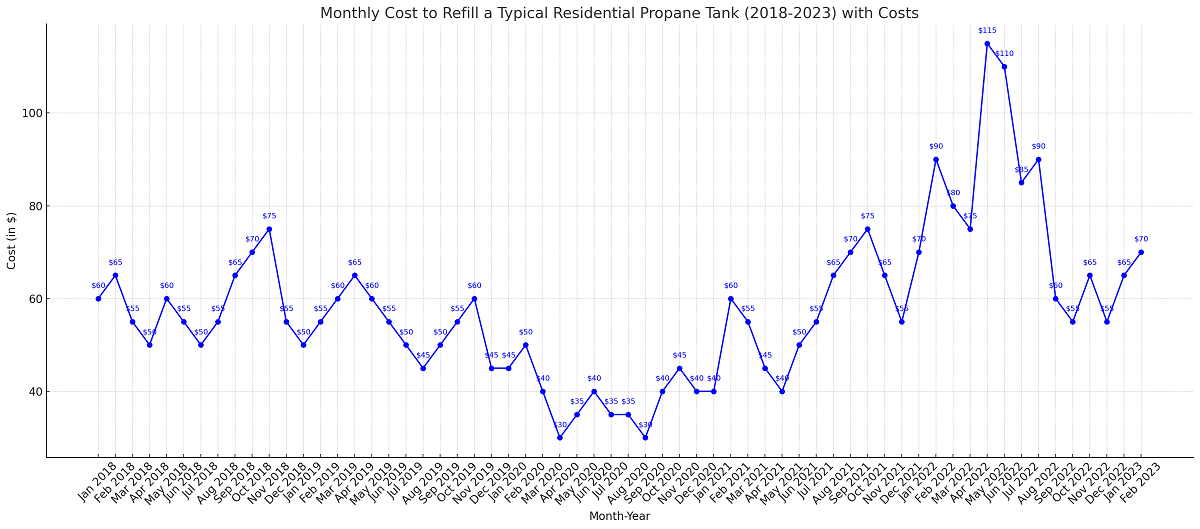
Here are some important factors that have influenced the prices for propane over the past 5 years:
- Crude oil prices – The current propane is derived from crude oil and natural gas, so oil price swings directly impact propane costs. Oil peaked in 2022, driving record-large propane prices.
- Winter weather – Colder winters increase heating demand, straining supply and causing seasonal price spikes. 2021 and 2022 saw cold snaps.
- Global supply disruptions – OPEC disagreements, Russia’s invasion of Ukraine, and Middle East conflicts squeezed global oil and gas supply during 2018-2022.
- Domestic production rates – U.S. propane output was high in 2020, contributing to low prices. But production declined in 2021.
- Inventory and storage levels – Low propane reserves and tight storage capacity during high-demand periods further raised prices.
- Transportation costs – Fuel price surges in 2022 made transporting propane from Gulf Coast refiners to other areas more expensive.
- Retail competition – Discounts among retailers attempting to secure customer loyalty contracts also influenced retail pricing.
Propane costs have been driven by a mix of global factors affecting oil supply and regional/seasonal issues impacting heating fuel demand and inventory levels over the past 5 years.
Final Words
Knowing what to expect for propane refill costs enables smart budgeting and informed provider selection. With some savvy comparison shopping and careful tracking of market prices, you can keep your propane tank filled affordably.
Frequently Asked Questions
Is it better to refill propane or exchange a tank?
In most cases, refilling your existing propane tank is more cost-effective than exchanging it for a pre-filled replacement tank. Propane refills typically run $25 to $35 for a standard 20 lb. cylinder, while tank exchanges often cost $40 to $50 or more per swap.
The convenience of immediately getting a ready-to-use tank with an exchange program comes at a premium. Refilling your current tank saves money as long as you plan ahead and account for the time required to have it refilled by a service provider.
However, exchanges can be the simplest option in a pinch when you need propane right away. Consider both refilling and exchange costs when making the best choice for your needs and budget.
How much propane fills a 20 lb tank?
A standard 20 lb. propane tank holds approximately 4.7 gallons when filled to 80% capacity. This is considered the safe maximum volume for a 20 lb. cylinder.
Given an average propane density of about 4.2 lbs per gallon, 4.7 gallons equates to roughly 19.7 lbs of propane in a full tank of 20 lbs. While 20 lb. propane tanks are a common size for home grilling and appliances, the fixed weight rating reflects the empty tank’s tare weight.
After factoring in the thick steel cylinder and valve assembly, the safe usable propane capacity works out to about 19 lbs or 4.5 gallons for a “20 pound” tank. Knowing this actual full volume can help estimate how long your propane may last based on your usage.
What is the cheapest month to fill a propane tank?
The most affordable months to refill your propane tank are typically April through August. Propane prices usually reach seasonal lows in the spring and summer months when heating demand declines going into warmer weather.
You can save money by planning your propane tank refills or bulk propane purchases for late spring through summer. Expect to pay premium peak season rates for propane tank fill-ups from November to February when cold weather drives up fuel consumption for heating.
The cheapest propane prices often hit around April and May before gradually rising again towards summer’s end. Tracking seasonal propane cost fluctuations can help time your tank refills for maximum savings.

Thank you for explaining that you shouldn’t refill your propane tank on your own. I’ve been wondering if I should find a place where I can refill my propane tank and assumed I would do it myself. I’ll be sure to start looking for someone that can do it for me.
How much to fill a 30 pound propane tank