
How Much Does Bowling Cost?
Updated on | Written by Alec Pow
This article was researched using 8 sources. See our methodology and corrections policy.
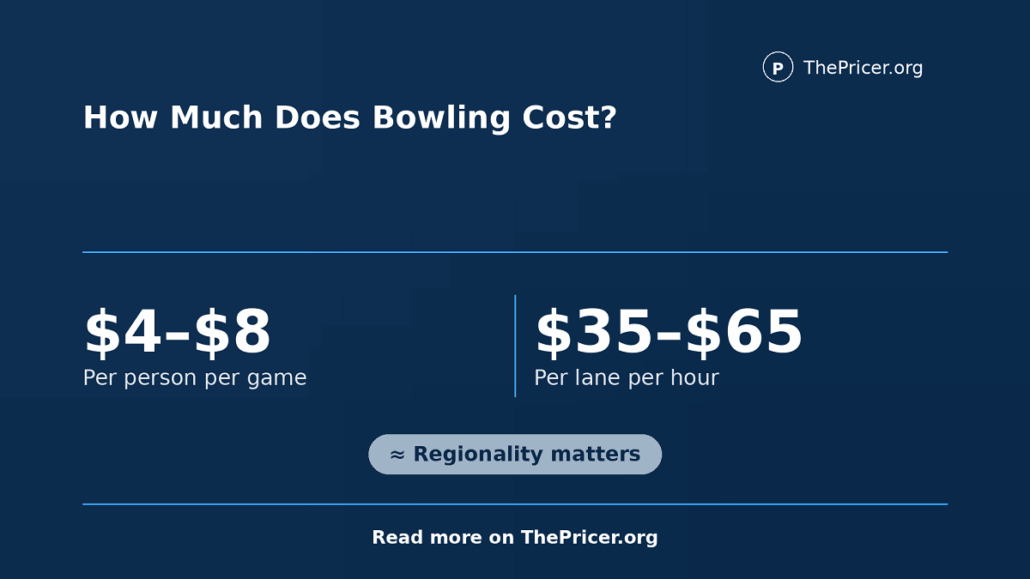
Bowling currently costs about $4 to $8 per person per game at many traditional U.S. bowling alleys, plus roughly $4 to $6 per person for shoe rental. Centers that charge by time commonly run about $35 to $65 per lane per hour, with some off-peak rates below that range and premium weekend rates reaching $65 or more. Seasonal passes and unlimited-bowling specials can bring the effective price much lower for frequent bowlers.
The pricing method matters almost as much as the posted rate. Two people sharing a $60-per-hour lane are paying $30 each before food or arcade spending, while six people on that same lane pay only $10 each. By comparison, two games at $6 each plus $5 shoes cost $17 per person.
Time of day, city, group size, reservation method, shoe rental, and whether the center is a traditional alley or a larger entertainment venue all change the total. Many chains now use location-specific pricing rather than one national rate.
Article Highlights
Jump to sections
- Open bowling commonly costs about $4-$8 per person per game.
- Bowling-shoe rental usually adds about $4-$6 per person.
- Hourly lane rates commonly run about $35-$65 (at $30 per hour, earning that amount would take about 1.2 to 2.2 hours of work, before taxes) per lane, with higher or lower local examples.
- Six people splitting a $60 lane pay $10 each for one hour before other spending.
- Season passes can reduce the effective game price to just a few dollars for people who bowl often.
- Buying $40-$60 entry-level bowling shoes can break even after roughly 8 to 12 visits compared with repeated $5 rentals.
How Much Does Bowling Cost?
Live 2026 pricing shows a wide spread even before food or arcade spending. Concord Bowl’s current rates are $5-$5.50 per game with $5 shoe rental. South Point in Las Vegas lists open bowling at $4.25-$5 per game and shoes at $5.
Boardwalk Bowl in Santa Cruz shows how much day and time can matter. Its April 2026 rate sheet lists walk-in games at $3.85 during selected off-peak periods and $7.85 during busier periods, with $5.75 shoe rental. Hourly lanes range from $39.95 to $64.95 (about 1.3 to 2.2 hours of work at $30 per hour).
| Bowling option | Useful 2026 budget |
|---|---|
| Open bowling, per game | $4-$8 per person |
| Shoe rental | $4-$6 per person |
| Hourly lane, lower-demand period | $35-$45 per lane |
| Hourly lane, evening/weekend | $55-$65+ per lane |
| Seasonal or unlimited special | Varies, often much cheaper per game with repeated use |
| Entry-level personal bowling shoes | $40-$60 |
| Beginner bowling ball | $60-$100 before drilling |
What You’re Actually Paying For
A bowling visit can be sold by the game, by the lane and hour, or through an unlimited-play package. Per-game pricing is easy to compare when one or two people want a short outing. Hourly pricing becomes more attractive when several people split the lane, because the lane charge is divided across the group rather than multiplied by each bowler.
Shoe rental is usually separate under per-game pricing. Hourly packages sometimes include shoes for everyone on the lane. Royal Pin Expo currently charges $35-$65 (about 1.2 to 2.2 hours of work at $30 per hour) per hour depending on time and day, with shoe rental included for up to six people. Its individual game pricing runs $3.75-$6.50, while separate shoes cost $4.25.
Food, beverages, arcade games, parking, entertainment taxes, reservation premiums, and party packages can all sit outside the lane price. A low advertised bowling rate is not necessarily the cheapest complete outing.
Per Game vs. Per Hour
The best pricing format depends on group size and how quickly the group bowls. At a current Royal Pin peak rate of $60 per lane per hour with shoes included, a six-person group spends $10 each. Four people spend $15 each, while two people spend $30 each.
Compare that with two games priced at $6 per game plus $5 shoe rental. Each bowler pays:
$6 + $6 + $5 = $17
For two people, that is $34 total. In that case, per-game pricing can be substantially cheaper than a $60 hourly lane. For six people, two games plus shoes would cost 6 × $17 = $102, making the $60 hourly lane look much stronger if the group can complete enough bowling during the hour.
Hourly lane limits also matter. A large group can take longer to complete one full game because every frame has more bowlers. Paying by the hour does not guarantee each person a fixed number of games.
Worked Example: Family of Four

Suppose a family of four visits a center charging $6 per game and $5 per pair for shoes. Everyone bowls two games.
Games cost 4 people × 2 games × $6 = $48.
Shoes cost 4 × $5 = $20.
The bowling portion of the outing is $68 total, or $17 per person, before food, drinks, arcade play, taxes, or parking.
If the same family finds a qualifying unlimited-bowling special around $13 per person with shoes included, the bowling cost falls to about $52. The family saves roughly $16 and may get more lane time or games, depending on the promotion’s rules.
Shoes, Food, and Reservations
Shoe rental is the most predictable add-on. Current independent-center examples cluster near $4.25-$5.75 per person. Bowling shoes are required at many centers for safety and to protect the approach surface. Bowlero’s current FAQ states that every guest must wear bowling shoes, so allowing children to bowl in socks is not a valid money-saving strategy.
Food and drinks can easily exceed the bowling charge for a family or group. Some centers do not allow outside food. Concord Bowl explicitly prohibits outside food and beverages. Check the venue policy before budgeting around bringing snacks from home.
Reservations can also change the economics. Boardwalk Bowl’s per-game prices are available to walk-ins but do not guarantee a lane, while reservable hourly pricing costs more. Bowlero says its pricing varies by center and may include per-game, hourly, or unlimited formats. Online reservations guarantee the time slot, but they are prepaid and location-specific.
Can a Bowling Pass Save Money?
Frequent summer bowlers can cut the effective cost dramatically with a seasonal pass. Bowlero’s 2026 Summer Season Pass includes two games per day plus shoe rental from May 18 through September 1 at participating locations. Premium passes also add a $5 arcade reload per visit and a 15% discount on food and nonalcoholic drinks. Pass pricing varies by location.
One current Premium Pass example at Bowlero Promenade costs $58.48. If a bowler uses it once a week for 10 weeks and bowls two games each time, that is 20 games:
$58.48 ÷ 20 = $2.92 per game
Shoes are included. Use the same pass 20 times for 40 games and the effective pass cost falls to about $1.46 per game.
Independent alleys can be even cheaper. Boardwalk Bowl’s 2026 Summer Fun Pass costs $25 for Basic or $45 for Premium. Both provide two weekday games per day during the eligible period, while the $45 version also includes shoes, a small fountain drink, and a food discount.
Entertainment centers use similar pass pricing. Main Event’s 2026 Summer Season Pass includes unlimited bowling during eligible redemption periods, shoe rental, and a food and nonalcoholic-beverage discount, with pricing varying by location. Pass rules can limit redemption days, hours, or lane time, so compare the restrictions with how often you will actually visit.
Leagues Can Lower Practice Rates
League bowlers often receive lower open-bowling rates, but the league itself carries weekly costs. Bowlero currently says league fees can range from about $10 to more than $24 per week, depending on whether the league includes prize money, merchandise, or other benefits.
The practice discount can still be substantial. Concord Bowl currently charges active league bowlers $2.50 per game, compared with its regular $5-$5.50 rate. Ten extra practice games would cost $25 instead of $50-$55, a savings of $25-$30.
Someone joining solely to save money should compare the full season dues with the value of those discounts. A league makes more financial sense when the bowler also wants the scheduled competition and social aspect.
When Buying Bowling Shoes Pays Off
Current entry-level bowling shoes can be found around $40-$60. At a typical rental charge of $5 per visit, the break-even point is easy to calculate:
$40 ÷ $5 = 8 visits
$60 ÷ $5 = 12 visits
Someone bowling twice a month could recover the purchase price in roughly four to six months of visits. Someone who bowls only a few times per year may be better off renting.
Current beginner equipment pricing also starts lower than many people expect. BowlersMart lists entry-level balls around $60-$100, while stronger performance models can move into the $130-$220+ range. The ball usually still needs to be fitted and drilled. Our guide to bowling ball drilling costs covers that separate expense.
Three Bowling Budgets
Two-person casual outing: two games each at $6 per game plus $5 shoes cost $34 total. A high-demand $60 hourly lane would be worse value unless the pair expects to bowl enough games to offset the difference.
Six-person group: a $60 hourly lane with shoes included costs $10 per person. The same group buying two $6 games and $5 shoes would spend $102 total, so the hourly format can save $42.
Frequent summer bowler: a $58.48 pass used for 20 two-game visits produces 40 games and an effective pass cost of about $1.46 per game, with shoe rental included under the current pass terms.
When Bowling Costs Less
Best value if:
- You bowl during weekday or daytime periods with lower open-play rates.
- A larger group can split an hourly lane that includes shoe rental.
- You bowl frequently enough to use a seasonal pass or league discount.
- You own shoes after reaching the point where repeated rentals cost more than a basic pair.
Costs more if:
- You reserve premium Friday or Saturday evening lane time.
- Only one or two people split an expensive hourly lane.
- Food, alcohol, arcade games, parking, or entertainment taxes become a large part of the outing.
- You buy a pass but visit too rarely to spread the upfront cost across many games.
Anyone looking at the business side rather than the price of a night out can compare the cost to open a bowling alley. For another bowling-centered entertainment venue, see our current guide to Dave & Buster’s bowling costs.
What We Verified
- Checked: current independent-center open-play examples cluster around $4-$8 per person per game, with shoes commonly near $4-$6.
- Confirmed: current hourly examples range from about $35 to $65 per lane, depending on the day and time.
- Cross-referenced: Bowlero states that prices vary by center and that its locations may use per-game, hourly, and unlimited-bowling pricing.
- Verified: bowling shoes are required at major centers, so socks are not a substitute for proper bowling footwear.
- Checked: current seasonal passes can include repeated games plus shoe rental, making them substantially cheaper per game when used often.
Answers to Common Questions
How much does one game of bowling cost?
Many traditional bowling alleys currently charge about $4-$8 per person per game. Busy urban entertainment centers and premium time slots can cost more.
How much are bowling shoes?
Current rental examples are about $4-$6 per person. Entry-level personal bowling shoes start around $40-$60, which can pay for themselves after roughly 8 to 12 visits compared with a $5 rental.
Is it cheaper to pay by the hour or by the game?
Hourly pricing is often better for larger groups. A six-person group splitting a $60 lane pays $10 each, while two people pay $30 each. Per-game pricing can be better for small groups or short visits.
Do kids need bowling shoes?
Yes at centers that require bowling shoes, which is common. Do not plan to let children bowl in socks as a way to avoid rental fees.
How much does bowling cost for a family of four?
At $6 per game and $5 shoes, two games each cost $68 total, or $17 per person, before food, drinks, arcade play, parking, and taxes.
Is buying a bowling ball worth it?
A casual bowler can use house balls at no separate charge. Someone bowling regularly may prefer a fitted personal ball. Beginner balls currently start around $60-$100 before drilling, while stronger performance equipment can cost $130-$220+.
Disclosure: Educational content, not financial advice. Prices reflect public information as of the dates cited and can change. Confirm current rates, fees, taxes, and terms with official sources before purchasing. See our methodology and corrections policy.
Yes