How Much Does a Peacock Feather Cost?
Updated on | Written by Alec Pow
This article was researched using 5 sources. See our methodology and corrections policy.
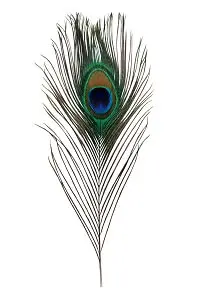
A natural peacock eye feather usually costs about $0.30 to $2 each, depending on length, quality, quantity, and where it is purchased. Bulk packs of 100 short 10- to 12-inch feathers generally cost around $28 to $50, while 100 longer 20- to 35-inch feathers may cost approximately $70 to $120+.
Single hand-selected feathers can cost $2 to $10+, especially when they are unusually long, full, symmetrical, bleached, dyed, or selected for costume and floral work. Peacock feather fringe, fans, bouquets, jewelry components, and completed decorative pieces can cost anywhere from $10 to several hundred dollars.
Length is only one part of the price. Buyers also pay for the size and condition of the eyespot, stem strength, natural or treated color, consistency across a bulk order, sanitization, packaging, and protection against damage during shipping.
Article Highlights
Jump to sections
- A natural peacock eye feather generally costs $0.30 to $2 each.
- A 100-pack of 10- to 12-inch feathers costs about $28 to $50 (at $30 per hour, earning that amount would take about 0.9 to 1.7 hours of work, before taxes).
- Long 20- to 35-inch feathers commonly cost $0.70 to $2 each in bulk.
- Selected 40- to 55-inch feathers may cost $15 to $30 each.
- Bleached, dyed, and matched feathers usually cost more than natural bulk stock.
- Shipping and damaged-feather allowances can add 10% to 30% to a small project.
- Peacock feathers are widely sold in the United States, but many native wild-bird feathers are federally protected.

How Much Does a Peacock Feather Cost?
| Peacock feather product | Typical price | Common use |
|---|---|---|
| One short natural eye feather | $0.50 to $2 | Small crafts, jewelry, invitations, and hair accessories |
| 10 to 12 natural eye feathers | $8 to $20 (about 16 to 40 minutes at $30 per hour) | Small floral arrangement or costume detail |
| 100 short 10- to 12-inch feathers | $28 to $50 | Wedding decorations, centerpieces, and bulk crafts |
| 100 medium 16- to 25-inch feathers | $60 to $100+ | Large bouquets, vases, displays, and costumes |
| 100 long 30- to 40-inch feathers | $90 to $140+ | Stage pieces, event displays, and dramatic arrangements |
| One selected 40- to 55-inch feather | $15 to $30+ | Statement décor, millinery, and collectible display |
| Natural peacock sword feathers | $7 to $15 per bundle | Fly tying, costumes, jewelry, and textured arrangements |
| Peacock eye fringe | $12 to $35 per yard | Clothing trim, costumes, hats, and home décor |
| Bleached or dyed feathers | 20% to 80% more | Color-coordinated events and fashion projects |
Current marketplace pricing supports a starting point below the article’s former upper range but well above its five-cent lower estimate. Walmart currently displays a 100-piece package of 10- to 12-inch natural feathers at $27.98.
An Etsy seller lists 100 natural 10- to 12-inch eye feathers at $35.99, while an eBay listing offers 200 feathers at $79.49. These examples work out to roughly $0.28 to $0.40 per feather before tax and shipping.
Specialty sellers charge more for individual long feathers. Feather Store lists natural peacock tails from $13.95 for a 10- to 12-inch selection to $34.95 for a 50- to 55-inch feather. These prices reflect individually offered or specially graded products rather than loose wholesale stock.
What You Are Actually Buying
The colorful feather commonly called a peacock tail feather is usually part of the bird’s train, not its true anatomical tail. The train consists of elongated upper-tail covert feathers that grow above and cover the shorter structural tail feathers.
The Smithsonian’s National Zoo explains that these elongated feathers can create a train reaching about five feet and carry the iridescent ocelli, or eyespots, for which male Indian peafowl are famous. The shorter actual tail helps support and raise the train during display.
Most commercial eye feathers come from the Indian peafowl, Pavo cristatus. The male is called a peacock, the female is a peahen, and the species collectively is called peafowl.
A product listing should ideally identify whether the feathers are natural eyes, swords, herl, fringe, plumage, bleached feathers, or dyed feathers. Those categories differ in length, shape, processing, visual effect, and price.
Types of Peacock Feathers and Their Uses
Eye feathers have the familiar rounded iridescent eyespot. They are the most recognizable type and are widely used in centerpieces, bouquets, costumes, displays, fans, fascinators, and craft projects.
Sword feathers are narrower, less symmetrical feathers found along the sides of the train. They have long iridescent barbs and a more angular profile. Fly tiers, jewelry makers, costume designers, and floral artists use them to add texture without the large circular eye.
Herl refers to the fine iridescent fibers stripped or cut from peacock feathers. It is commonly used in fishing flies, jewelry, embroidery, and specialty trim. When herl is sold “by the yard,” the product is usually stitched or bound fringe rather than a loose feather measured end to end.
Plumage feathers are shorter body or neck-style feathers sold individually, in clusters, or on trim. They may cost less per feather but can become expensive when sorted by color and sewn into a finished strip.
Bleached and dyed feathers have been chemically lightened, recolored, or treated to fit an event palette. Processing adds labor and can make the feather more fragile, which is why treated feathers frequently cost more than equivalent natural stock.
Why Some Peacock Feathers Cost More
Two feathers of the same stated length may differ significantly in quality. A strong, straight stem and a complete, centered eyespot are worth more than a feather with missing barbs, fading, bends, staining, or an irregular eye.
Important price factors include:
- Total feather length
- Eyespot size and symmetry
- Fullness of the surrounding barbs
- Straightness and strength of the shaft
- Natural, bleached, painted, or dyed finish
- Color matching across the order
- Hand selection and grading
- Sanitization and pest treatment
- Retail package size
- Protective shipping materials
Bulk sellers usually grade more loosely. A package of 100 may include shorter specimens, bent shafts, uneven eyes, or feathers requiring trimming. A milliner or costume designer may instead pay several dollars for each feather because the order must be visually consistent and usable without extensive sorting.
Long feathers also require larger shipping cartons. Improper packaging can bend the shafts or crush the eyes, so the delivered price may include more than the feather itself.
Three Peacock Feather Project Costs
Small home decoration
A buyer needs 12 natural eye feathers for a vase or wall decoration. The feathers cost $14 (about 28 minutes at $30 per hour), shipping costs $8, and the vase and filler materials cost $20.
The completed project costs $42. Although the feathers average about $1.17 each before shipping, the effective project cost is $3.50 per feather used.
Ten wedding centerpieces
Each centerpiece uses 12 short eye feathers, requiring 120 usable feathers. The buyer orders 200 for $79.49 so there are enough matching feathers and replacements for damaged pieces.
Ten vases cost $80, foam and floral supplies cost $45, and flowers or greenery cost $120. Shipping adds $15.
The total project cost is $339.49, or about $33.95 per centerpiece. The 80 unused feathers can be used for table accents, bouquets, signage, or replacements.
Large costume or stage display
A costume designer buys 100 long natural and dyed feathers for $120. A structural backing, fabric, adhesives, thread, and hardware cost $85. Shipping and oversized packaging add $25.
The materials cost $230 before labor. If assembly takes eight hours and the designer charges $35 per hour, the finished project reaches $510.
Worked Bulk-Buying Calculation
Suppose a buyer can choose between 12-feather packs costing $14 and a 100-feather package costing $39.
Buying eight small packs provides 96 feathers:
- Eight packs × $14: $112
- Cost per feather: about $1.17
The 100-piece bulk package costs:
- Total package: $39
- Cost per feather: $0.39
The bulk package saves $73 while supplying four additional feathers. The per-feather cost is approximately 67% lower.
Bulk buying only saves money when most of the feathers will be used and the quality is acceptable. A buyer who needs six flawless long feathers may be better served by hand-selected retail stock than 100 inexpensive mixed-quality feathers.
Legal and Ethical Sourcing
Commercially sourced Indian peafowl feathers are widely sold in the United States because the species is not a native North American migratory bird covered in the same way as hawks, owls, songbirds, and many other wild species.
That does not mean every feather found outdoors is legal to collect. The U.S. Fish and Wildlife Service warns that possession of feathers and other parts from native North American birds is generally prohibited without authorization under the Migratory Bird Treaty Act.
The agency further advises that feathers from species not protected by that law may still be regulated by state rules. When the species cannot be identified confidently, the safest choice is not to keep or sell the feather.
Buyers of peacock feathers should look for:
- Clear identification of the peafowl species
- A seller with traceable business information
- Disclosure of the country or farm source
- A statement explaining whether feathers were naturally molted
- Cleaning or sanitization information
- Accurate photographs and measurements
- A return policy for damaged or misgraded merchandise
Male peafowl naturally shed their long train after the breeding season. Reid Park Zoo explains that peacocks shed these display feathers before growing a new train for the next season. Naturally molted feathers can therefore be collected without removing them from a live bird.
A “cruelty-free” description remains a seller claim unless sourcing is independently documented. A naturally occurring molt makes ethical collection possible, but it does not prove that every feather offered online was obtained responsibly.
When Do Peacocks Shed Their Feathers?

Peacocks do not lose all their feathers during winter. The long train is typically shed after the breeding season, commonly beginning in late summer or early autumn, depending on climate and location.
The male then regrows the train before the following breeding season. Flight feathers and ordinary body plumage follow their own molting patterns and do not necessarily fall at the same time.
The annual molt explains why naturally shed feathers enter the craft market seasonally. Availability may rise after breeding season, while the best long, matched, or undamaged feathers may still command a premium throughout the year.
Peahens have more subdued brown, cream, gray, and green plumage and lack the male’s enormous train. Their appearance is adapted to different reproductive and survival pressures and should not be described as plain or inferior.
Shipping, Storage, and Hidden Costs
Shipping can materially change the cost of a small order. A $10 package of feathers may come with $7 to $12 in shipping, nearly doubling the delivered price.
Long feathers may be charged as oversized parcels. International orders can also involve customs processing, import restrictions, duties, or inspection delays.
Other possible costs include:
- Rush delivery: $10 to $40+
- Protective tubes or boxes: $5 to $20
- Wire, tape, adhesives, and floral foam: $5 to $40
- Dye or paint for customization: $10 to $30
- Replacement allowance for damaged feathers: 5% to 15%
- Professional design or assembly labor: project-specific
Store feathers flat or upright in a dry, ventilated container away from direct sun, moisture, pets, insects, and crushing weight. Avoid tightly bending the shafts.
Dust can often be removed with gentle air movement or a very soft brush. Strong household cleaners, soaking, steam, and high heat may damage the barbs, dye, or iridescent structure.
When Bulk Peacock Feathers Make Sense
Bulk buying makes sense if:
- The project needs dozens or hundreds of feathers.
- Minor differences in length and eyespot shape are acceptable.
- The buyer can use spare feathers elsewhere.
- The delivered cost per feather is meaningfully lower.
- There is time to sort, trim, and reshape the order.
Individual feathers make more sense if:
- Only a few feathers are required.
- Every feather must match closely.
- The project requires exceptional length or fullness.
- The feathers will be used in a visible fashion or display piece.
- Damaged or irregular stock would create expensive waste.
The cheapest package is not always the lowest-cost choice. A 100-piece order with only 60 usable feathers may cost more per finished piece than a smaller package of carefully graded stock.
What We Verified
- Checked current 100-piece listings between approximately $28 and $40 for short natural feathers.
- Confirmed that specialty retail prices increase substantially with length.
- Verified that the peacock’s train consists of elongated upper-tail covert feathers.
- Cross-referenced the annual post-breeding molt of the train.
- Confirmed that many native North American bird feathers are federally protected.
- Verified that commercially offered peacock eye, sword, herl, and fringe products are priced differently.
Related Bird and Decorative Costs
Anyone considering producing their own supply should first understand the cost of buying and keeping a peacock. The price of the bird is only part of the expense because secure housing, food, land, noise, breeding behavior, and local regulations must also be considered.
Peacock feathers are often used in floral and event arrangements, where the total bill includes containers, greenery, labor, and delivery. Buyers planning a larger display can compare the materials with the cost of wedding centerpieces and the cost of floral arrangements.
For other unusual bird-related items, readers can review the cost of an ostrich egg. The cost of a kiwi bird illustrates a very different protected-wildlife situation in which private ownership and commercial trade are highly restricted.
Answers to Common Questions
How much does one peacock feather cost?
A natural eye feather usually costs about $0.30 to $2 when purchased in ordinary quantities. Long, selected, bleached, or dyed feathers may cost $2 to $30+ each.
How much do 100 peacock feathers cost?
One hundred short natural eye feathers generally cost about $28 to $50. Medium and long feathers may cost $60 to $140+ per 100.
Are peacock feathers real tail feathers?
The famous eyespot feathers are elongated upper-tail coverts that form the train. The bird’s true tail feathers are shorter and help support the train during display.
Do peacocks lose their feathers naturally?
Yes. Male peafowl naturally molt their long train after the breeding season and grow a new one for the next season.
Is it legal to own peacock feathers?
Commercially sourced Indian peafowl feathers are widely available in the United States. This does not mean all wild-bird feathers are legal to possess. Many native migratory bird feathers are federally protected.
Why are dyed feathers more expensive?
Bleaching, dyeing, sorting, drying, and color matching add labor and processing. Treated feathers may also experience more breakage and quality loss during production.
Disclosure: Educational content, not medical advice. Pricing varies by provider, location, and insurance. Confirm eligibility, coverage, and out-of-pocket costs with a licensed clinician and your insurer. See our methodology and corrections policy.