
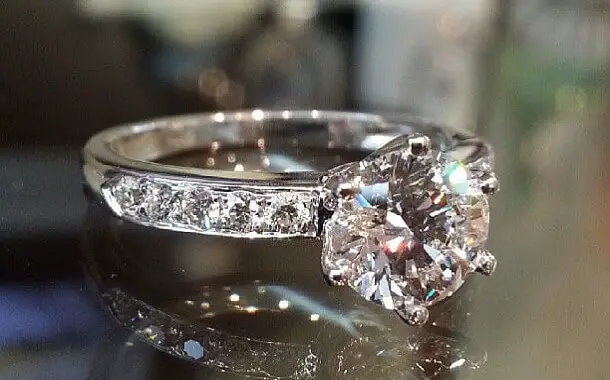
How Much Does It Cost to Reset a Ring?
Resetting a ring is usually performed when it is worn out and needs to be renewed and refreshed. Another common reason to reset a ring is when the jewelry is inherited or you only want to change the design of your ring to match your style by setting the stone or stones in a different way or changing the initial stone with a bigger one.
This process is known to be more cost-effective than purchasing a new one and paying its full price. This way, you can have a new design and a fresh look for a smaller cost.
During the process, a jeweler can remove and reset the diamond while maintaining its integrity.
Before deciding to reset your ring, take into consideration that the cost will greatly depend on various factors such as your geographical location, the jeweler, the type of changes you want to be done, whether you need to add any additional gems or not, as well as how complex the job is.
How much does it cost to reset a ring?
The average cost range for resetting a ring is anywhere from $100 to $300 for a basic process, which does not include adding extra gems. However, if we’re talking about a more unique model you can expect to pay up to $1,000, depending on the type and number of gems added, the jeweler who performs the work, and your geographical location.
Based on our research, resetting a diamond ring can cost somewhere between $100 and $500 but it can get up to $4,000 if you want additional diamonds. There is no set cost for resetting a ring, as the cost will greatly depend on the type of material from which it is made, the type of job that needs to be done, the need for additional diamonds, the types of gems, their color, and also the jeweler.
If you only need to resize your engagement ring, for example, the cost can be anywhere from $50 to $150, depending on the factors listed above. Among the most important factors are whether the ring needs to be sized down or enlarged and the type of material from which the ring is made. For instance, platinum rings tend to be more expensive than the ones made from white gold or yellow gold.
Brides.com states, that the cost of resetting a ring can fluctuate between $1,000 and $4,000 or even $5,000, but this will greatly depend on the type of setting and changes you choose to have performed.
Dmia.net, self-called the diamond gurus, claimed on their website that the average cost for a basic reset may be between $75 to $250.
According to JewerlyMarquis.com, resetting a diamond ring will cost at least $100 but the cost can go up to thousands of dollars, depending on the amount of material needed to be added, the work that is required, and the type of gems that are used.
One Reddit member stated that one jeweler quoted $4,000 for resetting a diamond engagement ring. She stated that she did not expect this amount of money, given the fact that she was not purchasing additional diamonds. Another member stated that he paid $2,000 to set an additional diamond on his wife’s engagement ring.
On Quora.com, one of its users claimed that he went through “Geller’s Blue Book to Jewelry Repair & Design” to get the resetting costs. He stated that according to the book, the cost of setting a 2.5-carat diamond into a Tiffany-style head can be around $250.
Resetting a diamond ring overview
When it comes to resetting a ring there are various ways that people choose to do it. Whether you want to resize the ring or renew an old ring that you have inherited, going to an expert jeweler is the right choice to make.
You might also like our articles about the cost of ring resizing, diamond mounting, or ring cleaning.
Once you find a jeweler that meets your requirements, you will have a conversation about what type of reset you would prefer. Then, he or she will be able to tell you if the changes are safe to be done and will explain the steps that this procedure requires. Also, only after an evaluation of your ring and the changes that need to be done, the jeweler will be able to give a quote for the work.
There are several common resetting options that people go for:
- Adding more diamonds
Typically, adding a few diamonds to your initial ring is one of the easiest ways to reset your ring. However, even though the cost for the reset may be low, keep in mind that the type of gems that you choose to add will influence the overall cost.
- Adding a larger central stone
Many women choose to upgrade their engagement ring to a larger diamond. The amount of work and cost will depend on the type of set found on the ring. For instance, if the ring has only one diamond, the work will be easy; however, if the ring has other diamonds along it, the work will be a much more complex process.
- Halo of stones
Another popular choice when resetting a ring is adding several small diamonds around the central stone. This design will give a new ring look and an illusion of one large diamond.
- Adding colored gemstones
A more creative and dramatic ring can be created by adding colored gems such as emeralds, sapphires, or rubies.
- Adding accent diamonds
Adding small diamonds along the band of the ring is another common reset. Keeping the form and the center stone of the ring, and adding these accent stones will keep its initial look, but with a touch of sparkle.
- New diamond shape
Changing the shape of the central stone of the ring will give it a new design. This way, you keep your old ring but it will have a totally new look.
Questions to ask the jeweler
- Do you have an estimate on the duration of this process?
- If the diamond goes missing, will I be insured for replacement?
- Could you clarify whether the diamond is shipped off-site or if it remains on your premises?
- Do you have any certification?
- Can you show me some of your previous work with a reset ring before and after the job?
What are the extra costs of a ring reset?
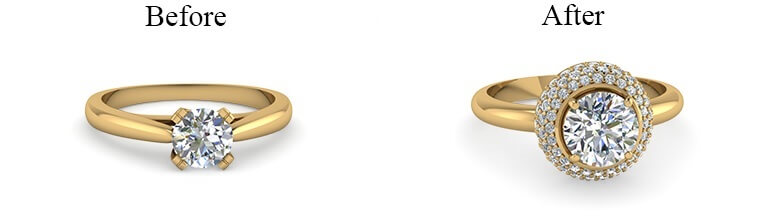 Depending on the type of changes that you require when going for a ring reset and the amount of time that the work needs to be done, the cost will definitely increase.
Adding other gemstones or changing the old one will come with an additional cost. The cost will greatly depend on where you purchase it, the number of stones, the size, and the type of gem. Take into consideration that the cost can go from hundreds to thousands of dollars.
Once you reset your ring, depending on the type of changes that will be done, you may want to insure the ring, in case it gets missing or robbed. The insurance cost will depend on the type of material that the ring is made of and the gemstones that are set.
Important things to consider
Resetting a ring, even though the job should upgrade it, may decrease its value.
There are cases when resetting an old inherited ring, may not be recommended. According to littlebirdtoldyou.com, there are multiple cases when the jeweler damaged the ring when unsetting the old gem. Make sure you go to a professional jeweler to warn you about possible risks. Also, there are jewelers who will not perform the changes that you require, to not damage the ring.
How can I save money?
Consider getting multiple quotes from different jewelers in order to find the deal that suits your budget.
People often say that it is more cost-effective to choose a local privately owned store rather than a big chain company to do the work.
Ensure that you hire a professional jeweler and ask for previous before and after work. For these jobs it is advisable to hire a reputable jeweler who is professional rather than a cheap one who may mess up your ring.

Leave a Reply
Want to join the discussion?Feel free to contribute!