
How Much Does Trilift Cost?
Updated on | Written by Alec Pow
This article was researched using 14 sources. See our methodology and corrections policy.
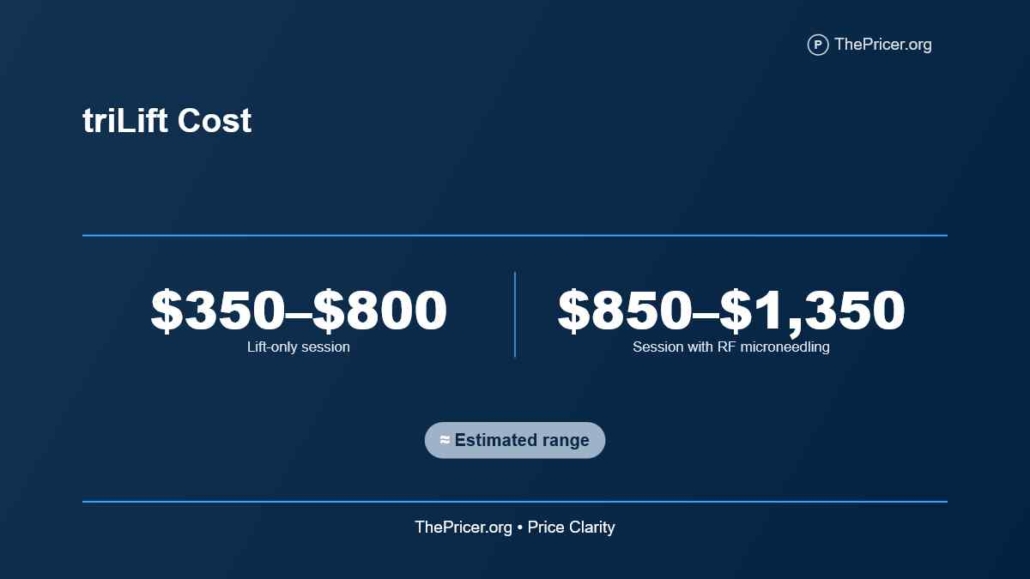
triLift costs about $350 to $800 for a lift-only session and about $850 to $1,350 when RF microneedling is included, based on current published US clinic menus. Multi-session pricing runs from about $1,800 to $2,495 for lift-only series to roughly $3,500 to $5,069 for fuller plans that add microneedling or bundled extras.
The wide gap comes from treatment scope, not from one standard triLift price. A quote should state whether it covers Dynamic Muscle Stimulation, TriPollar radiofrequency, RF microneedling, the face, the neck, and any add-on skin products.
Article Highlights
Jump to sections
- Lift-only triLift sessions can cost about $350 to $800 (at $30 per hour, earning that amount would take about 1.5 to 3.3 full-time workdays, before taxes), while sessions that include RF microneedling can reach $850 to $1,350.
- Published multi-session offers show lift-only series around $1,800 to $2,495 and fuller protocols around $3,500 to $5,069.
- Lumenis recommends a course of 4 to 6 weekly treatments rather than a fixed five-session rule for every patient.
- The full triLift protocol uses muscle stimulation, radiofrequency, and RF microneedling. A cheaper quote may omit the microneedling step.
- Maintenance can matter to the long-run budget because Lumenis describes effects lasting about 3 to 6 months, with added sessions used to maintain them.
How Much Does triLift Cost?
The price depends on what a clinic means by “triLift.” Current menus show that a lift-only visit using muscle stimulation and RF can sit hundreds of dollars below a visit that adds RF microneedling. At PM Aesthetics, a lift-only session is $800 (about 3.3 full-time workdays at $30 per hour), while one session with microneedling is $1,350. Clarus lists a similar split at $500 for RF skin tightening with DMS and $850 for a triLift session with RF microneedling.
Package pricing has the same scope problem. A low package may buy repeated lift-mode treatments. A higher package may add several microneedling sessions, neck treatment, IV therapy, skincare, or other extras. The published prices below are advertised clinic examples, not a national average. They are useful because they show what changes the bill.
| Provider | Advertised triLift scope | Published price |
|---|---|---|
| PM Aesthetics, New Hampshire | lift and microneedling menu | Lift only $800, single with microneedling $1,350, five-session plans $3,500 to $4,000 |
| Clarus, San Francisco | RF and DMS pricing | RF and DMS $500, full single $850, five full sessions $4,000 |
| J.Bentley Hair Studio Day Spa, Ohio | lift and resurfacing packages | Lift session $350, five lift sessions $1,800, six lift visits plus three RF microneedling sessions $3,500 |
| LIVation, Connecticut | multi-level triLift packages | Demo $249, five lift sessions $2,495, fuller package with three RF microneedling sessions and other extras $5,069 |
The lowest number is not automatically the better deal. Compare the number of sessions, which triLift modes are included, the treatment areas, and whether the quote is a promotional first visit or the normal package price.
What the triLift Price Buys
triLift is a Lumenis platform that can combine three treatment components. Dynamic Muscle Stimulation, called DMSt, uses electrical stimulation to contract selected facial muscles. TriPollar RF applies radiofrequency energy to the skin. triFX adds RF-assisted microneedling. The official triLift technology description separates these three components, which matters because clinics do not always sell all three in every appointment.
A full protocol is not the same product as lift mode alone. Lift mode can pair DMSt with RF without needles. The microneedling step adds a needling-based RF treatment. That extra procedure changes treatment time, supplies, recovery expectations, and price. It also explains why two clinics can both advertise “triLift” while quoting very different amounts. That scope difference can make one visit look much cheaper than another clinic’s fuller treatment plan.
Area coverage can change the quote too. Some menus describe facial-area treatment, while others include the neck or sell it inside a broader package. Ask the clinic to write down each area and each modality before comparing prices. A quote that says only “full face” leaves too much room for mismatched comparisons.
Why Package Prices Differ
Package discounts can be large, but they are not consistent. PM Aesthetics lists a non-member five-session full protocol at $4,000 (about 3.3 full-time workweeks at $30 per hour). Using that same clinic’s posted single-session prices, two lift-only sessions at $800 each plus three sessions with microneedling at $1,350 each would total $5,650. The package is $1,650 lower, a calculated saving of about 29% for that exact mix of visits.
That discount should not be applied to every clinic. Clarus lists a full single session at $850 and five sessions at $4,000. Five singles would total $4,250, so its published package saves $250, or about 6%. The difference between 29% and 6% shows why “package discount” is not a useful number until the single-session scope matches the package.
Bundles can also carry services outside the core device treatment. LIVation’s higher-priced package adds three RF microneedling sessions plus IV vitamin C and glutathione injections. Someone comparing that package with a lift-only series is comparing different purchases. Ask for a line-item quote if the clinic bundles skincare, injections, infusions, exosomes, or other services into the advertised total.
Maintenance
The initial series is only one part of the budget. A Lumenis protocol paper describes 4 to 6 weekly treatments, with the RF microneedling step performed every two weeks in that protocol. It says the combined effects last about 3 to 6 months and that maintenance may follow in 3-6 months, depending on the starting condition. That makes long-run spending more relevant than the first package alone.
A simple first-year scenario shows the difference. Start with PM Aesthetics’ $4,000 five-session full protocol. If the patient later buys one $800 lift-only maintenance session, the first-year spend becomes $4,800. If two lift-only maintenance visits are chosen, the total becomes $5,600. Those are illustrative totals, not a universal triLift schedule, because the clinician may recommend a different maintenance plan or a different modality.
Recurring cost is the hidden price most likely to change a budget decision. That upkeep can be costly. A person focused only on the opening five-session quote can miss the fact that the desired appearance may require paid upkeep. Ask how long the clinic expects its proposed protocol to last and what one maintenance visit costs before paying for the first series.
How Many Sessions
The old claim that every patient needs exactly five sessions is too rigid. Lumenis tells patients that a course of 4 to 6 weekly treatments is recommended for a longer-lasting effect. Five-session packages are common on clinic menus because five sits inside that range, but a menu structure is not the same as an individual treatment prescription.
The treatment sequence can also vary inside the course. The Lumenis protocol paper describes RF microneedling every two weeks rather than at every weekly visit. Several clinic packages follow a similar mixed design. PM Aesthetics sells a five-session modified protocol with three lift-only visits and two visits that add microneedling for $3,500. Its fuller $4,000 protocol uses two lift-only visits and three visits that add microneedling.
This is the number to ask for before comparing totals. How many weekly visits are included, and how many of those visits include microneedling? A five-visit quote with two needling sessions is not the same service as a five-visit quote with three. The treatment count alone does not tell you what you are paying for. The mix matters more.
triLift vs Other Facial Treatments
triLift and Ultherapy are easy to confuse because both are sold for non-surgical facial lifting, but they use different energy. Ultherapy PRIME uses microfocused ultrasound with real-time imaging. Its manufacturer says many patients have one Ultherapy session, with results developing over two to three months and lasting up to a year or longer for some patients. triLift uses muscle stimulation plus RF, with RF microneedling available as part of the protocol, and it is sold as a multi-visit course.
Botulinum toxin is a different purchase again. It temporarily reduces facial lines by acting on muscle activity rather than using RF or ultrasound to treat skin and facial structure. The American Society of Plastic Surgeons reports an average botulinum toxin cost of $435. Readers comparing repeat injectable spending can also see the current Botox cost guide and the dermal filler cost guide.
A surgical facelift has a different goal, invasiveness level, and cost structure. The American Society of Plastic Surgeons’ 2024 statistics give a projected facelift surgeon-fee range of $12,000 to $19,000 for facelift surgery, before anesthesia and facility costs. The facelift cost article covers the broader surgical bill. A 9D facelift price comparison is more relevant for readers looking at ultrasound-based non-surgical lifting.
Downtime, Risks, and Eligibility
“No downtime” needs qualification. Lumenis says patients may return to daily activities after treatment, but its patient information also says redness or swelling can last from a few hours to a few days and minor scabbing can appear after some treatment courses. The full triLift safety information lists possible effects that include pain, blistering or burns, redness, swelling, bruising, itching, pigmentation changes, scarring, and temporary breakouts.
Lumenis also lists pacemakers, defibrillators, implanted electronic devices, and metal implants in the treatment area among contraindications. A clinic should screen medical history and explain which modality it plans to use. The RF microneedling component changes the skin directly, so its recovery profile should not be treated as identical to a lift-only DMSt and RF visit.
Cost questions belong after eligibility questions when a device or implant may rule out treatment. Cosmetic pricing should not be read as medical clearance. If the clinic proposes a modified plan because of skin condition, prior procedures, implanted hardware, or another clinical issue, get the revised scope and price in writing before paying for a package.
Who Gets Better Value?

triLift sits between lower-cost repeat injectables and higher-cost surgery, but price alone does not make those options interchangeable. A buyer paying for triLift is paying for a course of energy-based and muscle-stimulation treatments. Someone seeking only one narrow wrinkle concern may be comparing the wrong services. Someone seeking surgical repositioning of marked tissue laxity may also be comparing different expected outcomes.
The better budget test is whether the proposed triLift scope matches the concern, the treatment series is financially comfortable, and maintenance has been included in the spending plan. If a clinic quotes $3,500 for five visits, ask whether microneedling is included and how many times. If another clinic quotes $5,000, ask what extra areas or services account for the difference. Those answers are more useful than judging the quote by price alone.
The same rule applies to adjacent aesthetic treatments. MiraDry pricing belongs to a different use case because MiraDry targets underarm sweating rather than facial lifting. Matching the treatment goal comes before matching the dollar amount.
Makes sense if
- You want a non-surgical facial treatment and a clinician says you are an appropriate candidate.
- You value treatment of muscle tone plus skin rather than a single-modality service.
- You can budget for a multi-visit course and possible maintenance.
- You have a written quote that identifies the included triLift modes and treatment areas.
Does not make sense if
- You expect the same anatomical change as a surgical facelift.
- You are comparing a lift-only quote with a microneedling package as if they were identical.
- A listed contraindication applies until a qualified clinician has reviewed it.
- The recurring maintenance budget would be difficult to sustain.
Answers to Common Questions
How much is one triLift session?
Published clinic menus show about $350 to $800 for lift-only sessions and about $850 to $1,350 for sessions that include RF microneedling. Promotional demos can be lower.
How much is a full triLift treatment series?
Current posted examples put fuller multi-session protocols around $3,500 to $5,069. Lift-only series can cost less, with published examples around $1,800 to $2,495.
Does everyone need five triLift treatments?
No. Lumenis recommends 4 to 6 weekly treatments for a longer-lasting effect. Five-session packages are common, but the treatment plan can differ by patient and by the components used.
How often will I pay for maintenance?
Lumenis describes effects lasting about 3 to 6 months and says maintenance may follow after that period. The cost depends on whether the maintenance visit uses lift mode alone or adds another component.
Is triLift cheaper than a facelift?
The upfront price is lower than the published surgeon fee for a surgical facelift, but the treatments are not equivalent. triLift is non-surgical and may involve repeat maintenance, while facelift surgery has separate anesthesia, facility, recovery, and medical costs.
Disclosure: Educational content, not medical advice. Pricing varies by provider, location, and insurance. Confirm eligibility, coverage, and out-of-pocket costs with a licensed clinician and your insurer. See our methodology and corrections policy.