
How Much Does a Norwegian Forest Cat Cost?
Updated on | Researched and reviewed by Alec Pow, Founder & Pricing Investigator
Prices, claims, and calculations checked against 14 cited sources. See our research methodology and corrections policy.
A Norwegian Forest Cat currently costs about $2,000 to $2,500 from the U.S. breeder pages and contracts reviewed for this update. The direct breeder sample includes advertised pet-kitten prices of $2,000, $2,000 to $2,200, and $2,500. That is not a national average, but it is a stronger current planning range than the older $800 to $1,200 figure still repeated in many breed-cost pages.
The acquisition price is only the first expense. Norwegian Forest Cats are large, slow-maturing pedigree cats with a double coat, climbing needs, routine veterinary expenses, and breed-specific health screening questions. A breeder contract may also leave sterilization and transportation to the buyer. Those differences can move the first-year budget by four figures even when two kittens have similar advertised prices.
Article Highlights
Jump to sections
- Current direct U.S. breeder examples reviewed here place pet Norwegian Forest Cats at $2,000 to $2,500.
- One breeder currently lists $2,000 to $2,200 and includes a veterinary exam, possible sterilization, a carrier, food, toys, and a care package.
- One documented 2025 purebred-rescue example carried an adult Norwegian Forest Cat adoption fee of $350.
- A calculated first-year breeder-kitten scenario comes to about $4,075 to $5,218+ before transportation, dental work, or emergency care.
- A modeled ongoing annual baseline with accident-and-illness insurance is about $1,392 to $1,765+, before dental treatment or unexpected illness.

How Much Does a Norwegian Forest Cat Cost?
Current direct breeder evidence sits well above the old $800 to $1,200 range. Folkvangr Forest Cats states a current kitten price of $2,500 and says the kitten comes with a spay or neuter agreement plus a health and genetic guarantee. MossPaws publishes a MossPaws sales contract at $2,000 for a pet-only Norwegian Forest Cat, with a $300 nonrefundable deposit that counts toward the purchase price. Goddess Cats lists Goddess Cats pricing of $2,000 to $2,200.
RebelSkog supplies another direct contract example. Its RebelSkog booking agreement states a selling price of $2,500, excluding transportation, with a $500 nonrefundable down payment applied toward the sale. Across these four breeder offers, the advertised pet-kitten range is $2,000 to $2,500. The sample is small and breeder-selected, so it should be read as a current planning range rather than a claim about every U.S. cattery. Contract terms also differ enough that two kittens at the same price can leave the buyer with different veterinary and transportation bills.
| Current U.S. breeder example | Advertised price | Published term or inclusion |
|---|---|---|
| Folkvangr Forest Cats | $2,500 | Spay or neuter agreement and health and genetic guarantee |
| MossPaws | $2,000 | Pet-only contract and $300 deposit toward purchase price |
| Goddess Cats | $2,000 to $2,200 | Vet exam, possible sterilization, carrier, food, toys, and care package |
| RebelSkog | $2,500 | Transportation excluded and $500 down payment toward purchase price |
What You Are Buying
The Norwegian Forest Cat, often called the Wegie, is a domestic pedigreed breed rather than an exotic wild-cat hybrid. CFA describes a sturdy cat with a dense undercoat and water-resistant guard hairs. The breed can take up to five years to reach full growth, with mature males around 12 to 16 pounds and females around 9 to 12 pounds. The same CFA breed standard says coat type and quality matter more than color and excludes chocolate, sable, lavender or lilac, cinnamon, fawn, and point-restricted coloring because those traits indicate hybridization.
Those breed traits have direct cost consequences. A larger adult cat benefits from a roomy carrier, a substantial litter box, sturdy scratching surfaces, and a stable cat tree rather than lightweight furniture. The long double coat also calls for regular combing even when professional salon visits are unnecessary. Coat-color marketing deserves care as well. A seller charging a premium for a chocolate, lilac, cinnamon, fawn, or pointed cat while calling it a standard purebred Norwegian Forest Cat is creating a mismatch with the CFA standard.
Pedigree records, parent health testing, veterinary care, contract terms, and the actual kitten package carry more financial weight than a claimed rare color.
What the Kitten Price Covers
The breeder pages above show why sticker price alone is a weak comparison. Goddess Cats places a veterinary exam, possible spay or neuter, a shot, travel carrier, familiar food, toys, and a care package inside its $2,000 to $2,200 kitten price. RebelSkog describes deworming, core vaccinations, rabies vaccination, and microchipping on its veterinary schedule. MossPaws sells at $2,000 but leaves sterilization to the buyer. A buyer comparing those offers should list every included service before deciding that one kitten is cheaper.
Current national veterinary planning figures show why the distinction matters. CareCredit places an over-six-month cat spay at an average $353, a neuter at $262, microchipping at $48, and a routine cat visit at roughly $57 to $130 in its veterinary cost study. Those figures are not charges every Norwegian Forest Cat buyer will pay. They are useful for services left outside the breeder package. Deposits need the same treatment. A $500 reservation payment on a $2,500 kitten is part of the purchase price when the contract says it is credited toward the balance, so adding it again would overstate the acquisition cost.
Health Screening
Health screening is one of the strongest reasons to compare breeders beyond price. TICA identifies hypertrophic cardiomyopathy, pyruvate kinase deficiency, and glycogen storage disease type IV among conditions that have affected Norwegian Forest Cats. DNA tests are available for PK deficiency and GSD-IV. HCM requires a different approach because TICA says no Norwegian Forest Cat-specific DNA detection test is available and recommends repeated echocardiogram screening of breeding cats. Its TICA health guidance also lists a life expectancy of 13 years or longer.
Ask for the records behind each health claim. A DNA certificate should identify the tested cat and the condition. An HCM statement should point to cardiac screening rather than a generic DNA panel. Testing does not promise a disease-free life, but it gives the buyer better information about inherited risks before money changes hands.
This is also where a very low kitten price can become misleading if the breeder cannot document parent testing, vaccination history, veterinary care, or a written health guarantee. Owners comparing another expensive breed can see the same relationship between acquisition price and breeder documentation in the Savannah Cat cost market.
First-Year Cost
A useful first-year estimate starts with one real purchase package and adds only expenses left to the buyer. Take the already cited MossPaws pet-only price of $2,000. Its contract requires sterilization at the buyer’s expense. Using the cited $353 female-spay benchmark, $330 to $1,100 for essential cat supplies, a $57 to $130 routine veterinary visit, and $75 to $100+ per month for routine cat expenses produces a reproducible budget. The cat ownership cost data include food, litter, enrichment, grooming, and litter-box maintenance within that monthly range.
Add the 2025 U.S. cat accident-and-illness benchmark of $435 per year, reported from NAPHIA’s 2026 industry data in a 2025 insurance benchmark. The modeled first-year total is $2,000 + $353 + $330 to $1,100 + $57 to $130 + $900 to $1,200+ + $435, which equals about $4,075 to $5,218+. This ThePricer scenario excludes transportation, dental treatment, emergencies, and any service already completed by the breeder. A male kitten using the cited $262 neuter benchmark lowers the same modeled total by about $91. That small surgery difference matters less than a four-figure change in supplies, monthly spending, or breeder inclusions.
Ongoing Annual Cost
After acquisition, initial supplies, and sterilization, the recurring budget is easier to isolate. Using the same cited monthly range of $75 to $100+, twelve months of routine spending comes to $900 to $1,200+. Add one routine veterinary visit at the cited $57 to $130 range and the cited $435 accident-and-illness insurance benchmark. The modeled recurring annual total becomes about $1,392 to $1,765+. This calculation answers a different question from the first-year total because it removes the kitten purchase, one-time home setup, and sterilization.
The annual figure is intentionally narrower than a lifetime-cost forecast. It excludes dental treatment, illness, emergency care, boarding, pet rent, medication, and major replacement purchases. Food, litter, enrichment, and grooming choices can push the baseline higher without any medical problem occurring. Norwegian Forest Cats do not need a breed-only commercial diet, but their larger adult body size can make the lowest food budget unrealistic for some cats.
A household using premium wet food, several litter boxes, frequent toy replacement, or paid pet sitting will spend above the modeled baseline. Compare the annual budget with a Tonkinese Cat only after matching the same food, insurance, veterinary, and housing assumptions.
Grooming and Home Setup
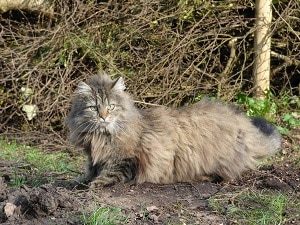
The Norwegian Forest Cat’s coat looks expensive to maintain, but routine care is usually home-based. PetMD says the dense water-resistant coat needs combing at least weekly, with more frequent work during heavy spring and fall shedding. Its Norwegian Forest grooming guidance also describes the breed as an active climber that benefits from high perches.
That shifts much of the breed-specific setup expense toward sturdy vertical furniture, scratching surfaces, and appropriately sized equipment rather than scheduled salon grooming.
Routine shaving is not a good money-saving plan for this double-coated breed. Regular combing removes loose undercoat while keeping the normal coat structure intact. The first setup should include a carrier large enough for an adult Wegie, a roomy litter box, a stainless-steel comb, nail clippers, sturdy scratching surfaces, bowls, toys, hiding areas, and a stable cat tree.
A household that handles weekly combing at home can keep routine grooming cash costs modest, although neglected mats can create a paid grooming or veterinary problem. Replacement cost matters because a heavier cat can put more stress on inexpensive furniture. Owners comparing another large longhaired breed may find the Ragdoll Cat cost useful because purchase prices can overlap while coat texture, health screening, and breeder terms differ.
Adoption and Lower-Cost Routes
Adoption is possible, but a confirmed purebred Norwegian Forest Cat is less predictable to find than a domestic longhair that resembles one. A 2025 Specialty Purebred Cat Rescue listing featured an eight-year-old Norwegian Forest Cat named Fiona with a $350 adoption fee. The documented rescue listing states that she is spayed, microchipped, vaccinated, and FIV and FeLV negative. That package shows why an adoption fee should not be compared with a breeder price as if both routes contain the same age, pedigree certainty, and veterinary services.
Retired breeding adults are another lower-cost route when a cattery offers them. Availability and price vary, so they should not be turned into a made-up national range. Transportation can also erase part of the apparent saving on a distant kitten.
The breeder terms already cited above show that Folkvangr places transportation on the new owner and RebelSkog excludes transportation from its $2,500 sale price. Airfare, ground travel, a professional courier, lodging, or an airline-approved carrier can sit outside the advertised kitten price. Ask for the complete handoff plan before comparing distant and local kittens. A slightly higher local price can produce a lower acquisition total when transport is avoided.
The Right Financial Fit
A Norwegian Forest Cat purchase fits best when the buyer can pay for the cat without emptying the money reserved for veterinary care. A current breeder price near $2,000 to $2,500 can cover meaningful services when the package includes pedigree records, early veterinary work, health screening behind the breeding program, clear sterilization terms, and a written health guarantee. A higher number alone proves none of those points. The records and contract carry the evidence.
The lower-priced route can fit better when its scope matches the household. A $350 rescue adult that already has sterilization, vaccination, and microchip work completed is not a discounted version of a $2,500 breeder kitten. It is a different acquisition route with a different age, history, pedigree certainty, and package of services. Budgeting works better when each route is priced as a first-year commitment rather than a sticker-price contest.
Makes sense if
- You can pay the purchase or adoption fee while keeping a separate veterinary reserve.
- You can provide sturdy climbing space and routine coat care.
- You are willing to review health tests, pedigree records, and contract terms before paying a deposit.
- You can fund recurring food, litter, insurance, and preventive veterinary care for a 13-year-plus commitment.
Does not make sense if
- The kitten price would use the money you need for sterilization, transport, or veterinary care.
- You are choosing a seller mainly because of a claimed rare chocolate, lavender, cinnamon, fawn, or pointed coat.
- You cannot accommodate a large cat’s climbing and litter-box needs.
- You expect the purchase price to cover the full first year.
Answers to Common Questions
How much is a Norwegian Forest Cat kitten?
The current direct U.S. breeder examples reviewed here place pet kittens around $2,000 to $2,500. The exact bill depends on breeder inclusions, sterilization terms, transportation, and the individual contract.
How much does a Norwegian Forest Cat cost in the first year?
The modeled breeder-kitten scenario above comes to about $4,075 to $5,218+. It includes a $2,000 kitten, buyer-paid spay, home supplies, routine monthly care, one routine veterinary visit, and the cited insurance benchmark. Transportation, dental work, and emergencies are excluded.
Can I adopt a Norwegian Forest Cat?
Yes, but confirmed purebred cats appear less predictably than mixed longhaired cats. One documented 2025 specialty rescue example carried a $350 fee and included major veterinary work.
Do Norwegian Forest Cats need expensive professional grooming?
Routine professional grooming is not usually required. Weekly combing at home is the main coat-care task, with extra work during seasonal shedding. Paid grooming may still be useful if matting develops or an owner cannot maintain the coat.
How long do Norwegian Forest Cats live?
TICA lists life expectancy at 13 years or longer. Individual lifespan varies with genetics, preventive care, environment, disease, and other health factors.
Disclosure: Educational content, not medical advice. Pricing varies by provider, location, and insurance. Confirm eligibility, coverage, and out-of-pocket costs with a licensed clinician and your insurer. See our methodology and corrections policy.