
How Much Does Pool Water Delivery Cost?
Last Updated on January 25, 2024
Written by CPA Alec Pow | Content Reviewed by  CFA Alexander Popinker
Swimming pools provide hours of entertainment during the hot summer months. But keeping a pool properly filled and maintained can be a headache, especially when it comes to transporting large volumes of fresh water.
This guide will cover everything you need to know about the pricing, services, and strategies for minimizing your pool’s water expenses.
How Much Does Pool Water Delivery Cost?
The cost of filling or refilling a pool with trucked-in water typically ranges from $200 to $1,000, with most homeowners paying $300 to $700 per delivery. The final price depends on several factors:
- Pool size – Larger pools require more water, which increases delivery costs. Expect to pay around $300 to fill a small 10,000-gallon pool, while 30,000+ gallon pools often exceed $700 per fill.
- Water volume needed – Are you filling a brand new pool or just topping off? Partial refills are cheaper than full-volume deliveries.
- Water source – Drawing from a local well or surface water is the cheapest. Purchased municipal water costs more.
- Delivery method – Water truck delivery is pricier than direct hose supply.
- Service frequency – Regular customers may get discounts compared to one-time fill-ups.
- Location – Water delivery in remote areas can add transportation fees.
- Time of year – Peak pool season usually means higher demand and rates for delivery services.
With so many variables, it’s impossible to give an exact universal price for pool filling. The average 25,000-gallon residential pool costs $450 to $600 per complete water delivery service, but your specific situation could be below or above that range.
ByRossi, for example, mentions that the average price to deliver water to a pool is $175-$380 per truck (roughly 6,000 gallons). It also states that it will cost about $440-$950 to fill a 15,000-gallon pool.
What is Swimming Pool Water Delivery?
Pool water delivery services involve hiring a water transportation service to bring the large volume of fresh water required to fill or top off a pool using tanker trucks. The delivered water replenishes pool volume lost to splashing, draining, or evaporation.
Companies that offer pool water delivery utilize large tanker trucks capable of carrying thousands of gallons of fresh water at once. This allows them to efficiently transport the 7,000 to 50,000+ gallons needed to fill average residential and commercial pools.
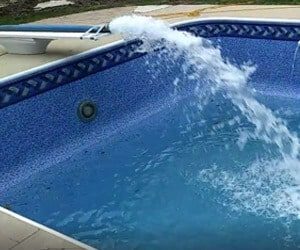
Water tanker trucks pump water into the pool via hoses, either drawing suction from a nearby hydrant or pressurizing stored truck water. The process of filling an entire pool normally takes 1-3 hours. Pool owners can also request smaller partial refills when needed.
Routine water delivery provides an alternative to using precious household water supplies to maintain pool levels. Pool filling can strain home plumbing and water bills. Hiring an outside service ensures you have the volume and pressure needed for quick, hassle-free fill ups.
Comparing Water Delivery Services
There are two main types of pool water delivery:
Water truck delivery – Bulk water is transported via tanker truck and pumped into your pool. More convenient but pricier.
Hose water delivery – Water is pumped through hoses directly from the source to your pool. Cheaper but less accessible.
Water truck delivery offers unmatched convenience. Tankers can transport 7,000 to 12,000+ gallons of water in a single trip. They pump directly into your pool via onboard pumps and hoses in just a few hours, regardless of property size or water access.
However, you pay a premium for that service, with average costs of $400 to $700 per residential pool fill. Rural deliveries of pre-chlorinated water may cost even more factoring in transportation time. Still, the speed and simplicity of water truck delivery make it the top choice for most pool owners.
Hose delivery utilizes large-diameter hoses to convey water directly from an on-site or municipal water source to your pool. This avoids water transportation costs, but depends on sufficient hose lengths and water pressure. Nearby hydrant access offers the most affordable option at $200 to $300 per fill. Hauling hoses across properties or multiple streets can reduce savings compared to truck delivery.
Calculating Water Volume and Cost
The starting point for estimating pool water delivery costs is to calculate how much water volume you actually need. With the total gallons, you can get an accurate quote.
Here is the formula:
Length x Width x Average Depth x 7.5 = Approximate Pool Volume (gallons)
So for example, a common 20 ft x 40 ft pool with an average 6 ft depth would need about 36,000 gallons to fill completely:
20 x 40 x 6 x 7.5 = 36,000 gallons
With this volume, you can request quotes from local water delivery companies. Expect to pay around $550 to $650 to fill a 36,000-gallon residential pool.
Use the same formula to calculate partial refill amounts. You’ll need to regularly replenish 5-25% of the total volume lost from splashing, draining, and evaporation.
Residential vs. Commercial Pool Water Delivery
Residential pools are smaller and use a lower volume of water compared to public commercial pools. The typical residential pool takes 7,000 to 50,000 gallons to fill. At standard water delivery rates of $0.10-0.15 per gallon, most homeowners can expect to pay $300 to $700 per fill.
Commercial pools are larger public pools found at schools, water parks, hotels, and recreation centers. Their expanded surface area requires far more water, from 50,000 up to over 500,000 gallons.
Bulk discounts can reduce the per gallon rate to just $0.05-0.10. Still, most commercial customers pay $1,000 to $5,000 per water delivery based on the massive volume required.
You might also like our articles about the cost of an Endless pool, an above ground pool, or the cost to open a pool.
Municipal sources often provide the most affordable commercial pool water delivery, while hydrant access issues make hose delivery impractical. Commercial locations also tend to require more routine refilling than residential pools.
Local vs. Distant Water Delivery Services
How far away is the nearest water delivery company? Distance from your pool creates a tradeoff:
- Local services charge less in transportation fees, making them ideal if available.
- Distant services may provide better rates and service to offset added mileage costs.
Check rates from any providers within a 25-mile radius of your pool. Most charge a base rate plus added fees for longer distances. Local companies may offer significant savings compared to distant suppliers once you factor in mileage charges.
If your property has hydrant access, even a distant company can utilize local water for affordable delivery. For rural areas, traveling delivery companies may be the only option but budget accordingly. Discuss distance, travel fees, and minimum delivery amounts before choosing a service.
Seasonal Considerations for Pool Water Delivery
 Pool season brings a spike in demand for water delivery. To ensure reliable service and cost savings:
- Book early – Reserve your pool’s opening delivery slot 1-2 months in advance. Last minute calls get hit with premium charges.
- Avoid peak months – July/August have highest demand. Schedule deliveries in May, June or September to potentially save over $100.
- Consider pre-purchasing – Some companies offer pre-paid volume discounts to lock in lower off-season rates.
- Plan ahead – Beat the rush by scheduling intermittent top-off deliveries every 2-3 weeks rather than massive seasonal refills.
With smart preparation, you can ensure your pool’s water supply without blowing your summer budget on emergency delivery fees.
Additional Pool Water Delivery Costs
Beyond the base transportation rates, you may encounter these added pool water expenses:
- Water treatment – Sanitized delivery adds $0.02-0.05 per gallon.
- Emergency delivery – Unplanned same-day or off-hour fills can cost an extra $100+.
- Fuel surcharges – Some companies levy extra fees during periods of peak gas prices.
- Unpumped draining – Removing water without pumps (ie for repairs) may have additional hourly labor fees.
Confirm any additional surcharges when comparing bulk water delivery quotes. While inconvenient, avoiding emergency and off-season
deliveries can really help control budget overruns. Carefully calculating your pool’s exact water volume needs also prevents paying for more water than necessary.
Tips for Reducing Pool Water Delivery Costs
Here are some proven ways to get the most value from your swimming pool water delivery:
- Compare multiple companies – Rates can vary dramatically between providers.
- Request off-season discounts – Taking delivery before peak summer can save up to 20%.
- Leverage routine service – Schedule regular small refills instead of massive seasonal fill ups to get customer loyalty discounts.
- Use household water – For small top-offs under 2,000 gallons, use your own garden hoses and save on delivery fees.
- Calculate needs precisely – Don’t pay to fill 100% capacity if you only need 15% restored.
- Inspect for leaks – Fix any cracks that lead to rapid loss of water and delivery costs.
Conclusion
Pool water delivery provides a convenient service for topping off or refilling your residential or commercial pool. While pricing varies based on volume, location, and other factors, most pools can expect to pay between $300 – $700 per delivery.
Carefully comparing providers, calculating your exact water needs, and scheduling off-peak deliveries can help minimize the costs. With smart preparation and usage, pool water delivery lets you keep your pool perfectly filled all season without blowing your budget.
FAQ
How much does it cost to fill up a 10,000-gallon pool?
For a 10,000-gallon residential pool, expect to pay $300 to $400 for complete filling. The typical range is $0.10 to $0.15 per gallon for water delivery and pumping. So at those rates, a 10,000-gallon pool will cost $1,000 to $1,500 to completely refill.
What is the fastest way to fill a pool?
The fastest method is using a water truck delivery service. Their powerful pumps and large tanker capacities allow completing most residential pool fills within 1-3 hours. For even faster fill ups, have multiple water delivery trucks get water to you simultaneously.
How soon after filling a pool can you swim?
For health safety, you should wait 1-3 days after full filling or refilling a pool before swimming in it. This allows proper circulation and filtering of the new water. Quicker swimming risks exposure to bacteria and contamination from the delivery process.

My daughters have been asking for a portable swimming pool for their fifth birthday. Thanks for mentioning here that ordering bulk water from a reputable company can give us a guarantee of a 24-hour timeframe of when they would finish filling up an average-sized pool. I think we’ll opt for this service and would probably get in touch with one after we buy the pool.
Trying to see if we can get water deliver to our round above ground pool. Is 24ft round. Can you tell me how much it would cost and when is the earliest we could get it delivered
looking to fill new pool.. 18x9x5 i think its 12,000 liters.. Whats the cost of this. Im in cambridge ont
I have a 15×30 in ground pool–how many gallons is that and the cost for delivery