
What is The Price of Jalapenos?
Updated on | Written by Alec Pow
This article was researched using 14 sources. See our methodology and corrections policy.
Fresh jalapeños currently cost about $1.49 to $2.19 per pound in several large U.S. retail examples, while organic peppers can run from about $2.59 to $6.99 per pound depending on store and market. A 12-ounce jar of pickled jalapeños can cost around $1.64 to $1.97. The price changes with store, region, pepper size, organic certification, package form, and whether the seller charges by weight or by piece.
For most shoppers, fresh conventional jalapeños remain an inexpensive produce item. The larger price gaps appear when comparing organic peppers, specialty markets, prepared jars, or seeds for home growing. A per-pepper price can also hide a large size difference.
Article Highlights
Jump to sections
- Current conventional examples reviewed run from $1.49 to $2.19 per pound.
- A current Sam’s Club two-pound pack is $3.97, or $1.99 per pound.
- Current organic examples reviewed range from $2.59 to $6.99 per pound.
- A 12-ounce pickled jalapeño jar can cost about $1.64 to $1.97.
- A 25-seed jalapeño packet currently costs $6.45 from one commercial seed supplier.
- Same-store serranos can cost about 82% more per pound than jalapeños.
How Much Do Jalapeños Cost?
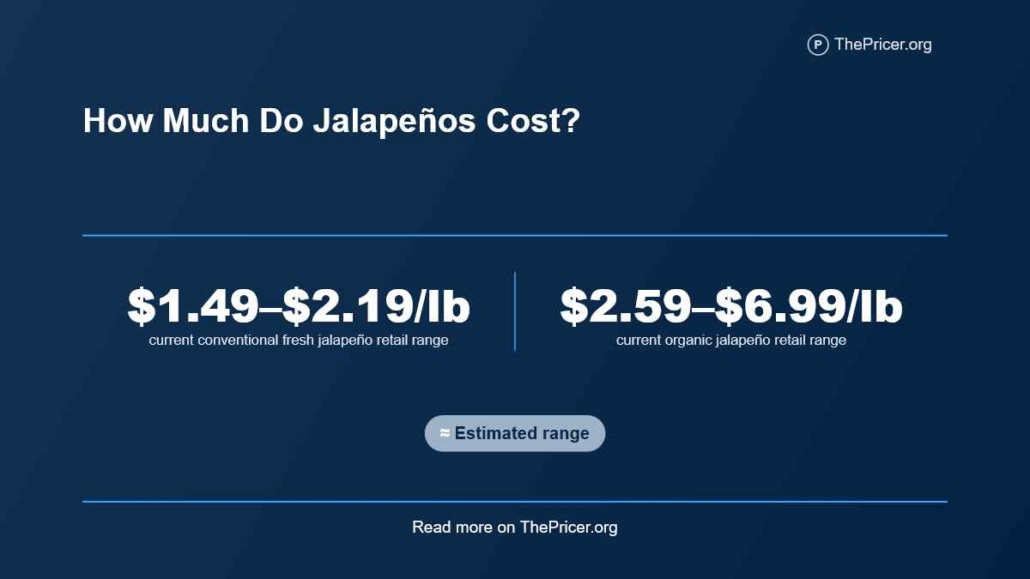
Current fresh prices are much tighter than the older $2 to $7 per pound range suggests. Instacart lists fresh jalapeños starting at $1.49 per pound based on recent regular U.S. online prices. Sam’s Club currently lists a two-pound pack at $3.97, or $1.99 per pound. A Kroger fresh listing is $2.19 per pound and about $0.33 each.
Organic and prepared products widen the spread. Smith’s organic jalapeños are $2.59 for one pound, while one specialty organic listing is $6.99 per pound. Walmart currently lists a 12-ounce pickled product at $1.64.
| Jalapeño purchase | Current example | Billing unit |
|---|---|---|
| Fresh conventional | $1.49 | Per pound starting price |
| Fresh two-pound pack | $3.97 | $1.99 per pound |
| Loose fresh at Kroger | $2.19 | Per pound |
| Organic at Smith’s | $2.59 | One-pound package |
| Specialty organic example | $6.99 | Per pound |
| Pickled 12-ounce jar | $1.64 | Per jar |
These are current retail examples, not a national average. Produce prices can move with local supply, retailer, promotions, and delivery channel. The low end can fall below the table during a sale, while specialty organic stores can sit well above mainstream grocery pricing. A two-pound club pack also requires a larger purchase than a few loose peppers, so the cheapest rate per pound may create more food than a household needs. A useful jalapeño budget starts with the exact form, quantity, and unit being purchased.
What You Are Buying
Jalapeño is a cultivar group of Capsicum annuum strongly associated with Mexico. Mexico’s agriculture ministry traces the name to Xalapa in Veracruz and notes regional names including cuaresmeño and guachinango. Fresh peppers are commonly harvested green, while fully mature fruit can turn red and develop a sweeter flavor.
Heat varies much more than the old 3,500 to 3,600 SHU figure suggests. A 2026 University of California pepper reference places jalapeños at 2,500 to 8,000 SHU. Variety, growing conditions, maturity, and individual fruit can change perceived heat. Serranos sit higher on the same scale.
Ripeness and processing also change the product being priced. Green jalapeños dominate fresh produce bins, while fully ripened red fruit can be sold fresh or processed. When ripe jalapeños are smoked and dried they become chipotle, which belongs in a different price category from fresh produce because water loss, smoking, packaging, and shelf life change the unit being sold.
For a fair cost comparison, match the form to the recipe. Fresh green peppers, ripe red peppers, organic peppers, pickled slices, dried peppers, and seeds have different weights, storage lives, and uses. A cheap jar does not replace fresh whole peppers for stuffing, and an inexpensive pound of fresh peppers does not offer the same shelf life as a sealed pickled product.
Price Per Pepper
Many stores display a per-piece estimate even when the final charge is based on weight. The Kroger listing cited in the opening price section is $2.19 per pound and about $0.33 each. Dividing $2.19 by $0.33 gives an implied 6.6 average-priced peppers per pound for that listing.
That number is not a physical rule. Jalapeños vary in length, wall thickness, water content, and maturity. Another retailer can estimate a much smaller or larger pepper. A store selling by piece can look cheap until the shopper compares the actual weight. A recipe calling for six large peppers can use more product than one calling for six small peppers.
The per-piece estimate does help with quick recipe math. At $0.33 each, 12 peppers cost about $3.96. Twenty peppers cost about $6.60. If the store weighs produce at checkout, the final bill may differ because the listed each-price is only an estimate.
For a fair grocery comparison, use price per pound when possible. Use price per pepper only when the store truly sells each pepper at a fixed amount or when the recipe depends on a count rather than total weight.
Organic Jalapeños
Organic jalapeños can carry a modest premium at a mainstream chain or a very large premium at a specialty seller. The Smith’s one-pound organic listing cited in the opening price section is $2.59. Compared with Kroger’s conventional $2.19 per pound example, that is a difference of $0.40 per pound, or about 18%.
The premium can widen sharply. The specialty organic listing cited in the opening price section is $6.99 per pound. Against the same $2.19 conventional benchmark, the gap is $4.80 per pound. That specialty example is about 3.2 times the conventional price.
Those two organic examples should not be blended into an “average organic price.” They show how retailer and market positioning can matter as much as certification. A one-pound packaged organic product at a regional chain and loose organic peppers at a specialty natural-foods store serve different retail channels.
Shoppers buying only a few peppers may see a small cash difference even when the percentage premium looks large. A household buying several pounds for canning, catering, or a large batch of salsa will feel the premium much more directly.
Fresh vs Pickled
Pickled jalapeños look cheap because the package is small and shelf-stable. The 12-ounce Walmart product cited in the opening price section costs $1.64, or about $0.14 per ounce. Multiplying that ounce price by 16 gives about $2.19 per pound of packaged product.

That happens to match Kroger’s fresh $2.19 per pound figure, but the comparison is misleading if treated as equal pepper mass. A jar contains brine and may include other vegetables or seasonings. Fresh produce pricing measures the peppers themselves. Packaged-product weight measures everything in the container according to the label.
Fresh and pickled also solve different kitchen needs. Fresh peppers work for roasting, stuffing, salsa, salads, and cooking where texture matters. Pickled slices offer longer storage and immediate use on sandwiches, nachos, burgers, and tacos. Paying a similar apparent per-pound rate does not make the two products interchangeable.
The useful rule is to compare the form required by the recipe. Buying fresh because it appears cheaper can create waste if most of the peppers spoil. Buying jars for a recipe that needs crisp whole peppers can force a second purchase.
Jalapeño vs Serrano
Jalapeños are often compared with serranos because both are common fresh green chiles, but the heat and price can differ. Kroger’s current search results show jalapeños at $2.19 per pound and current fresh-pepper results with serranos at $3.99 per pound. The same retailer also lists Anaheims at $1.49 per pound in that comparison set.
The serrano premium is $1.80 per pound. Dividing $1.80 by the jalapeño price of $2.19 gives about 82%. That makes serranos materially more expensive in this same-store comparison, even before considering that a recipe may use a different quantity because serranos are hotter.
Heat supports that distinction. Iowa State places jalapeños around 2,500 to 10,000 SHU and serranos around 10,000 to 25,000 SHU in its pepper heat guidance. A cook may need fewer serranos to reach the desired heat, so a straight pound-for-pound cost comparison does not tell the full recipe cost.
For shoppers building a produce budget, bell pepper prices belong in a separate mild-pepper comparison. Bell peppers have no jalapeño-like heat and are usually purchased for volume, sweetness, and texture rather than as a direct hot-chile substitute.
Seeds and Growing Costs
Growing jalapeños changes the cost unit from pounds to seeds, plants, and harvest. Johnny’s Selected Seeds currently lists one hybrid jalapeño packet at $6.45 for 25 seeds. The same listing charges $17.75 (at $30 per hour, earning that amount would take about 36 minutes, before taxes) for 100 seeds and $91.40 for 1,000 seeds.
The packet price equals about $0.26 per seed. Buying 40 separate 25-seed packets to reach 1,000 seeds would cost $258. The direct 1,000-seed quantity costs $91.40, a difference of $166.60, or about 65%. That bulk discount matters to growers, but a home gardener rarely needs 1,000 plants.
Mexico’s agriculture ministry says a jalapeño plant can produce about 35 peppers per harvest under some conditions, while stressing that variety and growing conditions change output. Using one $0.26 seed and a purely illustrative 35-pepper harvest, seed cost works out to less than $0.01 per pepper. Soil, containers, fertilizer, water, lighting, pest losses, failed germination, and labor are excluded, so this is not a full growing-cost estimate.
Home growing can still be attractive for households that use peppers often. The financial case becomes weaker when plants need purchased containers, indoor lighting, or repeated supplies for only a small harvest.
Shopping, Storage
Do not assume one calendar month will always deliver the cheapest local price. Produce promotions, crop conditions, store format, and pack size can move the shelf rate. Choose firm, glossy peppers without soft spots when buying fresh, then buy only the quantity that fits the recipe and near-term use. A lower club-store price per pound is wasted if part of a large package spoils.
Capsaicin can irritate skin and eyes. The Iowa State guidance cited above advises sensitive handlers to wear gloves and avoid touching the face while preparing hot peppers. Removing the pale interior ribs and nearby tissue can reduce perceived heat because much of the capsaicinoid concentration is associated with those internal tissues rather than the seeds themselves.
For a worked shopping scenario, assume a large gathering needs three pounds of fresh jalapeños plus one 12-ounce jar of pickled slices. Three pounds at the current Sam’s Club rate of $1.99 per pound cost $5.97. Add the Walmart jar at $1.64 and the modeled pepper total becomes $7.61, before tax, delivery, or other ingredients.
Makes sense if
- You compare fresh peppers by weight when stores use different piece estimates.
- You buy organic only when the certification or retailer fits your preference and budget.
- You use pickled peppers for recipes where brine and softer texture fit the dish.
- You grow plants when you will use enough peppers to justify the supplies and care.
Does not make sense if
- You compare jar weight directly with fresh pepper weight as though both contain the same amount of pepper.
- You assume every organic seller charges a similar premium.
- You buy a large quantity because the per-pound price is low but expect part of it to spoil.
- You treat seed cost alone as the full cost of growing peppers.
For a broader produce budget, the same unit-price method works when comparing cucumber prices and sweet potato prices.
Answers to Common Questions
How much is a pound of jalapeños?
Current conventional examples reviewed range from about $1.49 to $2.19 per pound. Local promotions and specialty stores can fall outside that band.
How much does one jalapeño cost?
Kroger currently estimates about $0.33 each at its $2.19 per pound listing, but pepper size can change the per-piece estimate.
Are organic jalapeños much more expensive?
They can be. Current examples reviewed range from $2.59 to $6.99 per pound, so the premium depends heavily on retailer.
How much do pickled jalapeños cost?
A current 12-ounce Walmart example costs $1.64, with another 12-ounce version at $1.97.
How much do jalapeño seeds cost?
One current commercial seed listing charges $6.45 for 25 seeds, while larger quantities reduce the cost per seed.
Disclosure: Educational content, not financial advice. Prices reflect public information as of the dates cited and can change. Confirm current rates, fees, taxes, and terms with official sources before purchasing. See our methodology and corrections policy.