
How Much Does Window Tint Removal Cost?
Last Updated on December 29, 2023
Written by CPA Alec Pow | Content Reviewed by  CFA Alexander Popinker
There are several reasons for people to remove window tint. They might notice that it starts to peel, look dull, or get a dingy appearance, as tint isn’t made to last forever.
Other owners might just need to remove window tint because they found out they are breaking the law or they just don’t like it or want it anymore.
How much does window tint removal cost?
Window tint removal costs, on average, anywhere between $120 and $250, for a whole car. By the window, the price is about $30 to $75. This price will usually depend on factors like your geographical location, the professional you choose to work with, the amount of tint on the window, as well as how this job is done.
You might also like our articles about the cost of window tinting, tempered glass, or car wrapping.
However, you could reduce these costs to as low as $10 if you were to go for a DIY project instead, depending on the products you choose for the job. Based on our research, using a small scraper, some water, a special blend of dishwashing detergent and steel wool is the cheapest way to approach this job.
People on TintDude.com have stated that a skilled technician in New York City might charge around $30 to $35 per window, although the back window is usually more expensive, at about $80 to $90. An expert on the same website has argued that they would charge around $60 per hour with jobs that have a minimum hour commitment.
Window tint removal overview
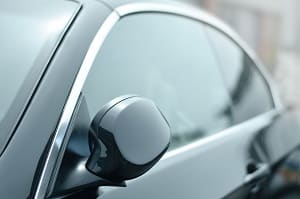 One of the most common methods that professionals use during the removal process includes lifting the corners with a blade. They don’t have to be lifted too much; just enough so that you can peel the tint away easily. Most of the tint will peel completely while you are grasping and peeling it. Even so, there will be pieces that will still stick in spotty areas, in most situations.
The next part involves using either an ammonia mixture or just a simple soapy mixture together with water. This will be placed inside a spray bottle and then sprayed over the entire car window, especially on the remaining residues.
You will then have the remaining tint removed by scraping with a razor blade. Keep the areas you scrape moist during the whole process to prevent damage to the window.
More experienced individuals might choose to avoid using the razor blade as a way of avoiding any damage done to the window. After all of the old tint and its adhesive are removed, the window will be cleaned and dried. A glass cleaner should work perfectly.
There are also professionals who choose to use fabric cleaner for this removal. During this process, you will have to fill the steamer with water. It will then be used near the corners up until the tint is loosened away from the glass.
Just like in the first method, the tint will then be peeled away. The remaining residue will be blasted with the steam instead of being washed with the soapy mixture.
Most professionals can do this job on all windows of the average four-door sedan, including the rear window tint, in under two hours.
How much does window tinting cost by geographic location?
A very important factor that impacts the cost of having your window tint removed is your geographic location.
There are important variations in the average hourly rates between different US states.
This is because you will find much lower operating costs for a shop in rural Georgia, for example, than in New York City. As such, the hourly rate for the shop’s time and labor would be more expensive in New York than in Georgia.
Let’s go over the average costs of removing tint in different locations around the US, so you better understand the price variation based on this factor:
| USA Geographic Location | Average Window Tint Removal Cost |
|---|---|
| Atlanta, GA | $160 – $193 |
| Augusta, ME | $116 – $143 |
| Austin, TX | $110 – $138 |
| Baltimore, MD | $121 – $148 |
| Birmingham, AL | $116 – $143 |
| Boise, ID | $127 – $154 |
| Boston, MA | $110 – $143 |
| Buffalo, NY | $148 – $182 |
| Charlotte, NC | $148 – $182 |
| Chicago, IL | $148 – $182 |
| Cincinnati, OH | $127 – $148 |
The cost to remove tint from building windows
You will get a different price to have window tint removed from a commercial or residential building than to have tint removed from the windows of a vehicle.
The average price you will get from most companies to remove tinting from windows will be somewhere between $2 and $3 per square foot. But considering that building windows come in very different sizes, most professionals won’t charge by the window. The condition and type of the tinting film will usually affect the price of the job.
The tinting on residential and commercial windows will start to crack, fade, peel, or bubble at some point, just as it happens to the windows of cars and trucks.
As the cost of replacing large windows on a commercial building or home can be very high, it is usually more important not to cause damage to the window during the film removal process.
Although the pricing is pretty different, the process used to remove bad tint from structural building windows is very much the same as it is for vehicles.
According to most window tint professionals, as long as the window tint film is barely scratched or shows just some bubbles, while still retaining most of its original coloration, you shouldn’t be charged more than $2 per square foot for the job.
If instead, the window film has become more prone to cracking and brittle or has considerably changed its color, the job will require more work, bringing the price higher, at around $2.50 per square foot.
The most expensive jobs are priced at around $3 per square foot and involve removing graffiti film or security film from windows.
Cost to Remove Window Tint From Residential & Commercial Windows (Per Window)
| Window Size | Square Feet | Major Damage/Wear (After 10% Increase) | Minimal Damage/Wear (After 10% Increase) |
|---|---|---|---|
| 48 x 72 | 24 | $66.00 | $52.80 |
| 48 x 60 | 20 | $55.00 | $44.00 |
| 48 x 54 | 18 | $49.50 | $39.60 |
| 48 x 44 | 14.7 | $40.43 | $32.34 |
| 44 x 62 | 18.9 | $51.98 | $41.58 |
| 44 x 60 | 18.3 | $50.33 | $40.26 |
| 44 x 52 | 15.9 | $43.73 | $34.98 |
| 44 x 48 | 14.7 | $40.43 | $32.34 |
| 40 x 60 | 16.7 | $45.93 | $36.74 |
| 40 x 54 | 14.5 | $39.88 | $31.90 |
| 40 x 52 | 14.4 | $39.60 | $31.68 |
| 40 x 48 | 13.3 | $36.58 | $29.26 |
| 40 x 44 | 12 | $33.00 | $26.40 |
| 32 x 48 | 10.7 | $29.43 | $23.54 |
| 28 x 48 | 9.3 | $25.58 | $20.46 |
| 24 x 48 | 8 | $22.00 | $17.60 |
| 32 x 44 | 9.9 | $27.23 | $21.78 |
| 28 x 44 | 8.6 | $23.65 | $18.92 |
| 24 x 44 | 7.3 | $20.08 | $16.06 |
| 32 x 36 | 8 | $22.00 | $17.60 |
| 28 x 36 | 7 | $19.25 | $15.40 |
| 24 x 36 | 6 | $16.50 | $13.20 |
How can I save money?
You should look around and compare at least three to five companies before committing to a particular expert. Most companies and individual experts have their prices listed somewhere online, either on their websites or their social media profiles so doing your due diligence won’t be as hard as you might think.
It isn’t that hard to remove the tint from your windows. You will probably be able to remove tint in three hours or less with several materials and just a handful of tools as long as you do your homework on what the job involves first.
If you choose the method of removing the tint with the scraper, be very careful, as it is pretty easy to scratch your window if you don’t work with enough care.
You also have to tread lightly around circuits that lead to the radio antenna or the defroster. The repair needed when you damage any of these circuits will be a lot costlier than what you’d pay a professional to remove the tint properly from the start.
You can find a detailed guide on YourMechanic, that shows step-by-step instructions on how tint can be removed.
There are products available that can make it easier to remove the tint, costing as little as $5.

Leave a Reply
Want to join the discussion?Feel free to contribute!