
Intake Manifold Gasket Repair Cost
Last Updated on May 8, 2022
Written by CPA Alec Pow | Content Reviewed by  CFA Alexander Popinker
Gaskets are small and often neglected, but they are a vital part of the engine. They are placed between two metal components that are usually tightened with screws.
The car seals prevent the elimination of liquids from the engine, ensure the tightness of the engine and stop the residues from entering the engine. Your car has a number of gaskets, including the intake manifold gasket.
How Much Does an Intake Manifold Gasket Repair Cost?
The repair cost of an intake manifold gasket will be affected by some factors such as the make and model of your car, the mechanic you choose, and the geographical location. Expect to spend anywhere between $320 and $1,200 on the complete repair, including the parts and labor. This price range is highly influenced by the make and model of your car. For example, the costs for this repair performed on a Volkswagen would be around $160, while for a higher-end car like a Porsche you will have to spend almost $1,100. However, the majority of the professional repairs will cost anywhere between $285 and $570. In the table below you will find the average prices charged by local dealerships/mechanics for this repair performed on different types of cars.
| Make and Model | Average Price (Labor + Parts) |
| Buick Lesabre | $400 |
| Buick Century | $550 |
| Chevy Impala | $850 |
| Chevy Blazer | $500 |
| Chrysler Town and Country | $400 |
| Chevy Malibu | $600 |
| Ford 150 | $730 |
| Dodge Ram | $500 |
| Nissan Altima | $625 |
| Mustang GT | $400 |
| Toyota Camry | $400 |
| Pontiac Grand Am | $825 |
| Volkswagen Jetta | $350 |
| Toyota Corolla | $250 |
Depending on the type of car, you will have to spend anywhere between $25 and $140 only for the parts. Even though the parts are not that expensive, you will have to pay the bigger part of the price for labor if you choose to go to a mechanic.
You might also like our articles on the price of valve cover gasket replacement, head gasket repair, or a rear main seal replacement.
According to the Open Bay website, the intake manifold gasket repair is anywhere between $360 and $650, depending on the place where you are living and the make and model of your vehicle.
A member of the Just Answer online forum said that he had to pay around $800 to repair the intake manifold gasket for his car at a mechanic. Also, the whole job took almost seven hours.
Intake manifold gasket details
To better understand what an intake gasket manifold is, we need to know what the intake manifold does beforehand. The intake manifold is a part that is found in all internal combustion engines and is located above the engine, to be as close as possible to the intake valves.
The intake manifold is the part responsible for distributing air to the intake valves, ensuring an uninterrupted flow of air to the car’s pistons. The intake manifold also has the role of cooling the engine. Through it passes antifreeze that cools the air before entering the cylinders.
The path of the air to the cylinders
The outside air passes through the air filter and then reaches the throttle which is electronically assisted and which decides the amount of air that reaches the intake manifold;
The air reaches the intake manifold;
The intake manifold is divided toward each piston and the air reaches the intake valve of each piston;
The air reaches the cylinder where it is mixed with fuel.
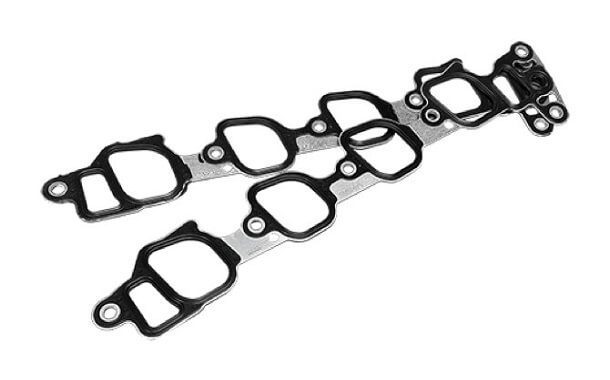
The intake manifold gasket is made of aluminized steel coated with carbon-based rubber. The gasket seals the intake manifold from the engine body. The intake manifold and the engine are usually made of two different materials that behave differently at the same temperatures.
Ideally, when the metal from which the engine is made expands the intake manifold should also expand as much. This does not happen in reality, but the gasket of the intake manifold seals the two components.
Symptoms of an intake manifold gasket about to malfunction
- antifreeze losses;
- the engine gets very hot;
- you find stains under the car;
- the check engine will light up on board;
- the engine starts running with interruptions
What are the extra costs?
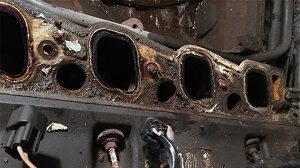 If the manifold intake gasket fails then it can leak coolant into the engine or worst, contaminate the engine oil. So, there are situations when you will have to change the engine oil as well.
Your mechanic may need an extra hour of labor if the bolt or stud that holds the gasket in place is broken and needs to be repaired.
After the replacement job is done, around two gallons of coolant will have to be added. In general, the coolant cost is included in the repair costs, but there are some mechanics that may charge separately for the coolant.
How can I save money?
You must repair your car immediately if you notice any leaks or signs of a damaged intake manifold gasket. This part plays a very important role in the car engine’s functioning, directing the fuel mixture inside the engine to the right cylinder, followed by a cool down in order to keep the engine running at the correct temperature. In case this gasket breaks, then the engine will lose the coolant, so it will overheat and run improperly. If you ignore the signs of a damaged manifold intake gasket and continue driving the car, then worse problems may appear in the future like severe damage to the engine block or to the cylinders.
Like with any other car repairs, try to find at least three price offers from the mechanics/dealerships in your area and choose the one that works best for you.

Leave a Reply
Want to join the discussion?Feel free to contribute!