How Much Does a Menards Truck Rental Cost?
Updated on | Written by Alec Pow
This article was researched using 10 sources. See our methodology and corrections policy.
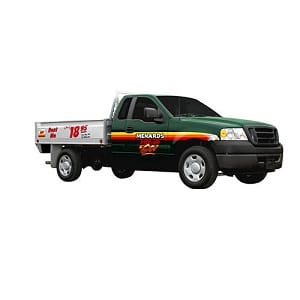
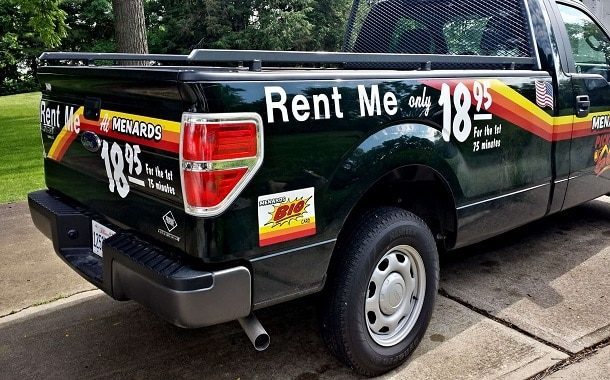
A Menards Pick-Up & Go truck costs $18.95 for the first 75 minutes. After that initial period, Menards charges $6 for every additional 15 minutes, with time rounded up to the next quarter hour. Mileage adds another $0.50 per mile.
That makes Menards an inexpensive option for a quick local delivery but not necessarily for an all-day move. A two-hour rental costs $36.95 plus mileage, while four hours costs $84.95 plus mileage. Keeping the truck for eight hours increases the time charge to $180.95 before mileage, taxes, tolls, damage, or other store-level charges.
Menards also collects a $300 rental deposit when the truck is picked up. The deposit is separate from the rental cost and is returned according to the terms of the agreement when the vehicle comes back on time and without new damage or other outstanding charges.
Article Highlights
Jump to sections
- First 75 minutes: $18.95 (at $30 per hour, earning that amount would take about 38 minutes, before taxes)
- Each additional 15 minutes: $6
- Mileage charge: $0.50 per mile
- Rental deposit: $300
- Two hours and 10 miles: $41.95 before tax
- Four hours and 25 miles: $97.45 before tax
- Eight hours and 50 miles: $205.95 before tax
- The program is designed for short local hauling rather than multiday household moves.

Current Menards Truck Rental Rates
| Rental period | Time charge | Total with 25 miles |
|---|---|---|
| 75 minutes | $18.95 (about 38 minutes at $30 per hour) | $31.45 |
| 2 hours | $36.95 | $49.45 |
| 3 hours | $60.95 | $73.45 |
| 4 hours | $84.95 | $97.45 |
| 6 hours | $132.95 | $145.45 |
| 8 hours | $180.95 | $193.45 |
Menards publishes its current formula on the official Pick-Up & Go rental page. The first 75 minutes cost $18.95, every additional quarter hour costs $6, and every mile adds $0.50. The clock-based structure is the central fact missing from the older article, which incorrectly described a fleet of daily pickup trucks, cargo vans, and box trucks.
Because additional time is rounded to the next 15-minute interval, returning the truck only a few minutes late can add another $6. The effective rate after the base period is $24 per hour before mileage. Careful scheduling matters more here than it would with a conventional flat daily rental.
How the Time Charge Works
The first 75 minutes are sold as one base rental. Once the rental passes that point, Menards does not charge by the exact minute. It adds one $6 block for every 15 minutes or portion of a 15-minute period. A rental lasting one hour and 29 minutes therefore uses one extra block, while one hour and 31 minutes uses two.
This rounding makes a rushed return risky. A customer who reaches the store at the deadline but still needs to unload, park, complete the return inspection, or wait for an employee may cross into another paid interval. Planning to return 15 or 20 minutes early creates a buffer against traffic, loading delays, and checkout lines.
ThePricer Short-Haul Example
Suppose you buy a refrigerator from Menards and live five miles from the store. The total driving distance is 10 miles because the truck must return to the same location. You spend 20 minutes completing paperwork and inspecting the truck, 15 minutes loading, 15 minutes driving home, 20 minutes unloading, and 15 minutes returning. The entire process fits within the initial 75-minute period.
- Base rental: $18.95 (about 38 minutes at $30 per hour)
- Ten miles at $0.50: $5
- Estimated subtotal: $23.95
This is where the Menards program makes the most financial sense. For less than $25 before tax or accessories, a customer can avoid waiting for delivery and move one large store purchase on the same day. The low headline price is genuine, but only when the store, destination, loading help, and return trip are close enough to fit inside the short base window.
Two-Hour Rental Cost
A two-hour rental uses three additional 15-minute blocks after the initial 75 minutes. Those blocks add $18, raising the time charge to $36.95.
If the trip covers 10 miles, the estimated subtotal is $41.95. At 25 miles it becomes $49.45, and at 50 miles it reaches $61.95. This remains competitive for a small local project, particularly when a customer needs the truck immediately and can complete loading without several trips.
Four-Hour Project Cost
Four hours is where the time-based pricing becomes more noticeable. The customer uses 11 extra 15-minute blocks, adding $66 to the original $18.95 base price. The resulting time charge is $84.95.
A 25-mile project costs approximately $97.45 before tax. At 50 miles, the subtotal reaches $109.95. At this point, the customer should compare Menards with a truck rented for an entire day, particularly when loading time is uncertain or several stops are planned.
A conventional daily rental can cost less even when its advertised base rate looks similar because the Menards clock continues running during loading, unloading, waiting, and traffic. The longer the project takes, the less important the low $18.95 opening price becomes.
Eight-Hour Rental Cost
An eight-hour Menards rental costs $180.95 in time charges. Adding 25 miles produces a subtotal of $193.45, while 50 miles raises it to $205.95.
That calculation explains why Pick-Up & Go should not be described as a $19 daily truck rental. The program can technically remain in use for several hours, but the fee structure strongly favors short errands. U-Haul, Enterprise, or another company offering daily and extended rentals may be a better match for a full-day move, repeated trips, or several days of contractor work.
The Truck Menards Actually Rents

Menards markets one short-term Pick-Up & Go vehicle program for customers whose projects are too large for a car. Its official vehicle-rental category describes a truck intended to help customers bring projects and purchases home.
The older article invented an 8-foot pickup, 10-foot moving truck, 12-foot cargo van, and 16-foot box truck with separate daily rates. Menards does not currently publish that fleet or those prices. Customers needing an enclosed cargo van or a large moving box should contact a dedicated truck-rental provider instead of assuming one will be available at Menards.
Truck specifications can also vary as vehicles are replaced. Before buying oversized lumber, a large appliance, landscaping material, or bulky furniture, call the store and ask about bed dimensions, payload capacity, tie-down points, and any restrictions in the rental agreement. A truck may have enough physical room for an item while lacking sufficient legal payload capacity for a very heavy load.
The $300 Rental Deposit
Menards states that a $300 deposit is collected at the time of rental. This is not an additional permanent fee when the agreement is completed properly, but the customer needs enough available credit for the hold and the final rental charge.
The time required for a released hold to disappear depends on the card issuer. Menards may release the deposit after the return, while the bank can take additional business days to restore the customer’s available balance. Anyone using a card close to its credit limit should account for this temporary reduction in available funds.
Ask which conditions can reduce or delay the refund. Common concerns in vehicle rentals include new damage, late return, excessive dirt, missing equipment, tolls, unpaid charges, or violation of the agreement. The signed store contract controls the transaction.
Rental Requirements
The truck is obtained through the rental center near the entrance of a participating Menards store rather than through a nationwide moving-truck reservation system. Menards’ general rental FAQ instructs customers to bring valid identification and an accepted form of payment, while the vehicle rental has additional driving and insurance requirements.
Customers should be prepared to provide:
- A current driver’s license
- Proof of valid automobile insurance
- A credit card with sufficient available credit
- The $300 deposit
- Any additional documents required by the store
Published descriptions of the program have historically placed the minimum age at 21. Since vehicle requirements can change and state rules differ, call the local rental center before traveling to the store. The driver named in the agreement should also confirm whether another person is permitted to drive.
Insurance and Damage Responsibility
The original article claimed that liability insurance was automatically included and that customers could add a $10-per-day damage waiver. Menards’ current public rate information does not support those statements. Requiring proof of the customer’s own insurance is not the same as guaranteeing that the policy covers every loss involving a rented pickup.
Before renting, contact the insurer and ask whether the policy covers physical damage, liability, loss of use, administrative charges, and operation of a short-term store rental truck. Coverage can differ according to the vehicle’s weight, intended use, policy exclusions, and whether the customer is hauling personal purchases or using the truck for business.
Do not assume that a credit card’s rental protection applies. Many card benefits cover ordinary passenger vehicles but exclude trucks, moving vans, commercial vehicles, or business use. Obtain the answer from the insurer or card administrator in writing when possible.
Availability and Reservations
Menards says rental equipment and rates can vary by store. The company directs customers to the rental center, where a team member completes the truck rental. The public page does not promise that every store supports advance online reservations or that a truck will be waiting at a selected time.
The safest approach is to call the location on the morning of the project. Ask whether the truck is available, whether it can be held, when the previous rental is due back, and how late it may be returned. Store hours can create an effective maximum rental period even if the customer is willing to pay for more time.
The broader Menards rental-equipment page emphasizes that tool types and prices vary by location. The same store-specific caution should be applied to truck availability and supporting equipment.
Loading Time Counts
The rental clock does not pause while the customer locates an order, waits for assistance, loads the truck, secures cargo, unloads at home, or encounters traffic. A project that looks like a 20-minute drive can easily consume two hours once the non-driving work is included.
Customers collecting a Menards order should determine whether the merchandise is ready before beginning the truck rental. If possible, complete payment, locate the pickup area, and confirm loading assistance first. Starting the rental before the order is staged can turn a low-cost 75-minute trip into several paid extensions.
Dollies, Straps, and Loading Equipment
Large appliances and furniture should not be moved without suitable equipment and help. Menards lists a Performax appliance dolly rental alongside the Pick-Up & Go program. Current availability and store pricing should be confirmed before the trip.
Depending on the load, customers may also need ratchet straps, moving blankets, corner protectors, tarps, gloves, ramps, and another adult to help. Open truck beds expose furniture, drywall, flooring, and appliances to rain and road debris. Protecting the load costs less than replacing an item damaged during transportation.
Menards vs Home Depot
Home Depot operates a broader truck and van rental program. Its current national page advertises unlimited-mile rentals starting around $29, while individual pickup listings show lower introductory prices at some locations. Vehicle type, local price, availability, and rental duration vary.
Menards can be cheaper for a short, low-mileage trip. Home Depot’s unlimited mileage becomes more attractive when the destination is farther away or when multiple runs are needed. The comparison should use an all-in local quote rather than only the first advertised number because both retailers use time-based introductory periods for some vehicles.
Menards vs U-Haul
U-Haul currently advertises pickup trucks at $19.95 per day plus mileage and fees. The pickup must generally be returned to the same location, but the daily structure is easier to manage when a project will take several hours.
A U-Haul pickup can therefore cost more for a fast ten-mile errand but less than Menards for an eight-hour project. U-Haul also offers cargo vans and box trucks that better suit enclosed furniture transport and household moves. Its extended-rental program includes mileage packages for longer pickup and cargo-van rentals, something Menards does not advertise.
When a Daily Rental Is Better
Choose a daily rental when the project has uncertain loading time, involves several stops, covers substantial mileage, or requires an enclosed cargo area. Enterprise offers pickup trucks through both passenger-vehicle and dedicated truck-rental locations, with daily, weekly, and monthly arrangements available according to location and vehicle class. Its truck comparison page is useful for projects extending beyond a quick store delivery.
Lowe’s also provides pickup rentals at selected stores. The current Lowe’s truck-rental page allows customers to locate participating stores and review local pickup availability. Rates and terms must be checked for the specific location.
Menards remains strongest when the truck is already at the store where the purchase is located and the customer can complete the entire trip quickly. Once the expected time passes three or four hours, comparing daily quotes becomes essential.
Menards Delivery vs Renting
Store delivery may be the better option when an item is extremely heavy, requires specialized handling, or cannot be unloaded safely at home. Delivery also eliminates the rental deposit, insurance questions, mileage charge, loading deadline, and risk of damaging the vehicle or merchandise.
Compare the delivery quote with the realistic truck expense, not only the $18.95 base rate. A four-hour and 25-mile rental already costs approximately $97.45 before tax and moving equipment. Adding a dolly, straps, help, and personal time may bring the practical cost close to a professional delivery charge.
Hidden Costs and Risks
- Additional 15-minute billing blocks
- The $0.50 mileage charge
- Taxes and store-level fees
- The temporary $300 deposit
- Tolls and parking
- Dolly or moving-equipment rental
- Straps, blankets, and weather protection
- Damage to the truck or cargo
- Insurance gaps
- Extra trips caused by an overloaded or poorly planned load
The largest hidden cost is usually time. A customer who expects a 75-minute rental but keeps the vehicle for four hours pays another $66 in extension charges. Accurately estimating loading, travel, unloading, and return time is the most effective way to control the bill.
How to Keep the Cost Low
Have the purchase paid for and staged before starting the rental. Measure the cargo and truck bed in advance, recruit enough loading help, and place straps and blankets where they can be reached immediately. Plan the route to avoid construction, toll roads, and peak traffic whenever practical.
Use one well-organized trip rather than several partial loads, but never exceed the truck’s payload or allow materials to obstruct lights, mirrors, or the license plate. Call the rental center before leaving home and ask about availability, deposit, insurance documents, exact closing time, and equipment rental.
Readers planning heavier commercial projects can compare the cost of a flatbed tow truck, Ditch Witch trencher, or dump truck rental.
What We Verified
- Confirmed the current $18.95 base charge.
- Verified the $6 additional 15-minute rate.
- Verified the $0.50 mileage charge.
- Confirmed the current $300 rental deposit.
- Removed the fictional cargo-van and box-truck price list.
- Removed unsupported daily, weekly, and monthly Menards rates.
- Removed the false no-mileage-fee claim.
- Compared Menards with current Home Depot, U-Haul, Lowe’s, and Enterprise options.
Answers to Common Questions
How much does a Menards truck rental cost?
Menards charges $18.95 for the first 75 minutes, $6 for each additional 15 minutes, and $0.50 per mile.
How much is the Menards truck deposit?
The current published deposit is $300. It is collected when the truck is rented and handled according to the return agreement.
How much does a two-hour Menards rental cost?
The time charge is $36.95. With 10 miles, the estimated subtotal is $41.95 before tax.
Can a Menards truck be rented for the whole day?
The truck can accrue additional time charges, but Menards does not advertise a low flat daily rate. Eight hours costs $180.95 plus $0.50 per mile, so a true daily rental may be cheaper.
Does Menards offer box trucks or cargo vans?
Menards currently promotes its Pick-Up & Go truck rather than the fleet of pickups, vans, and box trucks described in the old article. Contact the local store to confirm the vehicle available there.
Can the truck be reserved online?
The public Menards information directs customers to the store rental center. Call the location to ask whether it accepts reservations or operates on current availability.
Does Menards charge for mileage?
Yes. The current mileage charge is $0.50 for each mile driven.
Is a Menards truck good for moving a house?
It is better suited to short local hauling and bringing large purchases home. A cargo van or box truck with a daily rate is usually more practical for a full household move.
Disclosure: Educational content, not financial advice. Prices reflect public information as of the dates cited and can change. Confirm current rates, fees, taxes, and terms with official sources before purchasing. See our methodology and corrections policy.