
How Much Do Hubcaps Cost?
Updated on | Written by Alec Pow
This article was researched using 13 sources. See our methodology and corrections policy.
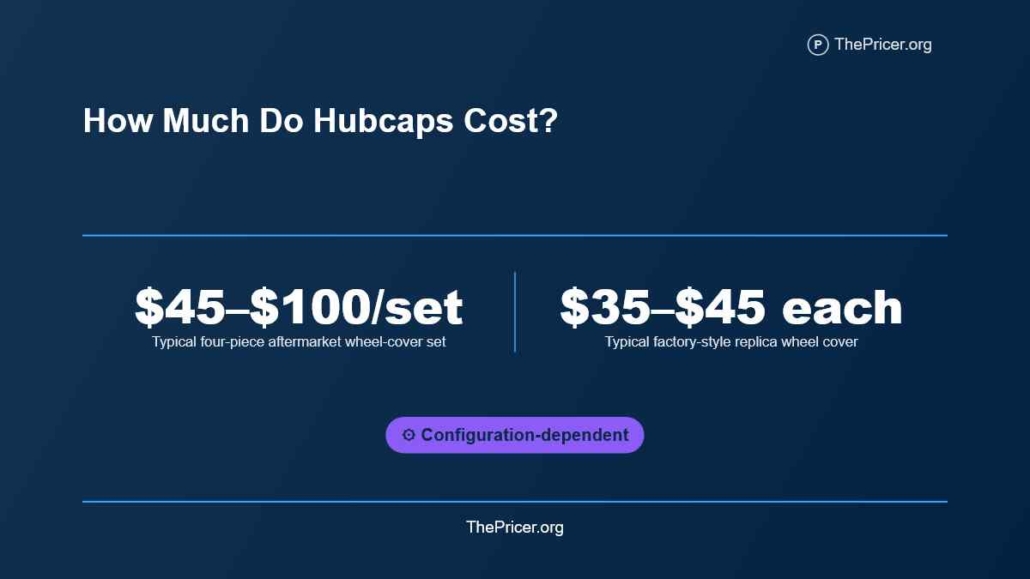
Current hubcap and wheel-cover prices run from about $13 to $25 each for some genuine center caps, around $45 to $100 for a four-piece aftermarket wheel-cover set, roughly $35 to $45 each for many vehicle-specific replica covers, and $45 to $170+ each for some genuine OEM wheel covers. Current AutoZone wheel-cover listings include four-piece sets at $44.99, $69.99, $73.99, and $96.99.
The word “hubcap” creates part of the pricing confusion. Drivers use it for small center caps, full wheel covers, factory-look replicas, and wheel skins. Those products can differ by more than $100 per wheel, so a useful price comparison starts by identifying what actually fell off the car.
For a basic steel-wheel makeover, a four-piece aftermarket set is often the low-cost route. Replacing one missing factory cover can cost more per wheel, while genuine OEM pieces for some vehicles can climb well into three figures.
Article Highlights
Jump to sections
- Current aftermarket four-piece wheel-cover examples fall around $45 to $100 (at $30 per hour, earning that amount would take about 1.5 to 3.3 hours of work, before taxes) per set.
- Factory-style replica wheel covers commonly appear around $35 to $45 each in current specialty listings.
- Genuine OEM pieces vary sharply by vehicle, with current examples from about $13 for a small center cap to more than $170 for one genuine hubcap.
- Chrome-looking wheel covers are often chrome-plated ABS plastic rather than solid chrome or aluminum.
- Most universal full wheel covers are designed for steel wheels and must match the wheel diameter.
- Buying four at once can cut the per-cover price enough that replacing a nearly complete set costs little more than buying three singles.
How Much Do Hubcaps Cost?
The current market makes more sense when the products are separated rather than forced into one broad “hubcap” range.
| Hubcap or cover type | Current price signal | What you are buying |
|---|---|---|
| Aftermarket wheel-cover set | $44.99 to $96.99 (about 1.5 to 3.2 hours of work at $30 per hour) for four | Current AutoZone examples, usually ABS covers for steel wheels |
| Universal 16-inch cover set | $59.99 to $81.99 for four | Current 16-inch ABS examples with retention systems |
| Factory-style replica | About $35 to $45 each | Vehicle-specific aftermarket cover made to resemble the original |
| Genuine Honda Civic wheel cover | $73.92 each | Current genuine 2016 Civic replacement example |
| Genuine Toyota wheel cover | $92.38 each | Current genuine RAV4 wheel-cover example |
| Genuine luxury-car hubcap | $171.97 each | Current genuine Jaguar example |
| Vintage steel or aluminum cover | About $39 to $69 each | Moon, smoothie, racing-disc, and similar specialty designs |
Genuine parts show why vehicle identification matters. A current 2016 Honda Civic parts catalog lists a center cap at $13.19 and a full wheel cover at $73.92. Those are not interchangeable parts even though both can be casually called hubcaps.
Toyota provides another reference point. A current Toyota wheel-cover catalog lists one RAV4 wheel cap assembly at $92.38 and a Corolla/Prius-family center ornament at $24.15.
At the higher end, a genuine Jaguar hubcap is currently listed at $171.97 through Parts Geek’s genuine hubcap inventory. That is why “how much is one hubcap?” can produce answers ranging from a few dollars to well over $100.
Hubcap vs Wheel Cover

A true hubcap covers the central hub area of a wheel. A center cap is another small cover fitted over the wheel center, often carrying the vehicle manufacturer’s logo. A full wheel cover spans most of the face of a steel wheel. Wheel skins fit over styled steel or alloy-look wheels to change their appearance.
Retailers often use these names loosely, so searching by “hubcap” can return all four products. Discount Tire’s wheel terminology guide distinguishes a hubcap from a full wheel cover and also separates both from the structural wheel itself.
That last distinction matters. A cosmetic wheel cover does not hold the tire, support the vehicle, or replace the wheel. Damage to the actual wheel is a different repair problem.
OEM vs Replica Math
Vehicle-specific replicas are where some of the largest savings appear. For an overlapping 2015-2019 Ford Transit application, a genuine four-piece Ford wheel-cover kit is currently listed at $190.35 (about 6.3 hours of work at $30 per hour) through a genuine Ford parts catalog.
A factory-look aftermarket Transit cover is currently $39 each, dropping to $29.75 each when four are purchased through the replica Transit wheel-cover listing.
Worked example: Four replica covers at $29.75 each cost $119. The genuine Ford kit costs $190.35. The replica route saves $71.35, or about 37.5% of the genuine-kit price before shipping and tax.
That does not make the replica identical to the Ford part. Logo treatment, finish, retention hardware, material, warranty, and exact appearance can differ. The calculation shows the price of preserving the factory-part route in one real vehicle example.
One Missing or Buy Four?
Replacing only the missing cover sounds cheaper, but quantity pricing can narrow the gap. One current 16-inch aftermarket cover costs $34.99, while orders of four drop to $27.25 each on the 16-inch wheel-cover listing.
Mini case 1, one cover missing: One replacement costs $34.99. Buying four costs $109, so replacing only the missing piece saves $74.01.
Mini case 2, two covers missing: Two singles cost $69.98. The four-cover quantity price is still $39.02 higher, so two singles remain cheaper when an exact match is available.
Mini case 3, three covers missing: Three singles cost $104.97. Four at the quantity rate cost $109. The extra cost to replace all four instead of buying three is only $4.03.
That third case is where a complete matching set starts to make financial sense. The buyer gets four covers with the same age, finish, and wear rather than trying to match one remaining old cover for a difference of only $4.03.
Wrong Fit
For universal full wheel covers, tire size gives a quick wheel-diameter clue. A tire marked R16 normally sits on a 16-inch wheel, so the replacement cover needs the corresponding 16-inch size. The retention design still has to work with the wheel.
A current 16-inch universal wheel cover is priced at $61.99 and uses clips plus a steel retention ring. AutoZone specifies that the product is intended for steel wheels and warns that most wheel covers and hubcaps of this type will not fit alloy wheels.
This is why bolt pattern is not the main shopping measurement for an ordinary snap-on full wheel cover. Wheel diameter, steel-versus-alloy construction, cover design, and retention method matter more.
A vehicle-specific cover adds another layer. Two cars can both use 16-inch wheels while having completely different factory cover shapes and clip locations. Matching the year, make, model, trim, wheel type, and part number reduces the chance of buying a cover that is the correct diameter but still cannot attach.
Chrome Often Means ABS
The old assumption that a chrome-looking hubcap must be an expensive metal part does not hold up in current listings. Many modern covers use ABS plastic with a chrome-plated or painted finish.
One current four-piece 16-inch set is priced at $195.99 and described as chrome-plated automotive-grade ABS in the AutoZone product specification. The shiny surface does not mean the cover is solid chrome.
ABS is common because a cosmetic cover can be light, molded into complex shapes, and resistant to rust. Metal still appears in vintage covers, racing discs, some center caps, and retention hardware.
Specialty metal designs can cost more. Current racing-disc hubcap listings show stainless and aluminum pieces from about $30 to $65 each, depending on size and attachment style.
When OEM Is Worth It
Makes sense if:
- You are replacing one missing cover and want it to match the other three closely.
- The vehicle has an unusual factory retention system or distinctive wheel-cover design.
- Original logos and exact factory appearance matter to you.
- A used or discounted genuine piece is close in price to a replica.
Does not make sense if:
- All four covers are missing and an aftermarket set costs far less than four OEM pieces.
- You only want to improve the appearance of plain steel wheels.
- The remaining factory covers are already scratched, faded, or mismatched.
- A replica fits the exact wheel and gives you the appearance you want for substantially less money.
A small center cap can also be worth replacing with the correct genuine part because the absolute cost may be low. Paying $13.19 for the Honda center-cap example is a very different decision from buying four $73.92 full factory wheel covers.
What We Verified
- Checked: current specialty hubcap pricing includes black covers at $34.99 each or $129 for four, plus several steel and vintage designs sold individually.
- Confirmed: current four-piece wheel-cover pricing includes a vehicle-specific 16-inch ABS set at $81.99.
- Cross-referenced: genuine center caps, full wheel covers, and hubcaps are separate catalog parts with very different prices across Honda, Toyota, Ford, and other manufacturers.
- Verified: a hubcap or wheel cover is not the structural wheel, so a missing cosmetic cover by itself does not create the tire-and-wheel imbalance corrected by a balancing service.
Related Wheel Costs
A vibration that remains after a wheel cover goes missing should not automatically be blamed on the missing cover. The cost and purpose of wheel balancing are tied to uneven mass in the rotating tire-and-wheel assembly rather than the absence of a cosmetic hubcap.
Removing wheels for routine maintenance creates another chance to inspect the covers, clips, tires, and wheel condition. Current tire rotation costs show how that service differs from replacing wheel trim.
A vehicle that pulls, has uneven tire wear, or has steering-angle problems may need an alignment rather than a cover. Current Les Schwab wheel alignment pricing gives one current shop example.
Answers to Common Questions
How much does one hubcap cost?
One aftermarket replacement can cost around $30 to $45 in current specialty listings. Genuine OEM examples can range from about $13 for a small center cap to more than $170 for certain vehicle-specific hubcaps.
How much is a set of four hubcaps?
Current aftermarket four-piece wheel-cover examples commonly fall around $45 to $100. Specialty metal sets and factory-specific replacements can cost more.
Can I drive without a hubcap?
Yes, when the missing part is only a cosmetic hubcap or wheel cover and the actual wheel, tire, lug hardware, and vehicle are undamaged. A missing wheel cover does not normally create wheel imbalance or steering vibration.
How do I know what size hubcap I need?
For many full wheel covers, match the wheel diameter shown by the tire size, such as R16 for a 16-inch wheel, then confirm that the cover works with your steel or alloy wheel and its retention system. Vehicle-specific covers should also be matched by year, model, trim, and wheel design.
Is an OEM hubcap worth paying more for?
It can be when replacing one missing factory piece because the logo, shape, finish, and clips should match the remaining covers. When replacing all four, a compatible aftermarket set can cut the total substantially.
Disclosure: Educational content, not financial advice. Prices reflect public information as of the dates cited and can change. Confirm current rates, fees, taxes, and terms with official sources before purchasing. See our methodology and corrections policy.