ThePricer Media
  • Latest: The Cost to Cool an AI Data Center
  • Cost Guides
  • News & Investigations
  • Daily Price Puzzle (60s)
  • Methodology
  • Press & Mentions
  • Contact
  • Click to open the search input field Click to open the search input field Search
  • Menu Menu
Business, Services

How Much Does it Cost to Laminate Paper?

Updated on July 31, 2026 | Written by Alec Pow
This article was researched using 8 sources. See our methodology and corrections policy.

Professional paper lamination generally costs about $1.50 to $4 per letter-size sheet, depending on the store, film thickness, finish, order quantity, and whether the document must be trimmed. Legal and 11-by-17-inch sheets commonly cost $2.50 to $8 each, while poster lamination can range from approximately $15 to $100+ according to size and finishing options.

Laminating at home costs much less per sheet after purchasing the machine. A basic letter-size laminator costs approximately $30 to $80, and standard pouches cost about $0.15 to $0.50 per page. A home setup can break even after roughly 30 to 60 letter-size sheets when compared with a retail counter charging more than $1 per page.

Lamination works well for menus, teaching materials, reusable checklists, signs, instruction sheets, ID cards, frequently handled reference pages, and replaceable copies. It should not automatically be used on original legal, historical, collectible, embossed, signed, or heat-sensitive documents. Lamination is generally permanent and can interfere with authentication or cause irreversible damage.

Article Highlights

Jump to sections
  • Current Paper Lamination Prices
  • Staples, Office Depot, FedEx
  • Home Laminator and Pouch
  • The Real DIY Break-Even Point
  • Poster, Blueprint, and Mounted Display
  • Film Thickness, Finish
  • Documents That Should Not Be Laminated
  • Retail letter-size lamination generally costs $1.50 to $4 per sheet.
  • Legal and 11-by-17-inch sheets commonly cost $2.50 to $8 each.
  • Poster lamination can cost $15 to $100+ (at $30 per hour, earning that amount would take about 0.5 to 3.3 hours of work, before taxes).
  • A home laminator generally costs $30 to $80.
  • Letter-size pouches usually cost $0.15 to $0.50 each.
  • Do not laminate Social Security cards, archival papers, thermal receipts, or irreplaceable originals.
Laminating Project Cost

Current Paper Lamination Prices

Lamination is priced by sheet, finished size, square foot, linear foot, or complete project. Small documents commonly use sealed pouches, while posters and signs may pass through a roll laminator. Retailers may also separate printing, mounting, trimming, and lamination into different charges, so two jobs described as a “laminated poster” can have very different totals.

Project Typical price What affects the total
Letter-size sheet $1.50 to $4 each Store, film, quantity, trimming
Legal-size sheet $2.50 to $5 each Pouch size and thickness
11-by-17-inch sheet $3 to $8 each Store equipment and finish
Small poster $10 to $35 (about 0.3 to 1.2 hours of work at $30 per hour) Dimensions and roll-film rate
24-by-36-inch poster $20 to $75+ Film, trimming, mounting
Mounted display board $35 to $150+ Printing, board, laminate, finishing
Home laminator $30 to $80 Width, speed, hot and cold settings
Letter-size pouch $0.15 to $0.50 each Brand, thickness, pack size

The useful comparison is the complete finished price. A print shop may quote lamination separately from the document itself, while an online poster product may combine printing and finishing. A large-format project may also require trimming, a foam board, an easel back, grommets, or a writable coating.

The original article’s claim that 400 retail pages would cost only $40 was incorrect. At even $1.50 per sheet, the same order would cost:

400 × $1.50 = $600.

A genuine high-volume discount could reduce that amount, but the customer would need a written quote. A general promise of a 50% discount is not reliable.

Related guides

  • How Much Does a Watch Battery Replacement Cost?
  • How Much Does It Cost to Move a Shed?
  • How Much Does Laptop Hinge Repair Cost?

Staples, Office Depot, FedEx

Major office and shipping chains offer lamination, but shoppers should not assume that every location uses one national price. Store equipment, local labor, document dimensions, finishing choices, and franchise ownership can change both availability and cost.

Staples Print and Marketing Services currently confirms in-store lamination and same-day availability for qualifying orders, but its public service page does not support one permanent nationwide per-sheet rate. Customers should configure the job online or obtain a local quote. ThePricer readers can compare related charges in the current guide to printing at Staples.

Office Depot offers lamination as an in-store service and as an add-on to eligible print products. Prices and promotions change, and high-volume letter-size jobs may not qualify for the same turnaround as a small order. Its current printing structure is examined in ThePricer’s guide to Office Depot printing costs.

FedEx Office separates document lamination, poster protection, water-resistant paper, and weather-resistant signs. These products should not be treated as interchangeable. FedEx Office directs customers to configure a product or request local pricing rather than publishing the old article’s supposed universal $1.19 letter-size charge. See ThePricer’s independent guide to FedEx Office printing prices for wider print-job context.

The UPS Store is a franchise network. Its locations offer printing and finishing services, but The UPS Store says service availability varies and recommends submitting the actual job for an accurate quote. The old fixed claim of $2.49 per sheet should therefore be removed.

Home Laminator and Pouch

A small thermal laminator suitable for letter-size sheets currently costs approximately $30 to $80 (about 1 to 2.7 hours of work at $30 per hour). Machines with 12-inch or 13-inch feed widths, faster warm-up, automatic thickness detection, reverse functions, or higher duty cycles commonly cost $100 to $300+. Heavy-office roll or automatic laminators may cost several hundred or several thousand dollars.

Current Staples listings show basic nine-inch machines around $34 to $78, with thermal-and-cold models near $50 to $61. A small machine is suitable for occasional classroom charts, menus, flash cards, checklists, and signs. It should not be labeled “high volume” merely because it can process several sheets in succession.

Standard letter-size pouches currently cost around $0.15 to $0.50 each in packs of 100. A current Staples house-brand example lists 5-mil pouches near $0.15 each, while other Fellowes products range around $0.20 to $0.35 each. Premium, legal-size, tabloid-size, matte, cold, or very thick pouches cost more.

The machine must support the selected film. A nine-inch laminator generally accepts letter-size paper because the pouch is slightly wider than the document. Legal paper may fit by width but requires a longer pouch. An 11-by-17-inch document usually requires a machine with at least a 12-inch feed opening.

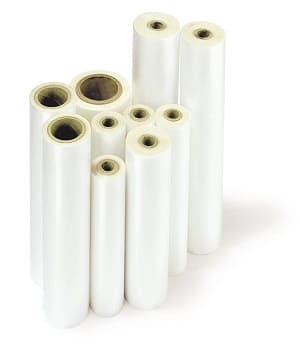
Laminating machine, pouches, and paper materials

Home users should also budget for wasted pouches, carrier sheets when required, a paper trimmer, rounded-corner tools, electricity, and time. These expenses are modest for repeated use but make a one-page DIY project less economical.

The Real DIY Break-Even Point

A break-even calculation should compare the machine and pouch costs with the actual retail price per sheet. Suppose a basic laminator costs $45, letter-size pouches cost $0.22 each, and a nearby print counter charges $1.75 per sheet.

The DIY saving on each completed page is:

$1.75 – $0.22 = $1.53.

The machine cost is recovered after:

$45 ÷ $1.53 = approximately 30 sheets.

At 100 sheets, the home cost is $45 + (100 × $0.22) = $67. Retail service at $1.75 each costs $175. The theoretical saving is $108.

This calculation assumes that the user already owns a trimmer, produces no failed sheets, and assigns no dollar value to labor. If five pouches are ruined while learning, the home cost rises by only $1.10. If one irreplaceable document is damaged, however, the financial consequence can be much larger than the savings.

For schools, restaurants, churches, offices, and teachers processing dozens of replaceable sheets, owning a machine can pay for itself quickly. A professional service remains more sensible for one-time jobs, large posters, expensive artwork, unusual sizes, and originals that require expert assessment.

Poster, Blueprint, and Mounted Display

Large-format lamination is often billed by square foot, linear foot, or finished product. The pricing unit matters. A linear-foot charge assumes a specific roll width, while a square-foot charge reflects the actual surface area. The two cannot be compared without knowing the width.

A 24-by-36-inch poster contains six square feet. At $5 per square foot, lamination alone would cost $30. At $8 per square foot, it would cost $48. This is why the old claim that a 24-by-36-inch poster could universally be laminated for $6.49 was not credible beside its own square-foot estimates.

Mounting is a separate process in which the print is attached to foam board, gator board, PVC, corrugated plastic, or another rigid substrate. A mounted and laminated poster may cost $35 to $150+ after the print, board, adhesive, film, trimming, and labor are included.

FedEx Office explains that ordinary poster lamination helps resist fingerprints, smudges, and light moisture but does not make a paper poster waterproof. Its poster guidance recommends outdoor banners or yard signs when a display must withstand prolonged rain, sunlight, or humidity.

Blueprints, maps, construction drawings, menus, event boards, and educational displays should be priced according to their actual dimensions. Customers should also ask whether the quote covers lamination only or includes printing and mounting.

Film Thickness, Finish

Laminating film thickness is measured in mils, with one mil equal to one-thousandth of an inch. A pouch described as 3 mil normally has 3-mil film on each side of the document. The finished piece is therefore thicker than 3 mil after accounting for both layers and the paper.

GBC describes 3-mil pouches as flexible, 5-mil pouches as sturdier, and 10-mil pouches as rigid. Three-mil film works well for documents needing light protection. Five-mil film is useful for menus, instruction cards, classroom materials, and signs handled regularly. Seven-to-10-mil film supports tags, badges, reference cards, and items requiring greater rigidity.

Not every machine accepts every thickness. The user must check the maximum pouch rating before buying supplies. Feeding a film that is too thick, using the wrong heat setting, or inserting the open edge first can cause clouding, incomplete seals, wrinkles, or jams.

Thermal lamination uses heat-activated adhesive and is the least expensive common method. Cold lamination uses pressure-sensitive adhesive and avoids heat, making it more suitable for some inkjet prints, thermal media, photographs, or materials that could react to heat. Cold products can cost more and may require a compatible machine or self-sealing sheets.

Gloss film produces strong color and easy cleaning but can reflect overhead light. Matte or anti-glare film costs more in some product lines and works better where documents must be read under bright lighting. Dry-erase-compatible film may be useful for reusable schedules and checklists, though marker compatibility should be tested first.

Documents That Should Not Be Laminated

Lamination should be reserved for replaceable copies and ordinary working materials. It is generally inappropriate for documents whose authenticity, security features, monetary value, historical importance, or future conservation needs could be affected.

The Social Security Administration specifically instructs cardholders not to laminate Social Security cards because the film can prevent examination of security features. A protective removable sleeve is safer.

The National Archives says newspapers and clippings intended for preservation should never be laminated. It recommends reproducing the information on permanent-quality paper and storing the original appropriately. The National Park Service similarly advises against laminating archival paper and original photographs.

Birth certificates, marriage certificates, citizenship documents, notarized papers, academic diplomas, documents with raised seals, collectible autographs, historical letters, original artwork, and irreplaceable family records should be checked with the issuing authority or a conservator before any permanent treatment. Some agencies may reject altered or obscured documents even when the information remains visible.

Thermal receipts, ultrasound printouts, fax paper, and other heat-sensitive media can darken or become unreadable in a hot laminator. Old photographs, inkjet prints, crayon, charcoal, pastel, flaking media, and pressure-sensitive labels can also react poorly. Scan or photocopy the item and laminate the copy instead.

Passport photos and ordinary photo prints may be laminated for crafts or displays, but do not laminate a passport, driver’s license, or other government identification unless the issuing agency explicitly allows it. Readers comparing document-related retail errands can review ThePricer’s guide to Costco passport photo costs.

Three Complete Lamination Projects

Small retail project: A customer laminates 12 letter-size instruction sheets at $1.75 each. The service subtotal is 12 × $1.75 = $21. Sales tax of approximately $1.70 brings the total to about $22.70. The professional service is sensible because the customer does not expect another project.

Classroom DIY project: A teacher buys a laminator for $45 and 100 pouches for $22. The initial cost is $67. After laminating 80 pages, the effective cost is $67 ÷ 80 = about $0.84 per page. If the machine is used for all 100 pouches, the cost falls to $0.67 per page. A second 100-page batch costs only the new pouches, or about $0.22 per page.

Mounted poster project: A 24-by-36-inch poster print costs $30, rigid foam-board mounting costs $25, and lamination costs $35. Trimming and tax add another $10. The completed display costs $100. Comparing that full product with a lamination-only quote would be misleading.

These examples show why paper size and project scope matter more than one advertised starting price. Retail service is economical for a handful of pages, while DIY can become dramatically cheaper when the machine is used repeatedly.

Home vs Professional Lamination

A home laminator is best for regular letter-size projects where every document can be replaced. Teachers, restaurant operators, office staff, homeschool families, event planners, and craft users can gain the most value because they repeatedly need signs, schedules, menus, labels, cards, and teaching materials.

A professional print shop is usually the stronger choice for posters, blueprints, display boards, thick film, special finishes, exact trimming, cold lamination, mounting, and valuable prints. It also removes the risk of machine jams and alignment mistakes. The shop should be told when a document is heat-sensitive rather than being allowed to assume standard thermal processing is safe.

Before submitting the job, ask for the price after tax and every finishing charge. Confirm the final dimensions, film thickness, gloss or matte finish, edge seal, turnaround time, and whether the original can safely tolerate the process. For posters, ask whether the product is water-resistant, indoor-only, or designed for actual outdoor exposure.

For home work, read the machine instructions, select an approved pouch thickness, center the page inside the pouch, and feed the sealed edge first. Allow the finished sheet to cool flat before trimming. Leave a clear sealed border around the document because cutting into the paper can open the edge and allow moisture or delamination.

What We Verified

We checked current lamination-service descriptions from Staples, Office Depot, FedEx Office, and The UPS Store and removed unsupported claims that every location uses the same price. We compared current laminator and pouch listings from Staples and Office Depot, film-thickness guidance from GBC and Fellowes, and large-format protection information from FedEx Office.

We verified the warning against laminating Social Security cards through the Social Security Administration and reviewed preservation advice from the National Archives, Library of Congress, and National Park Service. We also corrected the original 400-page calculation, separated square-foot pricing from linear-foot pricing, removed unsupported universal rush and bulk-discount percentages, and replaced the claim that ordinary lamination makes paper waterproof.

Answers to Common Questions

How much does it cost to laminate one sheet of paper?

A professionally laminated letter-size sheet generally costs $1.50 to $4. Local rates vary, and thicker film or special finishing can increase the charge.

How much does it cost to laminate a poster?

Small poster lamination may cost $10 to $35, while a 24-by-36-inch poster commonly costs $20 to $75+. Mounting and printing are separate unless included in a complete product.

Is it cheaper to buy a laminator?

Yes, when laminating regularly. A $45 machine using $0.22 pouches can break even after approximately 30 sheets compared with a service charging $1.75 per sheet.

What does 3-mil lamination mean?

It generally means the pouch uses 3-mil film on each side. Three-mil film remains flexible, while 5-mil and 10-mil film produce progressively stiffer results.

Does lamination make paper waterproof?

No. Properly sealed film provides resistance to spills, fingerprints, and light moisture, but cut edges, punctures, prolonged water exposure, heat, and outdoor humidity can still damage the paper.

Can a Social Security card be laminated?

The Social Security Administration says not to laminate the card because the film may prevent detection of security features. Use a removable protective sleeve instead.

Can old photographs or legal documents be laminated?

Irreplaceable originals should generally not be laminated. Heat, adhesive, and permanent sealing can damage the item or interfere with authentication. Scan the document and laminate a copy instead.

Disclosure: Educational content, not financial advice. Prices reflect public information as of the dates cited and can change. Confirm current rates, fees, taxes, and terms with official sources before purchasing. See our methodology and corrections policy.

by Alec Pow
ThePricer cost research Independent price research used by media, universities and public institutions.

We research provider pricing, market examples, buyer reports, hidden fees and public records.

Methodology · Citations · Newsroom
© 2014 - 2026 - ThePricer Media, LLC, 4 Grove Street, New York, NY, 10014, Phone: (212) 431-2441
We don’t use affiliate links or paid placements. All sources are cited only for verification.
  • Link to X
  • Link to LinkedIn
  • Link to Facebook
  • Link to Instagram
  • Link to Pinterest
  • Link to Youtube
  • Contact Us
  • About Us
  • Press & Mentions
  • Careers
  • Meet the Founder
  • Privacy Policy
  • Editorial Ethics
  • Methodology
  • Corrections
  • Disclosure
  • Terms and Conditions
Scroll to top Scroll to top Scroll to top