
How Much Do Versa Lok Blocks Cost?
Last Updated on February 20, 2024
Written by CPA Alec Pow | Content Reviewed by  CFA Alexander Popinker
Versa-Lok retaining walls have become increasingly popular for landscaping and hardscaping projects of all sizes. With their simple interlocking block design, beautiful aesthetic, and structural integrity, it’s easy to see why.
However, like any construction project, understanding the costs involved is crucial for proper budgeting and planning. This guide provides a detailed overview of the various factors that influence the total cost of a Versa-Lok wall, equipping you with the knowledge to estimate and manage costs effectively.
How Much Do Versa Lok Blocks Cost?
When budgeting your project, it’s important to understand the price ranges for the different Versa-Lok block types. The average cost of Versa-Lok blocks is between $2 and $12 per block depending on the type. Here are the most common types of blocks:
- Standard Units: $2-$4 per block
- Mosaic: $4-$6 per block
- Cobble: $5-$8 per block
- Accent: $6-$12 per block
For complete retaining wall projects, total installed costs typically fall within these ranges:
- Small DIY walls, under 3 ft tall: $10-$25 per square foot
- Medium DIY walls, 3-5 ft tall: $15-$35 per square foot
- Large professional walls, 5-10 ft tall: $25-$60 per square foot
- High professional walls, 10+ ft tall: $50-$100+ per square foot
These cost ranges account for both materials and labor based on wall size and complexity. Being familiar with these typical per-block and total project costs will help immensely when budgeting your own Versa-Lok retaining wall project. Please let me know if this added section better covers the specific cost details you were looking for!
Overview of Versa-Lok Blocks
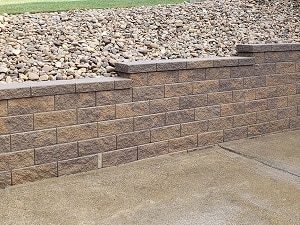
Versa-Lok blocks are interlocking, pinned concrete units that can be stacked dry without mortar to create decorative and functional retaining walls. The unique pin connection system provides alignment, setback, and structural integrity. Versa-Lok offers several styles:
- Standard Units: These are the basic building blocks for most retaining wall projects. They measure 8 in x 18 in x 12 in.
- Mosaic: Smaller blocks with a rougher, more organic texture for a modern, urban look.
- Cobble: Larger blocks styled like natural cobblestones, popular for accenting curves or steps.
- Accent: Decorative blocks to complement the standard units and add visual interest.
The variety of styles and shapes allow for endless design options, from sleek modern walls to old European charm. Their solid concrete construction also provides the strength and durability needed for structural projects.
Factors Influencing the Cost of Versa-Lok Blocks
Several key factors determine the total cost of a Versa-Lok retaining wall:
Material Costs
The type of blocks chosen directly impacts the budget. Standard units typically range from $2-$4 per block. More intricate styles like Mosaic and Cobble cost $4-$6. Accent blocks run $6-$12. Higher labor costs also come with laying the specialty blocks.
Installation Expenses
DIY projects can save significantly compared to a professional installation. Block layout is straightforward and requires basic tools, making it viable for handy homeowners. However, excavation work, drainage, and structural design may require hiring contractors.
Project Scope
Larger, multi-level walls or curving layouts require more blocks and work. Structural needs like geogrid, drainage stone, and backfill add expenses too. Small, simple walls as low as 3 ft tall can be $10-$25 per square foot while large projects run $25-$60 per square foot.
You might also like our articles about the cost of wood or timber retaining wall, AirStone, or Fieldstone.
Location
Regional labor and material rates cause price fluctuations. Shipping costs in remote areas also drive prices up. Research local rates to accurately budget your specific project location.
Calculating Your Project Cost
 The most effective way to estimate your total cost is to calculate the exact material needs. Here is a step-by-step guide:
- Sketch a plan with measurements for the wall layout. Note the length and heights of each section.
- Determine the square footage of the wall face area based on your plan measurements.
- Reference standard spacing guidelines to calculate the number of blocks needed per square foot.
- Multiply this by the total square footage to get the estimated block quantity.
- Research local prices for the specific blocks chosen, adding up total material costs.
- Calculate needs for drainage stone, base gravel, geogrid, edging, and other supplies.
- Research regional labor rates if hiring a contractor, adding to material costs for the total project budget.
Use Versa-Lok’s planning guides for detailed technical specifications on spacing and materials needed.
Installation Process and Cost Analysis
Installing a Versa-Lok wall involves careful planning and methodical execution:
- Excavate and prepare a compacted base.
- Install the leveling pad.
- Stack the first course, ensuring blocks are level and aligned.
- Backfill behind and compact.
- Lay subsequent courses, offset blocks and insert connectors.
- Backfill after each 1-2 courses.
- Add geogrid reinforcement if needed.
- Install cap blocks and drainage.
- Backfill behind fully and grade.
For most standard retaining walls under 5 ft tall, DIY installation costs can range from $10-$20 per square foot. Complex projects with structural engineering needs can be $50-$100 per square foot for professional installation. The tradeoff is the experience, equipment, and expertise of contractors versus cost savings doing it yourself.
Proper planning is key for the most cost-efficient project. Accurately calculating material needs and costs, and deciding on DIY versus professional installation allows you to budget realistically.
Where to Buy Blocks and Get the Best Deals
Versa-Lok distributors are located across the United States and Canada. Local home improvement stores like Lowes and Home Depot often stock standard blocks as well. For specialty products or bulk pricing, contact a dedicated hardscape supply company.
Buying direct from manufacturers also unlocks discounts for large wholesale orders. For big projects, the savings add up when purchasing pallets of blocks versus small quantities. You can save 5-20% off retail this way.
Seasonal sales around mid-summer can discount blocks 15% or more. Stock up then for planned future projects. Negotiating installation rates with multiple contractors is also advised, as rates can vary significantly.
Maintenance and Longevity
Properly installed Versa-Lok walls require very little annual maintenance. Replacing damaged vegetation, cleaning debris around drain ports, and checking for erosion or soil settling are the main tasks. By following manufacturer instructions, Versa-Lok walls can easily last 50+ years.
Their molded concrete construction resists freeze-thaw cycles better than natural stone. The color also lasts much longer before fading. Only severe structural issues require full replacement, so lifespan costs are low. Overall, Versa-Lok is one of the most durable and long-lasting retaining wall options you can choose.
Alternatives to Versa-Lok
Versa-Lok is at the higher end of the price range, given the unique locking system and high-quality manufacturing. Here are a few alternatives to consider:
- Poured concrete – Very low cost but requires forms and proper drainage provision. Plain aesthetic.
- Landscape timber – Less durable but can be very budget-friendly for low walls. Looks natural.
- Natural stone boulders – Highly attractive but heavy and difficult to work with. Very high cost.
- AB Courtyard Collection – Affordable interlocking blocks lacking Versa-Lok structural features.
- Keystone garden blocks – Another budget-friendly interlocking option but lower quality construction.
No alternative matches the full package of strength, durability, warranty, and aesthetics that Versa-Lok provides. Paying more upfront results in better long term value in many cases.
Frequently Asked Questions
How many Versa Lok blocks are on a pallet?
A standard pallet of Versa-Lok blocks contains 70 pieces, providing 35 sq ft of coverage. This may vary slightly by manufacturer. Purchasing pallets is recommended for larger projects to maximize bulk discounts.
What is the cheapest block for retaining wall?
Basic landscape timber and some types of poured concrete are typically the most budget-friendly retaining wall options. However, lower durability results in higher long-term costs. Versa-Lok strikes an optimal balance of affordability and lasting quality when total lifespan is considered.
How heavy are Versa Lok blocks?
The standard Versa-Lok units weigh approximately 38 lbs each. Always practice proper lifting techniques when handling multiple blocks to avoid injury. Some distributors will provide mechanical equipment for lifting pallets during delivery and installation.
Final Words
Versa-Lok is on the pricier end for retaining wall materials, but unparalleled structural performance and longevity make it a worthy investment. Careful planning and budgeting is key however, and this guide provides all the details needed to accurately estimate your project costs.
Utilizing available resources like bulk purchase discounts and seasonal sales allows you to realize savings. With the right budget in place, Versa-Lok is sure to meet and exceed your expectations, providing lasting curb appeal and functional enhancements to any property.

Leave a Reply
Want to join the discussion?Feel free to contribute!