
What Is the Average Cost of School Supplies?
Last Updated on September 5, 2023
Written by CPA Alec Pow | Content Reviewed by  CFA Alexander Popinker
The beginning of the school year is approaching. We are only a few days apart from the date when students return to their classrooms. During this time, there is a great frenzy and agitation among parents. At the last moment, many of them are now looking for supplies and useful things for the little ones. And since prices have been high lately, it is quite difficult to find anything on a tight budget.
Repeated increases in the last year are also felt in the prices of usual school supplies. Parents preparing their children for school this year will take more out of their pockets than last year, and that’s a certainty. So, here’s how much it costs you to prepare your child for school. The offers for supplies are diverse, depending on the trader, but this article will give you a pretty good idea of what to expect.
How Much Do Back to School Supplies Cost?
The average cost of school supplies per household is about $863, with a range between $669 on K-12 supplies and $1,200 on college supplies. The cost of school supplies can vary by region due to factors such as local taxes, cost of living, and availability of discounts. Additionally, some states offer tax-free weekends or other discounts to help families save money on school supplies.
According to various sources, the national estimates on school supplies in 2023 are expected to be around $890 per household. However, a Reuters survey found that consumers are expected to spend an average of 10% less on classroom supplies compared to last year, with planned back-to-school spending per child falling to $597 against $661 in 2022.
The cost of school supplies has been affected by inflation, which remains the major factor that drives rising prices for back-to-school or college supplies. The prices of back-to-school products have jumped by 9.8% this year compared to 2022.
Here’s the breakdown of school supply costs for 2023:
| Item | Elementary School | Middle School | High School |
| Backpack | $20 | $40 | $40 |
| Notebooks (5) | $10 | $15 | $21 |
| Folders (5) | $5 | $5 | – |
| Pencil box | $3 | – | – |
| #2 Pencils (2 packs) | $4 | $10 | $15 |
| Crayons (2 boxes) | $4 | – | – |
| Colored pencils | $3 | – | – |
| Scissors | $2 | – | – |
| Glue sticks (4) | $3 | – | – |
| 12-inch Ruler | $1 | – | – |
| Binders (2) | – | $6 | $9 |
| Loose leaf paper (2 packs) | – | $4 | – |
| Pens & pencils | – | $10 | $15 |
| Highlighters | – | $3 | – |
| Calculator | – | $20 | – |
| Graphing calculator | – | – | $100 |
| Additional subject supplies | – | – | $50 |
| Lunchbox | $15 | $15 | $15 |
| Miscellaneous | $5 | $10 | – |
| Total per student | $75 | $128 | $235 |
Here’s the breakdown of costs per child a projected average back-to-school spending figure of $597:
| Item | Cost |
| Backpack | $50 |
| Notebooks | $25 |
| Binder | $5 |
| Folders | $10 |
| Writing supplies | $20 |
| Computer (or Tablet) | $500 |
| Calculator | $30 |
| Ruler etc | $5 |
| Lunchbox | $20 |
| PE clothes/shoes | $50 |
| Miscellaneous | $10 |
| Total per child | $597 |
Families can re-evaluate the product mix based on needs. But this breakdown illustrates one scenario for reaching the $597 forecast for 2023 back-to-school spending. Careful budgeting and finding sales will be key this season. Here are the key assumptions:
- Computer/tablet purchase raises the total significantly. Can be removed or lowered for school-provided devices.
- A mix of elementary through high school needs estimated. College is not included.
- Clothing allotment covers fitness attire and basic apparel.
- School bags and lunchboxes occupy higher budget segments.
Factors That May Affect the Cost of School Supplies
The cost of school supplies can vary widely based on factors such as the grade level of the student (elementary, middle, high school, or college), the specific list of required supplies provided by the school or teacher, the region or country where you live, and on personal preferences, such as choosing higher-end brands or additional non-essential items. There are also specialized courses or programs that may require unique materials.
You might also like our articles about the cost of school uniforms, High school, or Elementary school.
What Is a Good Budget for Back-to-School Supplies?
A good budget for back-to-school supplies largely depends on the grade level, individual needs, region, and personal preferences. However, based on the breakdown provided earlier and common shopping practices, here’s a general guideline for setting a budget:
- Elementary School: A typical budget for an elementary student might range from $50 to $100. At this stage, students usually need basic writing supplies, a backpack, a lunchbox, and perhaps a few other miscellaneous items.
- Middle School: As students transition to middle school, their supply list can grow. A budget of $100 to $150 can be a good starting point. They might need more specific items like binders, dividers, and possibly even a basic calculator.
- High School: High school students typically require more specialized supplies. They might need graphing calculators, more tech items, or specific materials for elective courses. A budget of $150 to $300 (or more, if a laptop or tablet is needed) can be appropriate.
- College/University: College and university students face the highest expenses. Beyond just school supplies, they often require textbooks, software, and more substantial-tech needs like laptops or tablets. Their budget can vary widely based on their major (for instance, art students might need expensive supplies, while tech students might need high-end laptops). A budget for college can range from $300 to $1,200 or more. Textbooks alone can cost hundreds of dollars per semester, and technology investments can be substantial.
Ways to Finance Classroom Supplies
Here are some options for financing back-to-school supplies amid rising costs:
Back-to-school season often comes with sales and discounts. Shopping during tax-free weekends or utilizing store promotions can help in reducing costs.
Before shopping, take stock of what you already have. Some items from the previous year, like backpacks or calculators, might still be in good condition and can be reused.
Items like pens, pencils, and notebooks can be bought in bulk, which might be more cost-effective, especially if you have multiple students in the household.
Invest more in items that are essential and will be used daily, and save on items that are secondary or optional.
Especially for older students, involving them in the budgeting process can be a good learning experience. It can teach them about budgeting, prioritizing, and making cost-effective choices.
Are There Any Government Programs That Help Families With Back-to-School Spending?
Yes, there are government programs that help families with the cost of school supplies. In addition to charities and churches, some states offer tax-free weekends or other discounts to help families save money on basic school supplies.
The federal government also provides assistance to low-income families through the National School Lunch Program, which provides free or reduced-price meals to eligible students.
Additionally, some states have programs that provide free school supplies to low-income families. For example, the state of Florida has a program called “Back-to-School Bash” that provides free school supplies to eligible families.
The Salvation Army also offers a free school supply program in many communities, providing free back-to-school supplies to kids from pre-school up to high school age. Qualified households may also receive money, rebates, or free gift cards to buy school supplies at partner retailers, including Walmart or Target.
Cost of School Supplies Over the Last 5 Years
Here’s the breakdown of the major school supply categories and how their costs have changed from 2018 to 2023:
| Category | 2018 | 2019 | 2020 | 2021 | 2022 | 2023 (estimated) |
| Paper supplies | $23 | $25 | $26 | $27 | $29 | $30 |
| Writing instruments | $33 | $35 | $36 | $38 | $41 | $43 |
| Backpacks | $50 | $55 | $56 | $59 | $65 | $68 |
| Technology | $220 | $240 | $250 | $260 | $280 | $295 |
| Other accessories | $45 | $50 | $51 | $53 | $57 | $59 |
| Clothing/shoes | $270 | $287 | $292 | $306 | $392 | $407 |
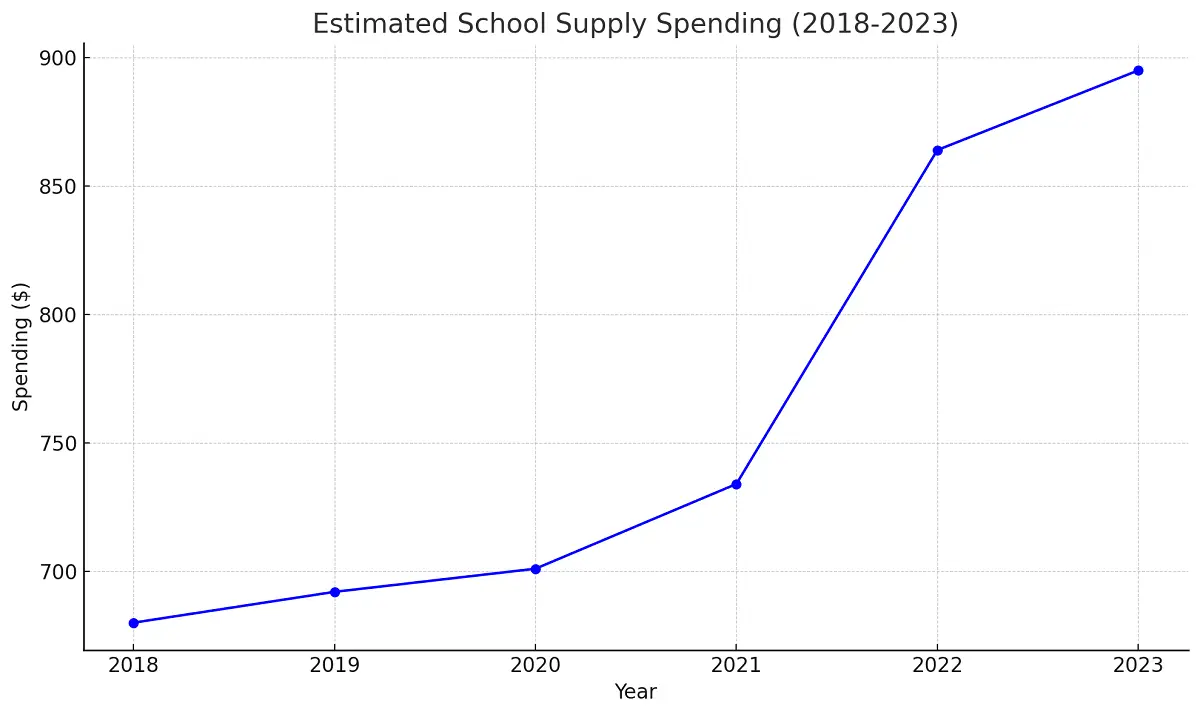
Here’s the chart visualizing the estimated school supply spending from 2018 to 2023. As you can see, the spending trend shows a gradual increase over the years, with a more pronounced rise between 2021 and 2022.
How Will Inflation Affect the Cost of School Supplies This Year?
Inflation will likely lead to across-the-board increases in school supply costs for 2023.
- Prices for backpacks and lunchboxes go up by 10-15% driven by higher production and transportation costs.
- Notebooks and paper go up 5-8% as paper pulp and fuel expenses rise.
- Writing instruments like pencils, and pens have prices 10% more expensive due to metal and graphite inflation.
- The costs for crayons, markers, and art supplies, are up 10-12% due to wax, dye, and plastic costs.
- Calculators and USB drives are up 5-8% with chip shortages.
- Back to school clothes and apparel are up 5-10% as cotton and synthetic textile prices climb.
- Retailers are facing higher costs so discounts may be less generous.
Overall, consumers can expect to pay 5-15% more across most school supply categories compared to 2022. Bulk purchasing, when possible, helps offset the impact. Being flexible on brands/styles also keeps costs down. With the current high inflation, stretching school supply budgets will require savvy shopping habits this year.
Final words
Remember, these are just guidelines, and the actual budget can vary based on individual circumstances and preferences. It’s always a good idea to get the school’s official supply list before back-to-school shopping to ensure you’re only buying what’s necessary.

Leave a Reply
Want to join the discussion?Feel free to contribute!