
Cost To Replace A Rear Bumper
Last Updated on December 29, 2023
Written by CPA Alec Pow | Content Reviewed by  CFA Alexander Popinker
A car’s exterior is one of the most important things to keep in shape because it shows how much you care for your vehicle. There are many things that can affect the car’s exterior, from scratches and dents to the side panels, broken tail lights, or a broken rear bumper.
You can replace the rear bumper either yourself and save some money, or take it to a mechanic.
How much does it cost to replace a rear bumper?
Rear bumper replacement cost depends on many factors including the make and model of the car, the age of the car, the gravity of the damage, the type of material the bumper is made of (some of the bumpers have steel or aluminum reinforcement, but the majority are made of plastic) and where you purchase the bumper from (whether it is aftermarket or OEM).
Depending on the factors mentioned above, expect to pay anywhere between $160 and $1,150 for a new rear bumper that can be installed on a small truck or a passenger car.
Besides the cost of the bumper, you should consider the expenses with the painting and the installation that can be anywhere between $310 and $710.
Also, the labor cost is a very important thing to consider as these vary from state to state. The cost of car labor would be anywhere between $55 and $210 per hour, according to AAA. The labor rate is determined in general by the experience level of the mechanic, business overhead, the certifications the mechanic has, whether it is a dealership or an independent shop, and the type of car.
In the table below you will find the average costs of a rear bumper replacement for different cars.
| Vehicle | Parts | Labor | Total | Bumper Kit Cost |
|---|---|---|---|---|
| Ford Focus | $175 | $150 | $325 | $125 |
| Nissan Altima | $50 | $150 | $300 | $110 |
| Toyota Corolla | $200 | $170 | $370 | $115 |
| Toyota Camry | $230 | $200 | $430 | $190 |
| Honda Civic | $200 | $145 | $345 | $125 |
| Honda CRV | $150 | $175 | $325 | $250 |
A rear bumper can be fixed in many different ways as presented below.
Cracks and punctures
Be prepared to pay anywhere between $360 and $460 in order to repair any holes or cracks in your bumper. The costs will get higher as there are damaged areas that involve filling the cracks, sanding, and using adhesive in order to patch the holes, due to the intensity of the work.
You might also like our articles about the cost of paintless dent repair, car hood painting, or car rust repair.
Ding and dent repair
Expect to pay anywhere between $175 and $655 for a dent repair in a rear bumper.
Scratches
Light scratches are easy and quick to repair, while the deeper scratches can determine severe paint chips that may affect large surfaces of the bumper. This being said, expect to pay anywhere between $110 and $710 in order to repair a scratch on a bumper, depending on the severity of the problem.
Paintless dent repair
The dents can be fixed through a method called PDR or Paintless Dent Repair, which uses specialized equipment in order to pull out the dent without affecting the paint. This method is much faster than the classic dent repair and costs less.
However, this method does not work for bumpers that are made of plastic. Also, it is recommended to use this option if the paint was not removed by the dent.
Is insurance an alternative to paying in cash?
First of all, you must consider the cost of your deductibles. For instance, it would be much cheaper to pay the costs out of your pocket for a bumper that has minor damage, than paying the deductibles of your insurance.
Also, it will keep the insurance at lower rates.
A better alternative will be to purchase a bump kit online and the other needed parts as well, and repair the bumper by yourself.
It is good to know that in case you hit a guardrail the insurance company will cover the costs under the Property Damage Liability coverage.
The process of the bumper repair and replacement
A bumper replacement or a bumper repair job can be performed by following the next steps:
Phase 1: The mechanic will evaluate the condition of the rear bumper and will determine which is the best option – the repair or the replacement.
Phase 2: The car service will contact the insurance company and place the order for all the parts that are needed.
Phase 3: The mechanic will disconnect the bumper from all the elements such as the warning systems, the light, and the sensor and will remove it.
Phase 4: The mechanic will use specialized equipment to repair any dents, holes, scratches, and cracks. After that, they will paint the bumper the same color.
This process takes a lot of time and may be very expensive for most people. That is why it would be a better option to purchase the bumper kit online and do this job yourself.
What are the extra costs?
While removing the old rear bumper you may destroy the plastic clips that are already affected by wear and tear. So, it is recommended to purchase some additional plastic clips.
Important things to consider
Rear-ending is one of the most common types of collisions in America, making up for 29 percent of all car crashes. It’s also a major reason for rear bumper damage.
Some collisions are inevitable when driving, but it’s important to know the difference between a minor fender bender and something more serious. Small impacts are known as ‘fender benders’ because they only result in minor scratches on the rear bumper, but major collisions may lead to you needing new parts or even replacement of the car itself.
The rear bumper damages can be classified into two categories.
The damages that can be repaired include the small scratches, the light scuffs, and the tiny dents.
On the other hand, the damages that require a bumper replacement include frame damage, major scratches, holes or cracks in the bumper, and large dents.
Depending on the type of vehicle and the gravity of the problem it could take anywhere between 2 hours and 2 days, or even more to repair a rear bumper.
How to replace the rear bumper yourself?
It will much easier to repair or replace the rear bumper yourself if you will have someone to help you and offer assistance with the parts. Some car elements are heavy and hard to handle.
Also, you will have to keep track of all the bolts and locking pins and know how to put them back.
So, if you decide to replace the rear bumper by yourself you will have to follow the next steps:
Phase 1: The transmission has to be put in Park.
Phase 2: You will have to activate the parking brake if it is a manual transmission.
Phase 3: Open the hood and disconnect the negative battery cable.
Phase 4: Open the trunk.
Note: Before starting you must do some online research or check your car’s repair manual to have an idea about the position of the clips and bolts that secure the rear bumper cover.
 You can easily remove them using a flat-head screwdriver. However, some cars may require some special tools.
Phase 5: Holding on the rear fender line, you will have to remove the fasteners.
Phase 6: After that, you will have to remove the retainers and the bolts fixed at the bottom of the rear bumper cover.
Note: In case you have problems with getting the bolts out, use a rust penetrant such as a WD-40 spray and let them soak for around ten minutes.
Phase 7: The rear bumper should then be removed from the car.
Note: You must remove the rear bumper cover straight, not on one side because this way you could break some plastic clips.
Phase 8: The fog lights and any other accessories are removed from the old rear bumper.
Phase 9: Place the accessories and attach any wiring for them on the new rear bumper.
Phase 10: Fix the new rear bumper on the car.
Phase 11: The fasteners are reattached in the fender liner.
Note: Ensure that there are no gaps between the fender and the liner.
How can I save money?
In case you want to save money on the rear bumper repair or replacement, it would be a good idea to perform this job yourself. In the table below you will find a cost comparison between the prices charged by a car service and how much you would spend if you did the job yourself.
| Severity | Shop Cost | DIY Cost |
|---|---|---|
| Full replacement | $500-$2,000 | $100-$150 |
| Paint scuffs | $150-$450 | $100-$150 |
| Small dents | $120-$800 | $100-$150 |
| Minor scratches | $250-$500 | $100-$150 |
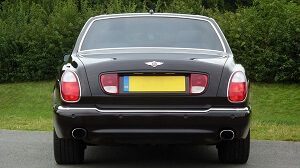
However, expect to pay some thousands of dollars to replace the whole bumper of a luxury car.
When repairing or replacing the rear bumper yourself you can save money by purchasing an aftermarket bumper replacement kit that is still of high quality.
To convince yourself that it is much cheaper to fix the bumper yourself you can ask for some price offers from the local repair shops. You will notice that even the lowest offer will be some hundreds of dollars more than the most expensive bumper replacement kit.

Leave a Reply
Want to join the discussion?Feel free to contribute!