
How Much Does a Top Fuel Dragster Cost?
Last Updated on September 14, 2023
Written by CPA Alec Pow | Content Reviewed by  CFA Alexander Popinker
Modern top fuel dragsters feature engines made of solid aluminum and a titanium oil pan.
The excess nitromethane fuel is used to cool down its cylinders and does a great job of preventing the engine from burning down.
On modern top fuel dragsters, you will find two magnets and each of them will have an output of around 44 amps. The engine is expected to develop more than 10,000 horsepower.
If you’re interested in the Top Fuel Dragster and its cost, then this article is for you. You will get all of the information you will need to be prepared for the purchase of this amazing vehicle.
How Much Does a Top Fuel Dragster Cost?
Are Top Fuel Dragsters expensive? The short answer is yes. You will usually be able to find a dragster priced anywhere between $200,000 and $500,000, although, depending on its features, its price might go even higher than that.
The price will increase, and considerably, the more power you add to your vehicle and the more you customize it to make it represent you.
Regardless of your financial capabilities, you must agree that a car worth half a million dollars is expensive. Even so, there are a few things you should consider if you want to bring its cost to a minimum.
And even when you do everything to cut down the costs, don’t expect it to get it all that cheaply. Some dragster enthusiasts will sometimes sell their old vehicles to get new ones. This will enable you to get them considerably lower than the market average.
The only downside to this is that you won’t be able to get one with the latest equipment, most of the time. If you’re looking for state-of-the-art vehicles instead, then this buying technique won’t really work for you, and you will be stuck with paying somewhere around half a million dollars.
You might also like our articles about the cost of monster trucks, dune buggies, or four wheelers.
Don’t think that after you pay the initial price of the top fuel car, you’ve done spending. This is just the initial hurdle a buyer will face. It will be followed by noticeable maintenance expenses, out of which the cost of an experienced service team is among the most important ones.
This is to make sure that you can fix whatever mechanical problem you’d be faced with. Seeing how these vehicles are made a little more complicated than your average car, it is really easy to mess things up if you’re faced with a repair you know nothing about.
And it doesn’t stop there. You will also have to prepare for daily maintenance expenses, that will ensure a properly functioning car. You will want to stay on top of unexpected expenses because if the engine or any other important parts break, the cost of repairs would easily surpass $2,000.
In the section below we will go through all of the major parts of the top fuel dragster that might need repairs and how much each of them will cost. This will be really helpful, especially for those people that want to enter a competition with their dragster and what to be prepared for.
Nitromethane
If you have a modern fuel dragster engine, it will usually burn around 11 gallons of fuel every minute. You will usually have a pump capable of pushing 77 gallons per minute and a tank that can hold around 17 gallons of fuel. If you were to get a 55-gallon drum of nitromethane, this would cost you around $950.
Engine
You should expect an engine for this type of vehicle to cost around $60,000. Buying it won’t be the only thing you will spend your money on. After you buy the engine, it will be broken down into pieces and rebuilt completely, a job that will take around 40 minutes or so.
This isn’t a one-time job as a professional driver will be faced with this rebuilding process around 184 times per year. This job, as you’d expect, is pretty expensive as well. You will spend around $5,000, if not more, to replace the broken parts and refuel for every race.
And that’s not even the most expensive repair. If something were to break while you’re on your race, then having it repaired on the spot and rebuilding the top fuel engine will be considerably more expensive. The rebuilding process of the engine, which has to be done after every race, will require the replacement of the valve springs, piston rings, spark plugs, engine bearing, and fuel.
Slicks
The tires on this funny car will set you back around $700 each, but you will have to change them quite frequently. You will usually have to change the slicks every four runs or so.
These aren’t even all of the additional costs you will be faced with when trying to race a dragster. Running one in a race will take a big toll on the vehicle itself and on your wallet before and after the run.
This means that before getting this amazing vehicle, you will have to do some extensive research and make sure that you can actually afford not only to own it, but to use it race after race.
Are you allowed to own a top fuel dragster?
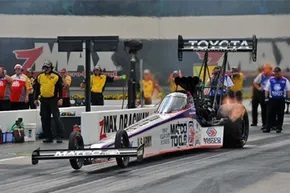 Before even thinking about the costs, a lot of people ask themselves whether they are even allowed to own such a masterpiece.
Whenever you see a dragster roll down a race lap during drag racing you immediately think that the driver must be professional and have a great deal of experience in their field.
This is because they have to be sure they can control such a beast and take it to the finish line without any issues.
Being able to control this machine properly and perfectly takes time and a lot of practice.
But this experience has to come from somewhere. So although most dragster racers are professionals with years of experience, newbies can also buy one and practice until they get better.
So the shorter answer to whether you can own a dragster or not is yes, as long as you can afford to buy it and keep it running properly. Although this seems like an easy job, it is usually a lot of work to make sure every piece of equipment is up and running on a dragster.
It is in fact pretty easy to get not only a dragster but any type of race car in the United States if you have the money.
If you’re just short of the numbers we’ve talked about above, then don’t worry; you might even find a dragster for cheap if you look long enough. But if you buy a suspiciously cheap race car, make sure you do a complete check to ensure that everything is properly working before taking it for a ride.
Will you need a License to drive top fuel dragsters?
The license should be the last of your worries.
Anyone can start driving a dragstart without a special government-issued license. This is mostly because this isn’t something you would drive to the grocery store, but on professional tracks.
Depending on the race you want to participate in, you will have to have different certifications from racing organizations, but those will only be earned with experience and time.
Getting some experience with a dragster trainer before actually hitting the tracks would be great to make sure you can handle its ferocity and speed.
How can I save money on this car?
It will be very hard to get this type of vehicle and its accessories at a more decent price mainly because this is a pretty expensive machine and so is everything related to it and its functioning. It will be expensive to buy regardless and getting one suspiciously cheaper might actually put your life in danger.
Even if you get it for cheap, you will have to understand that its maintenance expenses will overcome the initial price tag and this will happen sooner rather than later. This is something that most people won’t realize. It will be very expensive and will take a lot of time and patience to keep this vehicle running properly.
If you don’t take it through the necessary repairs in time, it will soon break down beyond repair. Its regular maintenance, without considering any feature updates, will quickly come close to the initial asking price.
Before getting one such race car think about all the expenses you will have to budget for, like a pit crew, service team, and some other similar elements.
If you want to get the parts separately, then you should know that at least the chassis can be found easily on the market, where some drivers will sell their old ones for a decent price.
You might find it suspicious that they are selling these car parts a lot cheaper than they should, but usually, this is because they have already bought a new chassis and the sale of the old one will help them pay their team for another season. Even so, you will have a lot of disadvantages when buying a used, old chassis.
In general, you will spend a lot less when buying the parts separately and on the second-hand market. But you will also have to consider that it will cost you both money and time to have all those parts tuned in together to form a decent dragster and you can never be sure that you will find everything you need in this way.
Buying it second-hand, either as a full vehicle or by parts, will generally get you an older version because the newest ones are never put out for sale. This is for the drivers to ensure that no other teams will get their hands on the new tech.
This means that you can’t expect to get a used model and be competitive at the same time, because you will probably get a vehicle that doesn’t have the latest makeovers of the engine and other important parts.
Buying car insurance for it will help you avoid expensive repairs although this won’t make the auto itself any cheaper.
Conclusion
Dragsters and anything around them will be expensive, to say the least. Every part of this vehicle is specially designed for it and will cost considerably more than its counterpart used on a normal vehicle. Finding clear information on prices for different dragster parts can be a pain and was a pain for us as researchers because not many want to share their knowledge on the subject.
Only a handful of people actually know a thing or two about top fuel dragsters and most of them are part of racing teams for these car races.
If you really want to buy and drive such an amazing vehicle, then your best bet would be to find and contact racing teams and ask them directly. They are the only ones that have a clear understanding of both the sport and the market around these vehicles. Depending on the team you are going to talk to, the price of a top fuel dragster will be lower or higher.

Leave a Reply
Want to join the discussion?Feel free to contribute!