
How Much Does a Whole Chicken Cost?
Updated on | Written by Alec Pow
This article was researched using 5 sources. See our methodology and corrections policy.
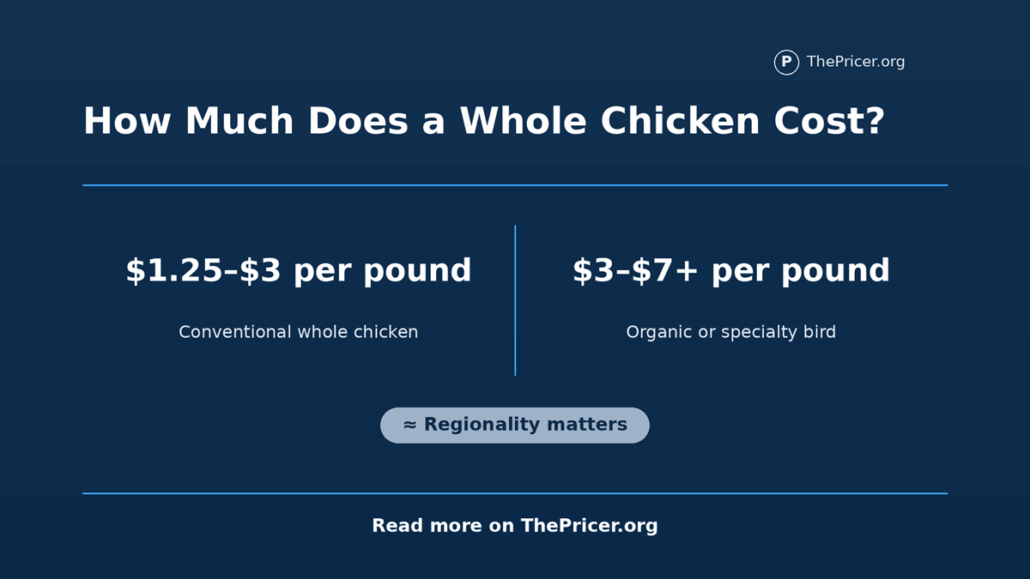
A fresh whole chicken generally costs $1.25 to $3 per pound for a conventional bird and $3 to $7+ per pound for organic, pasture-raised, heritage-breed, or specialty chicken. Since most whole chickens weigh between three and six pounds, expect to spend approximately $6 to $18 for a conventional bird or $15 to $40+ for a premium one.
The U.S. Bureau of Labor Statistics reported an average price of approximately $2.04 per pound for fresh whole chicken in mid-2026. Its whole-chicken category includes conventional, organic, and other product claims, so an individual store price may be substantially higher or lower.
Whole chickens are often less expensive per pound than boneless breasts, wings, or individually packaged thighs. The bones and skin reduce the amount of ready-to-eat meat, but the carcass can be used for broth, making a whole bird one of the most versatile meat purchases.
Article Highlights
Jump to sections
- Conventional whole chicken usually costs $1.25 to $3 per pound.
- Organic and specialty birds commonly cost $3 to $7+ per pound.
- A typical raw whole chicken costs $6 to $25 (at $30 per hour, earning that amount would take about 12 to 50 minutes, before taxes).
- Farm-raised heritage birds can cost $25 to $50+.
- A four-pound bird generally provides approximately 2 to 2.5 pounds of cooked meat.
- Raw whole chicken keeps for only one to two days in the refrigerator.
- Cook chicken to at least 165°F in the breast, thigh, and wing areas.
How Much Does a Whole Chicken Cost?
| Type of whole chicken | Typical price per pound | Typical price per bird |
|---|---|---|
| Sale-priced conventional chicken | $0.99 to $1.49 | $4 to $9 |
| Regular conventional chicken | $1.50 to $3 | $6 to $18 (about 12 to 36 minutes at $30 per hour) |
| Air-chilled or antibiotic-claim chicken | $2.50 to $5 | $10 to $30 |
| USDA organic chicken | $3 to $7+ | $15 to $40+ |
| Pasture-raised or local-farm chicken | $4 to $9+ | $20 to $50+ |
| Cooked rotisserie chicken | $5 to $12 per bird | Weight is often lower than a raw roaster |
The Bureau of Labor Statistics currently reports an average U.S. whole-chicken price close to $2.04 per pound. The national average was approximately $2.09 per pound in the Midwest during the same reporting period.
A four-pound bird at the national average costs:
4 pounds × $2.04 = $8.16
A six-pound organic bird priced at $5.49 per pound costs:
6 pounds × $5.49 = $32.94
Retail prices vary by city, store, package size, certification, processing method, and promotion. Weekly sale prices can temporarily fall below the national average, especially when stores use whole chickens as a promotional item.
Broilers, Fryers, Roasters
Most ordinary whole chickens sold in supermarkets are young broiler-fryer chickens. The terms describe relatively young birds raised for meat rather than entirely different breeds.
The USDA’s chicken classification guidance describes a roaster as a young chicken between eight and 12 weeks old with a ready-to-cook weight of at least five pounds. Roasters are generally larger than broiler-fryers and may require more cooking time.
A Cornish game hen is a small young chicken, usually weighing less than two pounds. Compare its pricing with the cost of a Cornish game hen.
Capons are surgically castrated male chickens traditionally raised to develop larger, tender carcasses. They are uncommon in ordinary supermarkets and can cost considerably more than conventional young chickens.
Mature hens and roosters can have firmer meat and stronger flavor. They are often used for soups, stews, braises, and slow-cooked dishes rather than quick roasting. Our separate guide covers the price of a rooster.
What Chicken Labels Mean
Marketing terms can add several dollars per pound, but they do not all describe the same thing.
Fresh does not mean the chicken was slaughtered that day. USDA labeling rules say fresh poultry has never been held below 26°F, the temperature at which poultry begins to freeze.
Natural generally means the product contains no artificial ingredients or added color and was only minimally processed. It does not describe outdoor access, feed quality, antibiotic use, or animal-welfare practices.
Free-range indicates that the producer has documented outdoor access. The term does not automatically reveal how large the outdoor area is, how often the birds use it, or whether the ground is covered with pasture.
USDA organic has a broader regulated meaning. USDA organic poultry must receive organic feed, must not be raised with prohibited antibiotics or hormones, and must receive outdoor access under organic livestock standards. The USDA National Organic Program requires certification before a product can carry the USDA organic label.
Pasture-raised may describe a production system with meaningful outdoor pasture access, but shoppers should look for a clear producer explanation or trusted third-party certification rather than relying on the phrase alone.
Hormones and Antibiotic Claims
The old article incorrectly implied that ordinary chicken may be given growth hormones while organic birds are hormone-free. Federal regulations prohibit adding hormones to poultry production in the United States. A “no added hormones” chicken label therefore does not identify a benefit unique to that brand.
Antibiotic claims are different. Labels such as “raised without antibiotics” or “no antibiotics ever” are voluntary animal-raising claims that must be supported by the producer. USDA updated its labeling guidance to encourage stronger documentation and verification of these claims.
All chicken sold legally must comply with federal residue limits. A customer may still choose an antibiotic-related claim because of production preferences, but conventional chicken is not automatically unsafe.
Whole Chicken vs. Chicken Parts
Buying a whole chicken can cost less per pound than purchasing boneless breasts or wings. The comparison changes after accounting for bones, skin, cooking loss, and preparation time.
Assume a five-pound chicken costs $2 per pound:
5 × $2 = $10 (about 20 minutes at $30 per hour)
If cooking produces approximately three pounds of edible meat, the effective meat cost is:
$10 ÷ 3 pounds = $3.33 per pound of cooked meat
The carcass, neck, wing tips, skin, and drippings can also produce broth or gravy. If those replace a $3 carton of stock, the effective value of the purchase improves.
Whole chicken may not be the cheapest option when a household eats only breast meat, has limited time, or discards the carcass. Compare the usable yield rather than only the package price.
How Much Meat Does a Whole Chicken Provide?
A raw whole chicken loses weight as moisture and fat leave during cooking. Bones and cartilage also remain after the meat is removed.
A practical planning estimate is that a raw bird will provide approximately 50% to 65% of its original weight as cooked edible meat. Technique, bird composition, trimming, and how thoroughly the carcass is picked affect the yield.
A four-pound chicken may provide approximately two to 2.5 pounds of cooked meat. At four ounces per serving, that equals roughly:
32 to 40 ounces ÷ 4 ounces = 8 to 10 servings
Actual dinner servings may be larger, especially when the chicken is the main course. A four-pound bird commonly feeds four to six adults when served as carved pieces.
Three Realistic Cost Examples
Budget conventional chicken. A 4.5-pound bird costs $1.49 per pound. The raw chicken costs $6.71. Seasoning, vegetables, and electricity add approximately $3, producing a roasted meal for about $9.71.
Organic family dinner. A five-pound organic bird costs $4.99 per pound, or $24.95. Potatoes, carrots, herbs, and cooking costs add $7. The complete meal costs approximately $31.95.
Three-meal chicken plan. A five-pound chicken costs $10. The household uses part for a roast dinner, the remaining meat for sandwiches and soup, and the carcass for broth. If it replaces two separate meat purchases and one carton of stock, the chicken can support three meals for approximately $3.33 in chicken cost per meal.
Raw Chicken vs. Rotisserie Chicken
A rotisserie chicken can cost as little as $5 at some warehouse clubs, occasionally less than a comparable raw bird. Retailers may use rotisserie chickens as low-margin products to bring customers into the store.
The prepared bird is convenient but may be smaller, highly seasoned, or injected with a solution containing water, broth, salt, flavorings, or other ingredients. Check the ingredient and nutrition labels when sodium matters.
A raw chicken provides more control over seasoning, cooking method, stuffing, and doneness. It may also offer a larger selection of organic, local, air-chilled, or pasture-raised products.
For prepared alternatives, compare the price of Albertsons fried chicken and the cost of Walmart fried chicken.
Extra Costs
Basic roasting requires little beyond oil, salt, spices, and cooking energy. Vegetables, herbs, brines, stuffing, roasting bags, or premium seasoning blends may add $2 to $15.
A butcher may charge to split, spatchcock, or cut the bird into pieces, although many supermarket meat departments perform simple cuts free when asked at purchase.
Buying chickens directly from a farm can involve an additional processing charge. Some farms advertise the live-bird price separately from slaughter, chilling, packaging, or delivery.
Online poultry orders may add insulated packaging and refrigerated or frozen shipping. Shipping can exceed the chicken’s price, making online ordering economical mainly for specialty breeds or large orders.
How to Select a Whole Chicken

Choose an intact package without tears, leaking liquid, or excessive trapped air. Check the sell-by or use-by information and select a bird that will remain within its recommended storage window.
Do not press raw chicken through the package to determine freshness. Springiness is not a dependable food-safety test and handling several packages can spread raw poultry liquid.
Color alone does not determine safety or quality. Feed, breed, skin pigment, age, freezing, bone marrow, lighting, and packaging can change the bird’s appearance. USDA explains that darkening near bones is common in young chickens because pigment can pass through porous developing bones.
A yellow skin color may reflect genetics or feed pigments and does not prove that the bird is fattier. Blue or dark coloration is not a dependable indicator that a chicken belongs to the Brahma breed or that its meat has a particular fat content.
Storage and Food Safety
The USDA recommends keeping raw whole chicken refrigerated at 40°F or below and cooking or freezing it within one to two days. Properly frozen raw whole chicken maintains its best quality for approximately one year, although continuously frozen food remains safe indefinitely.
Safe thawing methods include the refrigerator, cold water, and the microwave. Chicken thawed in cold water or the microwave should be cooked immediately. Do not thaw poultry on the kitchen counter.
USDA advises against washing raw chicken because splashing water can spread bacteria to sinks, utensils, counters, and nearby food.
Cook the chicken to at least 165°F, measured with a food thermometer in the innermost thigh and wing area and the thickest portion of the breast. The USDA temperature guidance explains that color and clear juices cannot replace thermometer verification.
If stuffing the bird, both the center of the stuffing and the chicken must reach 165°F. Cooking stuffing separately usually makes it easier to achieve safe temperatures without overcooking the meat.
How to Save Money
Compare prices per pound rather than package totals. A large chicken costs more at checkout but can provide a lower unit price and more leftovers.
Review weekly store advertisements and digital coupons. Whole chickens are frequently discounted, and a sale-priced bird can be frozen for later use.
Reduced-price chicken near its sell-by date can offer good value when the package is intact and the bird is cooked or frozen promptly. The date is not permission to leave raw chicken in the refrigerator beyond the USDA’s one-to-two-day recommendation.
Warehouse clubs can offer competitive multi-packs, but calculate whether the membership, package size, and freezer space make the purchase worthwhile.
Use the entire bird. Roast the meat, save leftover pieces for another meal, and simmer the carcass for broth. Reducing waste often saves more than choosing the absolute lowest shelf price.
What We Verified
We used current Bureau of Labor Statistics data for the national whole-chicken price and USDA sources for poultry classifications, label terminology, organic production requirements, refrigeration, freezing, thawing, and cooking temperatures.
The old $2.75 to $3.50 conventional range was replaced because it overstated the current national average. The unsupported store examples, pressure freshness test, cage descriptions, hormone implication, blue Brahma flesh claim, and awkward references to breast halves and “hammers” were removed.
Answers to Common Questions
How long can a whole chicken remain frozen?
A raw whole chicken maintains its best quality for approximately one year at 0°F.
Should raw chicken be washed?
No. Washing can splash bacteria around the kitchen. Proper cooking to 165°F destroys harmful bacteria.
What temperature should a whole chicken reach?
Cook it to at least 165°F in the breast, innermost thigh, and innermost wing area.
Does yellow chicken skin mean more fat?
No. Yellow coloring can result from genetics and feed pigments and does not reliably indicate fat content.
Are hormones used in U.S. chicken production?
No. Federal rules prohibit added hormones in poultry production.
Disclosure: Educational content, not financial advice. Prices reflect public information as of the dates cited and can change. Confirm current rates, fees, taxes, and terms with official sources before purchasing. See our methodology and corrections policy.