
How Much Does a Tattoo Cost?
Last Updated on February 25, 2023
Written by CPA Alec Pow | Content Reviewed by  CFA Alexander Popinker
Many people that like body art use tattoos as a great way of remembering great events from their lives, quotes, people, dates, or images they like and mean something to them. If you want to find out exactly how much a tattoo costs and expect only the most amazing results without a lot of money invested, then you should take a few things into account.
Tattoos are the closest thing to permanent when it comes to body art and beauty. This is why it is vital that you are properly prepared and know everything they is to know before sitting down on the tattoo shop chair. If you’ve just decided that it is time to get your first tattoo, you’re surely not alone. Did you know that around 30% of all Americans have a tattoo? Studies have also shown that close to 50% of people between the ages of 18 and 35 have one or more tattoos.
How Much Does a Tattoo Cost?
Figuring out the cost of a new tattoo isn’t as straightforward as you might think. There are actually quite a few factors that will have to be considered, among the most important being the type of tattoo, its size, your location, the cost of living, and the materials used.
Most tattoo artists will charge on average between $50 and $100 for a small tattoo, around $250 for a medium tattoo, and $300 or more for larger tattoos. Keep in mind that depending on how large and complex of a piece you need, the price can go really high.
So let’s go over some of the most important factors in deciding the price of a tattoo.
Location on body
In order to accommodate your request, the artist will give a different price for every part of the body you want to get a tattoo on. Usually, more accessible and bigger parts of your body will cost less to get tattooed than smaller and not that easily accessible ones. A good example is the fact that a tattoo on your wrist could cost you around $50 to make while getting that tattoo on your neck could set you back $80 or more for the same tattoo.
Level of Detail and Tattoo Design
You Will Spend This Much For An Eyebrow Tattoo
Another aspect that is of great importance is the amount of detail in your tattoo. Don’t ask how much a tattoo costs before you know exactly what type of design you’re aiming for and how detailed it will be in the end. More detailed tattoos cost way more than simpler ones. An artwork that is complex and very difficult to create, with plenty of details could set you back $300 or more, while tattoos that are simpler could cost you $40 or less.
Colors
If you’re on a tight budget, our advice would be to aim for a tattoo in black and grey, which is usually cheaper than a colorful one. The complexity raises whenever you add a new color, because the artist will have to use different kinds of ink, so, in the end, it will cost you more. As an example, a colorful tattoo can cost $150-$200, while a black/grey one with the same design can set you back $50-$100.
You could end up spending a lot more than $50-$100 even for a black/grey tattoo, and a big part of the price will be for the artist and his skills, which takes us to another aspect that will influence the final price.
Materials Matter
The materials needed to be used should also be factored in the price. The more elaborate a tattoo will be, the more it will cost the artist in terms of materials. A tattoo that needs a lot of different needles, a lot of ink, and most importantly, many different ink colors, will also cost more. All the materials used for your tattoo will be found in the final bill. So you will be charged more for it the more materials the artist will use.
Tattoo Artist
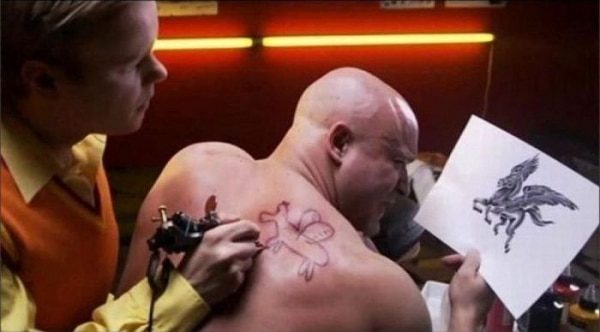
Depending on which artist you work with and their skills, you could spend more or less. A simple tattoo in black and grey can have a price of $150 when done by one artist, or it can be cheaper, lower than $80 even when done by someone else. The artist will set a price depending on the time needed, his skill, and the products he’ll use to have the tattoo done for you, along with any of their personal fees for the job.
If you aim for a more reliable artist, they might charge more, but the whole process will be safer. Some of the cheapest artists are known to use the same needles without any sanitation measures, on multiple clients, which puts you in danger of getting one of the diseases transmitted through blood exchange.
If You Want To Get a Nose Piercing, You Will Spend This Much
Size
Another aspect that adds to the final price is the size of your tattoo. Yes, don’t think about how much a tattoo costs before you know how big you want it to be. If you want to keep the price at a minimum, aim for a smaller tattoo. Larger designs require more time to make and more products to be used which will greatly increase the final price.
The Cost of Each Type of Tattoo
Full Back
The full-back tattoo will usually be made to cover your whole back from the waist to the bottom of your neck. When going for a detailed, colorful, complex tattoo design for your whole back, be prepared to spend about $2,500 to $5,000 for the outlining alone, costing another $200 to fill it in with color. In the end, you should be ready for roughly 40-60 hours of total work, which will definitely affect the total cost.
To be a bit more budget-friendly, consider taking this slow and going piece by piece.
Sleeve and Half Sleeve Tattoo
One of the tattoos that show how committed you are to getting yourself inked is the full sleeve tattoo. This is a large tattoo that will go from the shoulder to the wrist and includes both the design and color (if you want it in multiple colors). It is usually done in multiple sessions and will require a lot of patience both for the artist and the customer.
It’s not uncommon for designs that go in this area to cost anywhere between $2,000 and $4,500 for the outline alone, going upwards of $6,000 when full-color, and the artist will require around two full days to finish it. It is done either in multiple shorter sessions or in large chunks depending on what works for you. Expect to pay half this price for a half-sleeve tattoo.
Chest
A chest tattoo will take somewhere between 6 and 10 hours to complete depending on the design you’re going for, and the price will be between $700 and $2,400, depending on the tattoo size, shading, color, and of course, the artist’s experience and fame.
Forearm
This will usually cost half the price of a full sleeve because it will also be half in length. It will cover your forearm and will cost between $300 and $1,500 depending on the colors, design, size, and the artist or tattoo shop you are using. As you’d expect, when going for full color you will pay more than just for the outlines or lettering.
Finger
For people that want to get a tattoo but are not ready to commit to something really visible, large, and colorful, finger tattoos are a great idea. These are pretty cheap, within a price range of about $50 to $150 for the outline alone. There are also some that have a bigger level of detail with perfectly sharp lines or other complex features, and those can cost as much as $600. With these tattoos, as with most others, the artist and the design will be the factors that have the biggest impact on the cost of your tattoo.
Shoulder Tattoo
A standard shoulder cap is one of the most popular locations to get a tattoo. This is the circular top of one of your shoulders. The price of these tattoos will be between $850 and $1,000 for the simple outline.
Thigh or Hip
A hip or thigh tattoo of a standard size will typically cost between $500 for the outline alone and $2,000 for a full-color intricate design one.
Ankle
A standard ankle tattoo will cost $75-$300 depending on what you want to get out of it.
Full Body
The full body tattoo is intended for people that want to fully commit to the tattoo world and how fierce they are in modifying their looks. When getting inked from neck to toe, you should be ready to pay close to, or even more than $100,000. And this is because you really want to work with a professional that will spend a lot of time with every inch of your body.
Lip/Face
If you also consider getting cosmetic tattoos, if you feel these are more of your thing. You can get freckles, lip liner, eyeliner, or even inner lip tattoos, and the average tattoo cost for this category will be $500-$3,000 depending on the artist. It might seem a lot, but a tattoo that stands out each time you show your face should really be created as close to perfect as possible.
Tiny Tattoos
A tiny tattoo like a cross, a tiny heart, or even a permanent wedding band can be a great way of getting into the world of inking. They are made as a subtle hint at the tattoo world and will usually be something to remind you of a meaningful thing in your life. This will usually cost close to the minimum fee of the shop, so somewhere between $50 and $200.
Average Tattoo Prices: Consultation is Vital
During the consultation with the tattoo artist, you can go over the prices associated with the different tattoos they offer. You will also want to go over all of the important factors, as a lot of things will go into deciding the tattoo price.
Conclusion
How will a simple tattoo influence the budget of our average working man or woman? Well, getting a tattoo won’t necessarily set you back to the point of no return. So it is something manageable, but if you want to spend less, keep it smaller and try using just a few colors to be sure you don’t go over a decent budget.
Don’t be cheap when thinking about the artist and aim for professional places that are known to take great measures to ensure proper hygiene and sanitation. As long as you don’t think about covering your entire body with tattoos, getting one won’t be the biggest issue.
FAQ
How much does tattoo removal cost?
The average cost of laser tattoo removal will depend on the size of the surface that needs to be cleaned. You should expect to spend between $250 and $600 for each treatment. You should also know that some tattoos will need multiple treatments to completely disappear, and of course, those will cost more to get removed.
A really small tattoo will usually hit the minimum charge of a tattoo parlor, with a price of around $50. Of course, this price is available for something really simple that is made in a single color. This cost can go a lot higher depending on your desired design and size.
Leave a Reply
Want to join the discussion?Feel free to contribute!